


The Probiotic Powerhouse
Pickles, when prepared through natural fermentation, are a fantastic source of probiotics – those beneficial live microorganisms vital for a healthy gut
microbiome. These tiny helpers play a crucial role in digestion, nutrient absorption, and even bolstering your immune system. While many store-bought pickles boast a tangy flavor, the unfortunate reality is that the vinegar used in their production often decimates these valuable live cultures. This renders many commercially available pickles lacking in the very probiotic benefits consumers seek. Dr. Joseph Salhab, a gastroenterologist, highlights this significant difference, explaining that to truly reap the probiotic rewards from pickles, one must either seek out specialty vinegar-free varieties or, more economically and effectively, embrace the art of home fermentation.
Homemade vs. Store-Bought
The stark contrast between homemade fermented pickles and those found on supermarket shelves lies primarily in the presence of active probiotics. Store-bought pickles, predominantly relying on vinegar for preservation and flavor, undergo a process that is detrimental to beneficial bacteria. This means you're often left with a tasty snack, but one devoid of its potential gut-health advantages. Dr. Salhab points out that while vinegar-free store-bought pickles exist, they can be a pricier option. The more economical and health-conscious approach, according to the gastroenterologist, is to ferment them yourself. This method not only significantly reduces costs but also grants complete transparency and control over the ingredients entering your body, ensuring a pure, probiotic-rich product.
Simple Fermentation Recipe
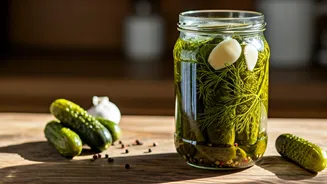
Embarking on your own probiotic pickle journey is remarkably straightforward. For optimal results, a fermentation crock or an airlock jar is recommended, though a standard mason jar will suffice with a daily ritual of loosening the lid to release built-up gases – a crucial safety step. The essential ingredients include about 2 pounds of pickling cucumbers, 4 cups of filtered or dechlorinated water, and approximately 2 tablespoons of non-iodised salt to create a roughly 3.5 percent brine. Enhance the flavor and probiotic potential with aromatics like 4-6 crushed garlic cloves, fresh dill or 1 teaspoon of dill seed, 1 teaspoon of mustard seed, 1 teaspoon of whole peppercorns, and a pinch of red pepper flakes if desired. For an extra crisp texture, a grape leaf or another tannin-rich source can be added. This recipe provides a solid foundation for creating delicious, gut-loving pickles.
Crafting Your Pickles
The preparation of your homemade probiotic pickles begins with a simple trim of the blossom end from each cucumber. Next, meticulously dissolve your non-iodised salt into room-temperature filtered water until it's completely integrated, forming your brine. Introduce the garlic, dill, and selected spices to the bottom of your clean jar, then tightly pack the cucumbers on top, ensuring about an inch of headspace remains. Pour the prepared brine over the vegetables, making certain they are fully submerged. If any cucumbers attempt to float, a weight can be used to keep them submerged. Secure the jar with an airlock lid or a regular lid, remembering to 'burp' it daily if using the latter. Allow the concoction to ferment at room temperature for five to fourteen days, or until the desired level of sourness is achieved, influenced by ambient temperature. Once perfectly fermented, transfer the sealed jars to the refrigerator to halt further fermentation and preserve their delightful taste and probiotic richness.