







Bonobos: Gentle Giants
Bonobos, also known as pygmy chimpanzees, represent one such species where females often hold sway. Within bonobo society, the female group dynamics typically
lead to increased status and influence. They form strong bonds among themselves, enabling them to collectively dominate males, particularly in resource-rich settings. This cooperation not only secures them better access to food and shelter but also shapes the social structure, making the males less likely to engage in aggressive behaviors. The females' control ensures a generally peaceful environment, reducing conflict within the group and fostering a cooperative atmosphere where females frequently make important decisions.
Spotted Hyenas: Matriarchal Might
Spotted hyenas exhibit a clear matriarchal society, where females are larger, more aggressive, and socially dominant over males. The females inherit their rank, leading to a strong social hierarchy. Higher-ranking females have greater access to food, mating opportunities, and resources, which directly influences the survival and success of their offspring. This dominance can be clearly observed in their behavior, such as their approach to feeding, where they are first in line, and their management of social conflicts. The superior strength and social standing of female hyenas lead to increased opportunities, helping ensure the survival of their lineage. Thus, the matriarchal structure is a key component to the group's success.
Elephants: Family-Oriented
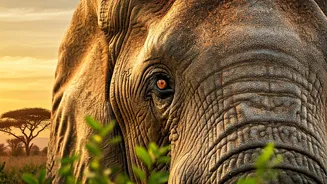
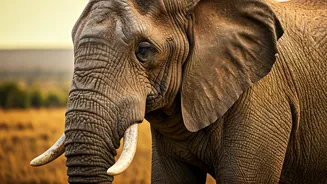
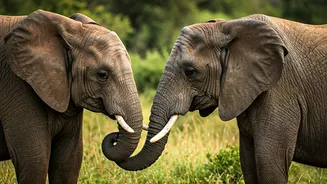
Elephant herds are organized around the oldest and most experienced female, called the matriarch. She leads the group, offering essential wisdom and guidance on migration routes, water sources, and predator avoidance. The matriarch passes her knowledge down to the younger members of the herd, ensuring the survival of the herd. Male elephants leave their families upon reaching maturity; female elephants, however, stay with their mothers and sisters. This creates a tight-knit family group. The matriarch's decisions greatly impact the entire group, and the cohesion and success of elephant societies rely significantly on the matriarch's leadership. These matriarchs are crucial in protecting the group from danger.
Ants & Bees: Eusocial Control
In many ant and bee species, the queen reigns supreme, holding reproductive authority and commanding the colony's operation. Worker ants and bees, all female, perform the daily tasks, from foraging to defense, and the entire structure revolves around the queen. The queen's main purpose is to lay eggs, thereby ensuring the survival and growth of the colony. The worker ants and bees are equipped with various skills; they can ward off intruders, gather food, and perform other duties to protect and sustain the queen and her offspring. This cooperative system is integral to the impressive ecological dominance and success of eusocial insects. The queen's presence is key to the entire colony's ability to thrive.
Orb-Weaving Spiders: Cannibalistic Tendencies
In orb-weaving spiders and black widows, the females often exhibit pronounced physical advantages over their male counterparts and, sometimes, cannibalistic tendencies. Female spiders tend to be substantially bigger and more powerful than the males. After mating, females may eat the male, using the nutrients to bolster their egg production. This reproductive strategy ensures that the female gets the best resources available, increasing the chances of offspring's survival. These spiders also demonstrate a variety of hunting and defensive behaviors that showcase the female's dominance, making them adept predators. The size disparity and their aggressive behavior emphasize the females' dominance, highlighting the crucial role they play in the survival of their species.
Green Anacondas: Larger Than Males
Female green anacondas typically surpass males in size, providing them an advantage in the wild. The larger size of the female anacondas is directly linked to enhanced reproductive capabilities. Larger females are capable of producing more offspring and, due to their size, are better able to protect themselves and their young from predators. This physical advantage plays a key role in their hunting success, as the females use their bulk to subdue prey, ensuring that they can acquire enough sustenance. Female anacondas, with their physical superiority, are integral to the species' overall survival and the continued presence within their ecosystem, making them the superior sex.
Poison Dart Frogs: Parental Duties
In certain species of poison dart frogs, the females display parental care and other behaviors that highlight their importance to their offspring. The female poison dart frogs may take care of the eggs, guarding them and keeping them moist and safe. They also transport the tadpoles to safe breeding sites, such as water-filled plants. In some species, the female provides the tadpoles with unfertilized eggs as a food source, further increasing their chances of survival. Such behaviors underline the significance of the female poison dart frog. Their care is vital to the survival of their young and the continuation of the species. Thus, it is the female's care that defines the survival of the next generation.
Birds of Prey: Hunting Prowess
In many birds of prey, such as eagles, hawks, and owls, females are often larger and stronger than males, a physical attribute that directly impacts their hunting prowess. This size difference allows the females to hunt larger prey. Their larger size contributes to their ability to defend nests and young from intruders. The females’ hunting and protective abilities are key in the survival of their offspring and the general success of the species. The females’ physical advantages and behaviors enhance the ability of the species to succeed, proving the female's importance.
Komodo Dragons: Size Advantage
Female Komodo dragons have a size advantage over the males and are involved in the process of parthenogenesis, or asexual reproduction. This ability enables them to reproduce when males are not available. These large reptiles are solitary hunters and their size helps them to overpower larger prey and protect themselves from other animals. Their ability to reproduce through parthenogenesis also ensures the survival of the species, even when males are scarce. The Komodo dragon's size, hunting ability, and unique reproductive options all contribute to the females' domination within their species.
Female-Led Strength
The remarkable examples of female dominance highlight a diversity of strategies and adaptations throughout the animal kingdom. From the social dynamics of bonobos and the matriarchal societies of spotted hyenas and elephants to the reproductive strategies of spiders and the hunting abilities of birds of prey, each species presents a unique display of female influence. The prevalence of females in the animal kingdom, and their different methods of influence, demonstrates the complexity and variety within the natural world. These examples underscore the evolutionary drivers that favor female strength and leadership, highlighting the pivotal role females have in shaping the survival and success of many animal species.