




Timing Your Dahlia Planting
Dahlias are passionate about warmth, requiring soil temperatures between 60°F and 75°F to awaken from dormancy and sprout. If your climate experiences
chilly springs and frosty nights, it's best to introduce your tubers to the garden about two weeks before the last expected frost. For those in colder regions, get a head start by nurturing your tubers in pots indoors, perhaps under the glow of grow lights or in a greenhouse, about a month prior. These early seedlings can then be transplanted outdoors once all threats of frost have vanished. In areas with warmer winters, specifically USDA Zones 7 through 10 where dahlias truly thrive as perennials, planting can commence as early as April, May, or early June, with varieties chosen for their heat tolerance to grace your autumn garden. Be mindful of the days to maturity for your chosen dahlia variety, especially in areas prone to extreme heat above 90°F, as this can halt blooming and should inform your planting schedule for peak performance.
Choosing the Ideal Spot
For dahlias to truly flourish, they crave abundant sunshine, ideally six to eight hours of direct light each day. However, in regions where summer sun is particularly intense, providing some relief with afternoon shade can be beneficial. Additionally, select a location that offers a shield from strong winds to prevent damage to the delicate blooms and stems. The soil itself is crucial; it must be rich in organic matter, consistently moist, yet exceptionally well-drained, whether you're planting in the ground or in containers. Incorporating well-rotted compost into your garden bed or potting mix will significantly boost nutrient levels. The mature height of your dahlia variety should also guide its placement. Taller types, which can reach up to 5 feet, are best positioned at the back of flower borders, while shorter varieties, measuring 12 to 18 inches, are perfect for creating charming low borders, adding vibrancy to window boxes, or serving as standalone potted specimens. Mid-size dahlias, typically between 30 to 40 inches, offer excellent structure and color in the middle of garden beds, providing a spectacular display from mid-summer through to autumn. It’s worth noting that dahlias share similar growing preferences with tomatoes; if you can successfully cultivate tomatoes, you'll likely find success with dahlias, making them an excellent companion planting choice.
Spacing for Growth and Access
To create a truly impactful display, plant your dahlia tubers in groupings of five, as this arrangement tends to be the most visually appealing. The spacing between individual tubers should range from 12 to 36 inches, a crucial factor determined by the anticipated mature height of the specific dahlia variety you are cultivating. It is vital to consider the surrounding plants; taller spring and early summer bloomers can potentially cast shade on later-blooming dahlias, thereby limiting their access to essential sunlight and creating competition for vital water and nutrients. Therefore, ensure a generous space of 2 to 3 feet is maintained between your dahlia tubers and other neighboring plants. Furthermore, remember that dahlias require ongoing care throughout the season, including regular watering, feeding, and deadheading to encourage continuous blooming. Adequate space around and between the tubers is not just for aesthetic reasons but also to allow easy access for these essential maintenance tasks as the plants mature.
Planting Depth Secrets
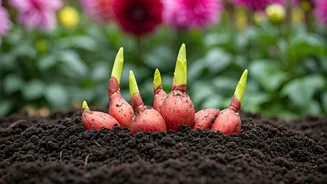
The correct depth for planting dahlia tubers is directly related to their size. For larger, taller varieties, aim to plant them 6 to 7 inches deep. Smaller varieties, on the other hand, can be planted at a shallower depth of 2 to 3 inches. A recommended planting method involves digging a hole approximately 12 inches deep. Before placing the tuber, backfill the hole with 6 to 9 inches of soil. Position the tuber in the hole, ensuring the 'eye' – which resembles an eye on a potato – is facing upwards. Once the tuber is in place, cover it with the remaining soil. For dahlias that are expected to reach 4 feet or taller, an alternative approach can provide enhanced stability. Dig a 12-inch deep hole and fill the bottom 6 inches with soil. Place the tuber on this layer and cover it with just 1 inch of soil. As a sprout emerges, add another inch of soil, and continue this process, topping up with soil as the sprout grows, until the planting hole is fully filled. This technique offers root-level support for tall stems. It is also advisable to install stakes at the time of planting to prevent accidental damage to the tubers later on.
Post-Planting Hydration
For dahlia tubers to successfully sprout, they need consistent moisture, but it's crucial to avoid waterlogged conditions, which can lead to rot. If the soil, whether in a pot or garden bed, feels dry after planting, provide a thorough watering. Following this initial watering, refrain from watering again until you observe sprouts emerging from the soil. Once your dahlia plants begin to grow, their water requirements are initially modest. The goal is to maintain evenly moist soil. As the plants mature, aim to provide approximately 1 inch of water per week, especially if natural rainfall is insufficient. Keep in mind that dahlias grown in containers will generally require more frequent watering than those planted directly in the ground due to faster soil drying in pots.
Dividing for Future Blooms
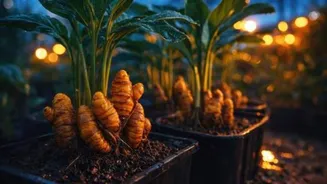
As the growing season concludes, plants that originated from single dahlia tubers will have multiplied, producing a cluster of new tubers. These are carefully unearthed in the autumn after the first frost and can be divided either before or after they are stored for winter. Dahlias perform best when grown from single stems, making annual division a beneficial practice. The new tubers typically form around the circumference of the original tuber and remain attached to the main stem. The critical 'eye,' or bud from which a new plant will grow, is located close to this main stem, which can make the division process seem a bit intricate. However, with a little practice, it becomes quite straightforward. To divide, select a single stem and dig a circle around it, about 1 to 1.5 feet away from the center, and to a depth of 6 to 12 inches, depending on the plant's height. Gently lift the plant and its attached tubers from the ground. Carefully locate the 'eye' on each individual tuber, which should be near the main stem. Using a sharp knife, precisely cut each tuber away, ensuring you keep the eye and a small section of the main stem intact. Remove the remaining tubers in the same manner, discarding the spent central stem. After division, place the separated tubers in a warm, shaded spot to allow them to dry slightly to the touch. Subsequently, pack them into containers, covering them with damp, but not wet, sphagnum moss or another suitable insulating material. Store these tubers in a dark, frost-free location, ideally maintaining a temperature around 45°F. Throughout the winter, periodically inspect them, discarding any tubers that show signs of rot, indicated by a black or mushy appearance. Some gardeners prefer to divide their dahlias in the spring when the swelling buds are more visible and easier to manage. In this case, you can cut back the main stem and store it along with the attached tubers using the same storage method described for divided tubers.