






A Leisurely Ascent
While India gears up for high-speed rail, a different kind of railway captivates travelers with its deliberate pace. The Nilgiri Mountain Railway, a true
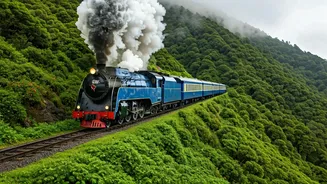
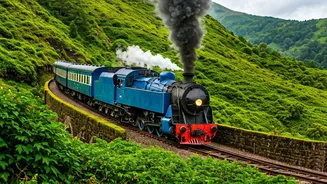
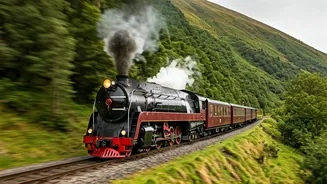
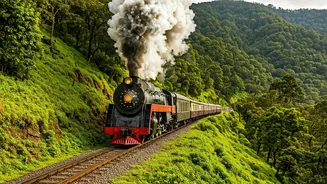
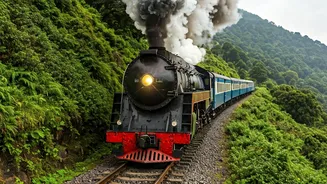
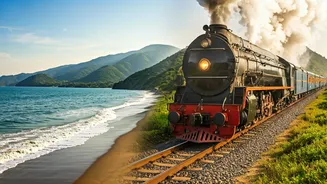
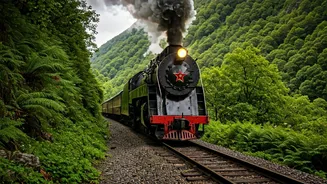
marvel of engineering, winds its way through the picturesque Nilgiri Hills. Its journey, often described as slower than a leisurely stroll, takes approximately five hours to cover a distance of just 46 kilometers between Mettupalayam and Ooty. This unhurried rhythm is precisely what transforms the commute into an immersive experience, allowing passengers to truly absorb the breathtaking scenery that unfolds outside their windows. The train's modest average speed of around 9 kilometers per hour is not a flaw but a feature, meticulously designed to navigate the challenging terrain of steep inclines and sharp turns, ensuring a safe and scenic passage through the heart of the mountains. This intentional slowness encourages a unique connection with the environment, making every moment of the journey a memorable spectacle.
Engineering Ingenuity
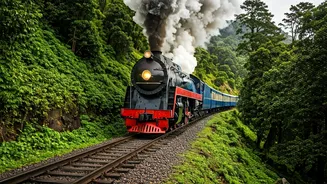
The slow speed of the Nilgiri Mountain Railway is a testament to its ingenious engineering, specifically adapted for the rugged mountain environment. Navigating gradients as steep as 1 in 12 and traversing numerous sharp curves, some with radii as tight as 11 meters, necessitates this deliberate pace. The railway employs a special rack-and-pinion system on its uphill stretches, a crucial mechanism that grips a toothed rail laid between the tracks, preventing the train from rolling backward and enabling it to ascend the formidable slopes. This intricate system, combined with the narrow gauge tracks designed exclusively for hill travel, ensures the train's stability and safety. The route is a visual feast, meticulously laid out to pass through approximately 16 tunnels, over 250 bridges, and around 200 curves, each element contributing to the train's slow yet steady progress through diverse landscapes, from dense forests to open tea estates.
UNESCO Heritage Status
Recognized for its outstanding universal value, the Nilgiri Mountain Railway is an integral part of the UNESCO World Heritage site, 'Mountain Railways of India.' This designation highlights its exceptional feat of engineering and its enduring significance as a representation of mountain railway construction from the early 1900s. The line has witnessed over a century of operation, consistently showcasing its ability to harmonize with the natural environment while providing a vital link through the Western Ghats. The railway's historical importance is matched by its cultural impact, famously featuring in the iconic song 'Chaiyya Chaiyya' from the film 'Dil Se.' This cinematic moment introduced the world to the romantic allure of train travel atop the Nilgiri range, further cementing its legendary status and drawing global attention to this unique heritage asset. It stands as a pristine example of colonial-era railway engineering adapted for challenging topography.
The Enduring Appeal
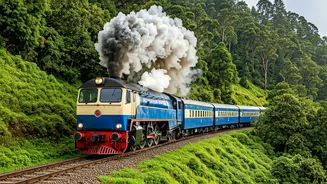
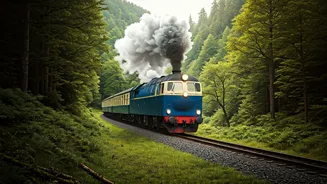
In an era dominated by rapid transit, the Nilgiri Mountain Railway continues to enchant travelers by offering an antithesis to modern life's haste. Despite quicker road alternatives to Ooty, many opt for the train solely for the immersive experience it provides. The journey offers a delightful blend of sweeping vistas of the Western Ghats, a chance to relax in vintage wooden coaches, and the charm of heritage travel. It's an escape into untouched landscapes, a nostalgic interlude that contrasts sharply with the daily rush. The preferred time to embark on this picturesque voyage is between October and June, when the weather is generally pleasant, offering clear mountain views. While the monsoon season (July to September) paints the hills in lush greens and dramatic mist, it can also bring heavy rainfall that might cause occasional delays, making the drier months ideal for a smooth and uninterrupted experience of this slow-travel marvel.