




The Functional Fitness Philosophy
Healthy aging is far more than just reaching a certain number; it's about cultivating self-love, embracing courage, and consistently choosing to honor
your body's unique journey. This proactive mindset has been the driving force behind Shenaz Treasury's father's enduring vitality. The actor and travel vlogger recently shared an inspiring account on Instagram, revealing that her 83-year-old dad has been her consistent workout partner since she was just 15 years old. She recalled a formative moment at 15 when her father, noticing her struggle to pedal a water bike back to shore, didn't hesitate to call her out for being out of shape. This direct feedback led to an immediate start in push-ups that very day, marking the inception of her own fitness regimen. They have been exercising together ever since, a testament to his unwavering commitment. Shenaz emphasizes that his current state of health isn't a matter of luck or genetic predisposition, but rather a result of a simple, yet profound, principle: he simply never stopped moving and training.
Everyday Movements, Elevated
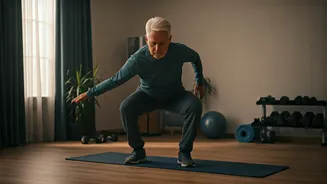
Functional exercises are essentially fundamental body movements that mirror our daily activities, often referred to as multi-joint exercises. Think about common actions: when we ascend stairs, we're performing a lunge; lifting a heavy object, like a sack of rice, from the floor emulates a deadlift; and carrying grocery bags to our car involves loaded carries. Varun Rattan, co-founder of The Body Science Academy, highlights that these exercises are incredibly effective for building strength and toning both the upper and lower body. Beyond just muscle development, they significantly enhance balance and coordination, making everyday tasks feel remarkably easier. The beauty of functional training lies in its direct applicability to real-life scenarios, directly improving one's ability to navigate the world with greater ease and confidence as they age.
Building a Foundation for Longevity
To ensure a healthier old age, the groundwork for fitness and well-being should ideally commence during one's 20s and 30s. Dr. Raghu Nagaraj, director at the Institute of Orthopaedics, Sports Medicine and Robotic Joint Replacement at Kauvery Hospitals in Bengaluru, advises that a well-structured routine in later years should meticulously prioritize three key components: strength training, mobility work, and controlled cardiovascular exercise. Strength training is paramount for preserving precious muscle mass and offering robust support to joint stability. Concurrently, mobility exercises are crucial for maintaining a healthy range of motion in the joints, thereby mitigating stiffness and preventing the onset of rigidity. Dr. Nagaraj stresses the importance of focusing on controlled movements that mimic functional patterns, all of which should be adequately supported by sufficient protein intake and dedicated recovery periods.
The Crucial Role of Protein
Protein remains an indispensable cornerstone for achieving healthy aging, according to fitness trainer Garima Goyal. Adequate protein consumption is vital for supporting muscle mass, bolstering immune function, and facilitating effective recovery processes. For individuals in their 80s, incorporating easily digestible protein sources such as lentils, paneer, yogurt, or fish (as tolerated by their system) can significantly contribute to maintaining strength and preserving functional independence. Goyal further suggests that pairing these protein-rich foods with fiber-rich vegetables and complex carbohydrates offers additional benefits. This combination aids in stabilizing energy levels throughout the day and helps to minimize post-meal fatigue, ensuring sustained vitality and well-being.