







The Sonic Barrage
The recent surge in pea whistle sounds across Tamil Nadu, amplified by both political celebrations and the Chennai Super Kings' 'whistle podu' chant, brings
to the forefront a persistent environmental concern in India: noise pollution. The sheer volume generated by thousands of these devices, reaching levels that can damage hearing, is comparable to the disruptive vuvuzelas of the 2010 World Cup. While these events might seem celebratory, they underscore a societal tolerance for noise that far exceeds acceptable limits. Data from the National Ambient Noise Monitoring Network (NANMN) reveals that over 80% of monitoring stations in 2019 exceeded prescribed noise limits, with Chennai's residential nighttime noise consistently breaching the 45-decibel threshold. This indicates a pervasive and largely unaddressed problem affecting public well-being.
Unseen Health Impacts
The detrimental effects of excessive noise extend far beyond mere annoyance, posing significant threats to public health. The World Health Organization links occupational noise to 16% of disabling hearing loss in adults, with an estimated 6.3 crore individuals in India experiencing some degree of hearing impairment. Studies in occupational settings show alarmingly high prevalence rates of hearing loss, ranging from 13% among construction workers in Puducherry to nearly 49% in industrial cohorts. Globally, noise is recognized as a major environmental factor contributing to lost healthy life years, second only to air pollution in Europe. In India, dense urban environments, less effective building acoustics, and lax enforcement exacerbate these issues, leading to disrupted sleep, elevated stress hormones, impaired cognition in children, and even endothelial dysfunction.
Regulatory Gaps
Despite the established health risks, India's approach to noise pollution control remains largely ineffective. The Noise Pollution (Regulation and Control) Rules of 2000, which stipulate zone-wise decibel limits and silence zones, are frequently ignored and rarely enforced. While the Central Pollution Control Board has recently proposed financial penalties, these measures often target issues where political considerations are less sensitive. Existing rules allow for exceptions for religious and cultural events, permitting nighttime loudspeaker use for a limited number of days annually. However, even within these permitted hours, public events routinely surpass decibel limits, with sound systems frequently set up in residential areas, near hospitals, and other sensitive locations, highlighting a significant gap between regulation and reality.
A Call for Change
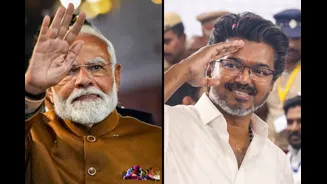
The pervasive tolerance for noise pollution in India contrasts sharply with the growing awareness of other environmental issues. While some progress has been made in addressing air pollution, noise often remains in the policy periphery. The emergence of C. Joseph Vijay and his party, Tamilaga Vettri Kazhagam (TVK), presents a unique opportunity for a paradigm shift. As a new political force, TVK has the potential to redefine public discourse and set new standards for public conduct, including noise management. The party's election symbol, the pea whistle, which has become synonymous with their victory celebrations, could paradoxically symbolize a new era of respect for public peace. By leveraging his current political capital, Mr. Vijay can advocate for noise mitigation, encouraging a society that balances celebration with the fundamental right to work, relax, and sleep undisturbed.