

The Roaring Twenties Bob
The 1920s ushered in a revolutionary era for women's hair, marked by the daring liberation of the bob cut. This departure from long, traditional styles
symbolized a newfound sense of freedom and independence, aligning perfectly with the energetic spirit of the Jazz Age. The sleek, often chin-length bob, frequently adorned with elegant finger waves, became the definitive look, signifying a bold break from the past and an embrace of modernity. It was a powerful visual statement that echoed the era's broader social and cultural transformations, resonating with women who sought to express their autonomy and individuality through their appearance.
Fifties Feminine Volume
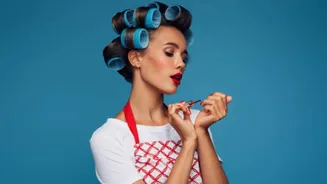
Moving into the 1950s, the prevailing aesthetic championed a more traditionally feminine allure, with voluminous and carefully coiffed hairstyles taking center stage. Soft, cascading curls, meticulously styled pin-up waves, and overall fuller silhouettes defined the era's glamour. Icons of the time, most notably Marilyn Monroe, epitomized this trend, presenting polished and perfectly sculpted hair as the ultimate expression of sophisticated womanhood. This period emphasized meticulous styling and an adherence to a refined, glamorous ideal, where hair played a crucial role in crafting a polished and alluring image.
Sixties Bold Extremes
The 1960s presented a striking dichotomy in hair trends, oscillating between dramatic volume and minimalist chic. On one end, the towering beehive and voluminous bouffant hairstyles reached audacious heights, representing a bold, attention-grabbing aesthetic. Contrasting sharply with this extravagance were the sharp, androgynous pixie cuts, famously popularized by supermodel Twiggy, which championed a more modern, streamlined, and youthful look. This decade showcased a fascinating duality, offering distinct choices that catered to different aspects of the era's evolving fashion and cultural identity.
Seventies Natural Flow
The 1970s embraced a more relaxed and natural approach to hairstyling, reflecting a widespread desire for a carefree and uninhibited lifestyle. This era celebrated natural textures and effortless beauty, moving away from the rigid styles of previous decades. Feathered layers, popularized by icons like Farrah Fawcett, and the ever-versatile shag cut became signature looks, embodying a free-spirited and bohemian vibe. The emphasis was on a more organic and lived-in appearance, perfectly capturing the decade's ethos of individuality and laid-back style.
Eighties Unapologetic Big
The 1980s were characterized by an unapologetically bold and amplified aesthetic, where hair was meant to be seen and felt. Bigger was unequivocally better, with perms, crimping techniques, and gravity-defying volume dominating the scene. This maximalist approach to hair was heavily influenced by pop culture and music icons, with artists like Madonna leading the charge. Their expressive and often extravagant hairstyles became aspirational, encouraging a generation to embrace vibrant, dynamic, and highly personalized looks that mirrored the decade's energetic and sometimes over-the-top spirit.
Noughties to Teens Versatility
The turn of the millennium into the 2000s and 2010s witnessed a significant shift towards greater versatility and personalization in hair trends. The early 2000s were marked by the sleek, ultra-straight look achieved with flat irons, a stark contrast to the effortless beach waves and subtly highlighted balayage techniques that gained prominence in the following decade. Celebrities, including Jennifer Aniston, played a pivotal role in popularizing these evolving styles, which allowed for a more customized and individualistic approach to hair, reflecting a growing appreciation for personal expression and adaptable beauty.