



Rocketry's Latest Leaps
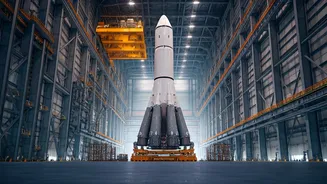
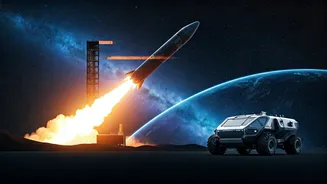
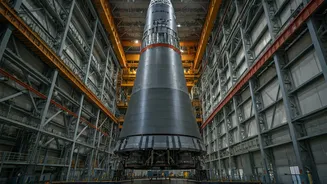
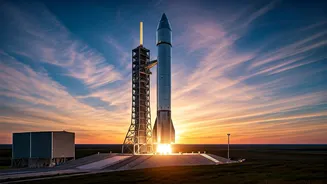
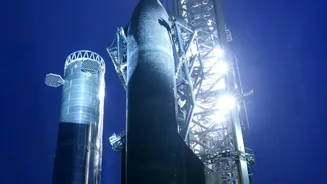
The field of rocketry is experiencing a period of intense development and testing. SpaceX has successfully conducted static fire tests on its massive 'V3'
Starship Super Heavy booster, a critical step towards its next major flight. Concurrently, the company launched its Falcon Heavy rocket after an 18-month hiatus and sent 45 Starlink satellites into orbit during a nighttime mission. Another significant launch involved SpaceX sending secret US spy satellites aloft from California. Furthermore, Astrobotic has achieved a milestone by successfully firing its next-generation 'rotating detonation rocket engine' in a record-breaking test, showcasing advancements in propulsion technology that could power future missions. These developments highlight a robust push forward in launch capabilities, essential for both scientific endeavors and commercial ventures in space.
ISS and Lunar Ambitions
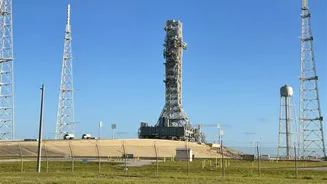
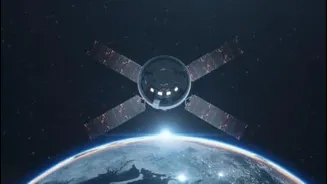
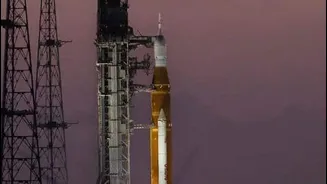
The International Space Station (ISS) continues to be a vital hub for research and operations, with a recent 'Cygnus XL' cargo ship delivering over 5 tons of essential supplies to its astronaut crew. Looking further afield, NASA's Artemis 3 rocket is steadily taking shape, with a projected 2027 launch aimed at testing lunar landers, marking a significant step in the return of humans to the Moon. Beyond government initiatives, private companies are also charting ambitious courses. Quantum Space has appointed former NASA chief Jim Bridenstine as its CEO, indicating a strong future for private space ventures. Meanwhile, Vast has secured $500 million to advance the development of its 'Haven' private space stations, hinting at a future where commercial outposts orbit Earth.
The AI and Orbit Debate
Artificial intelligence is profoundly impacting space exploration, significantly accelerating data analysis for telescopes like the James Webb Space Telescope, reducing tasks that once took years to mere days. This AI integration is also set to benefit groundbreaking observatories like the Rubin Observatory. However, the proliferation of artificial intelligence in space is not without controversy. Concerns are mounting regarding SpaceX's plan for a million orbiting AI data centers, with scientists arguing this could severely disrupt astronomical observations. This has led to protests from astronomers against large orbiting mirror projects and vast constellations of satellites. The potential for an AI cyberattack on satellites within the next two years also raises serious questions about preparedness and security in orbit.
Resource Management and Future Tech
The growing presence in space necessitates solutions for its long-term sustainability. Two companies are actively planning to commence space junk removal operations from orbit in 2027, addressing a critical environmental concern. Looking towards future infrastructure, Cowboy Space has raised $275 million to launch AI data centers on new rockets, and Star Catcher has secured $65 million to construct the world's first space-based power grid utilizing lasers. Technological innovation also extends to materials science, with a new, ultra-thin, and flexible material developed that could offer superior radiation shielding for next-generation space technology. These initiatives underscore a concerted effort to build, manage, and protect the future of the space economy.
Cosmic Mysteries and Probes
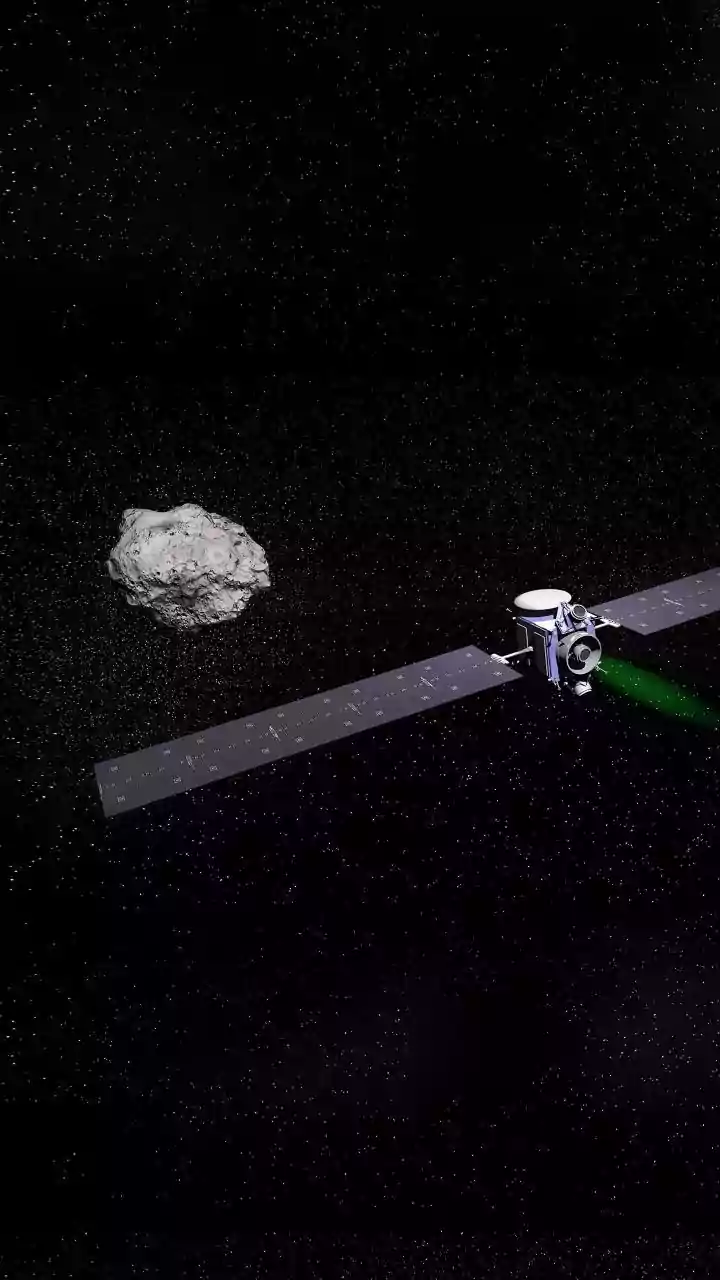
Beyond technological advancements, the exploration of space continues to unravel cosmic mysteries. The Rubin Observatory, potentially aided by AI, is poised to investigate the enigma of dark energy, possibly through the study of 'cannibal stars.' NASA's Psyche asteroid probe is on a trajectory that will bring it within 3,000 miles of Mars on May 15, offering a unique vantage point for observation. Looking at the broader celestial landscape, mesmerizing vortexes were captured swirling near an Antarctic volcano, a stunning space photo of the day. The Breakthrough Prize 2026, often called the 'Oscars of Science,' awarded over $18 million for significant discoveries spanning space, physics, and other scientific fields, recognizing the profound impact of these ongoing investigations.