






The Pink Arrival
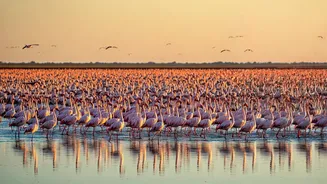
Each year, Maharashtra's coastal regions and wetlands are painted with the stunning hues of thousands of flamingos. These elegant migratory birds journey
from places like Gujarat's Rann of Kutch and Rajasthan's Sambhar Lake, typically arriving in Maharashtra from late October and remaining until early May. While the peak viewing period is usually from December to March, this year's spectacle extended, delighting visitors well into May. This natural wonder offers a unique opportunity for nature enthusiasts and photographers alike to observe these birds in their temporary habitat, drawn by the rich biodiversity and suitable conditions found in Maharashtra's wetland ecosystems. The presence of both Greater and Lesser flamingo varieties highlights the ecological significance of these areas.
Prime Viewing Times
To truly capture the essence of the flamingo migration, timing is crucial. The season generally spans from October through May, but for the most vibrant displays and active birds, the months between December and March are ideal. During this period, the weather in Maharashtra is pleasant, creating perfect conditions for both the flamingos and the visitors. For the best photographic opportunities and to witness the birds at their most active, tour operators consistently recommend planning your visit for sunrise or sunset. The soft, natural light during these times enhances the visual appeal of the pink plumage against the water and sky, making for truly memorable and stunning images.
Top Flamingo Hotspots
Maharashtra offers several prime locations to witness this avian spectacle. The Sewri Mudflats in Mumbai are a highly accessible and popular choice, serving as a vital feeding ground for numerous flamingos. Near Mumbai, the Navlakha Nature Preserve in Thane provides a more tranquil setting. While not dedicated sanctuaries, areas around the Bandra-Worli Sea Link and various points along Thane Creek also frequently host these birds, especially during high tide. Further afield, the Panje wetland near Uran and coastal regions in the Raigad District, including Alibaug and Murud-Janjira, are known for their significant flamingo populations, offering a more serene experience away from the urban bustle. These diverse locations cater to different preferences, from easily accessible urban spots to more secluded natural reserves.
Enhancing Your Experience
To make the most of your flamingo-spotting adventure, a few essential tips can elevate the experience. Carrying binoculars is highly recommended to observe the birds' intricate details without disturbing them. While professional camera equipment can capture stunning shots, even basic cameras or phone cameras can document the beautiful moments, especially given the sheer numbers of birds present. For those opting for guided tours, arriving at least 20 minutes before the scheduled departure is advised, and always wear the provided life jacket. It's crucial to maintain silence and follow the instructions of crew members and guides to ensure the birds are not agitated. Avoid loud noises and refrain from consuming food inside boats to preserve the natural environment and the birds' peace.
Responsible Wildlife Viewing
Witnessing the flamingos is a privilege that comes with the responsibility of protecting their fragile habitat. It is paramount for all visitors to maintain a respectful distance from the birds, avoiding any actions that could startle or disrupt their natural behavior. Feeding the flamingos is strictly prohibited, as it can negatively impact their health and feeding patterns. Visitors are encouraged to adhere to all guidelines provided by local authorities and tour operators, including signing self-declaration forms before boarding boats. By practicing responsible tourism, we contribute to the conservation efforts aimed at preserving these vital wetlands, ensuring that future generations can also marvel at this spectacular natural phenomenon and the rich biodiversity it represents.