


A CEO's Metro Journey
In a move that underscored the evolving landscape of urban transportation, Uber CEO Dara Khosrowshahi embarked on a journey aboard the Delhi Metro. Swapping
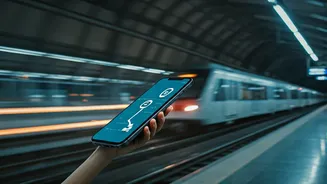
his usual executive transport for the city's public transit system, Khosrowshahi traveled from Central Secretariat to Jor Bagh. This firsthand experience allowed him to assess the efficiency and accessibility of the metro. His trip was documented and shared, offering a unique perspective from a leader in the ride-sharing industry on the value of public transportation. The choice to use the metro, even for a prominent figure, served as a powerful endorsement of its capabilities as a viable and practical mode of commuting within a bustling metropolis like Delhi. This initiative aligns with a broader vision of urban mobility that extends beyond single-occupancy vehicles.
Praise for Speed, Cost, Reliability
During his Delhi Metro excursion, Dara Khosrowshahi articulated his positive impressions, characterizing the experience as 'fast', 'affordable', and 'reliable'. These attributes are crucial for any public transportation system aiming to serve millions of daily commuters. The speed refers to the efficiency of the metro network in covering distances swiftly, minimizing travel time. Affordability speaks to the cost-effectiveness, making it accessible to a wide demographic. Reliability highlights the consistent and dependable nature of the service. Khosrowshahi emphasized that the future of mobility, as envisioned by Uber, encompasses a much broader spectrum than just cars, signaling a strategic shift towards integrating various transit solutions to provide a comprehensive travel experience for users.
Future of Seamless Mobility
Khosrowshahi articulated Uber's forward-thinking strategy, stating that the future of mobility involves making every mode of transportation seamlessly available through their app. This vision extends to incorporating two-wheelers, three-wheelers, autos, buses, and public transit into a single, user-friendly platform. This integration aims to reduce friction in travel planning and execution, offering unparalleled convenience. The Uber CEO pointed to ongoing public transit integrations in five Indian cities as a testament to this commitment. He expressed enthusiasm for expanding this 'public-private transit partnership model' globally, suggesting it as a blueprint for improving urban mobility worldwide. The goal is to create a holistic ecosystem where commuters can effortlessly access and combine different transport options.
Partnerships & Open Networks
Uber's strategic push for integrated mobility in India has seen significant traction, with over 10 million metro rides booked through the Uber app. This impressive figure underscores the user demand for multi-modal travel solutions. Khosrowshahi attributed a part of this success to the Open Network for Digital Commerce (ONDC), a decentralized digital infrastructure. The partnership with DMRC for metro ticketing on the Uber app, facilitated by ONDC, exemplifies how open networks can accelerate the scaling of such initiatives. Since 2025, this collaboration has enabled users to plan journeys, purchase QR-based tickets, and access real-time transit information directly within the Uber application, with UPI handling payments. This approach not only enhances user convenience but also fosters innovation through collaboration.