






A Glimpse into History
Bekal Fort, situated in the northernmost district of Kerala, Kasargod, stands as a prominent historical landmark approximately 65 kilometers from Mangalore.
Recognized as a special tourism spot by the Indian government since 1992, this 300-year-old fortress offers a captivating journey into the past. Its distinctive keyhole shape and strategic positioning provide a window into the eras of its former glory. Beyond its historical significance, the fort is embraced by serene natural surroundings, including a pristine beach and clear waters, making it a perfect destination for both history enthusiasts and nature lovers. The fort's ramparts and bastions whisper tales of centuries gone by, while its preservation makes it one of the largest and best-maintained forts in Kerala. It beautifully merges the allure of bygone times with the tranquility of nature, promising an experience filled with discovery and adventure.
Fortress of Strategic Design
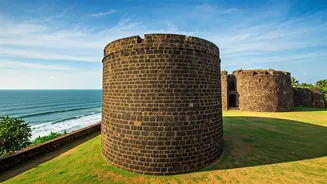
Constructed in the 17th century by Shivappa Nayaka of the Keladi Nayaka dynasty, Bekal Fort is a testament to ingenious military architecture. Its commanding presence over the Arabian Sea, standing 130 feet above the waves, highlights its historical role as a defensive stronghold. Approximately three-quarters of the 40-acre fort's perimeter is encircled by the sea, a natural defense that also offers unparalleled views. The fort is constructed from dark maroon laterite stones, lending it an imposing appearance. Its polygonal design and robust ramparts were crucial for repelling naval invasions. A notable feature is a solitary bastion that juts out into the sea, a striking symbol of its historical vigilance. The fort also includes an observation tower, reportedly added by Tipu Sultan, from which visitors can survey the surrounding towns and appreciate the fort's strategic surveillance capabilities. The architecture emphasizes functionality and defense, a hallmark of its military purpose.
Architectural Marvels Within
Within the expansive walls of Bekal Fort lie fascinating architectural elements that reveal its defensive prowess. The fort features serpentine tunnels, thought to have served as secret escape routes leading towards the water, adding an element of mystery to its design. The strategically placed holes in the outer walls are a prime example of its sophisticated defense system: higher openings were for long-range attacks, middle ones for closer threats, and lower ones for assailants at the base. The zigzag entrance was a clever design to impede enemy access. Small openings along the walls provided vantage points for archers. Unlike the ornate structures found elsewhere, Bekal Fort exhibits a solid, utilitarian architecture, prioritizing function over embellishment, similar to forts like Thalassery and St. Angelo. This practical approach to defense is a key characteristic of the fort's design, showcasing considerable military ingenuity.
Cultural and Natural Surroundings
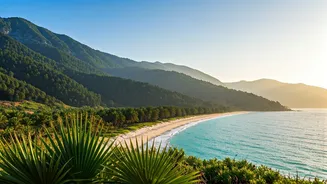
Bekal Fort is not only a historical monument but also a site of cultural and natural significance. Inside its walls, one can find the Anjaneya Temple, noted for its skilled masonry, and two Theyyam sculptures, crafted from the local laterite stone. An ancient mosque, believed to have been built by Tipu Sultan, and the aforementioned underground passages further enrich the site's historical depth. Adjacent to the fort, a rock garden constructed from laterite stone provides an interesting architectural display. The nearby Bekal Beach is a serene stretch of golden sand and gentle waves, perfect for relaxation. A walkway lined with newly planted trees enhances the beach experience. As evening approaches, the fort and its surroundings are illuminated, creating a magical ambiance. Historically, Bekal Fort has been a crucial stronghold for various dynasties, including the Kadampa, Kolathiri Rajas, Vijayanagar Empire, Tipu Sultan, and the British East India Company, underscoring its long-standing importance.