



What is a Blood Moon?
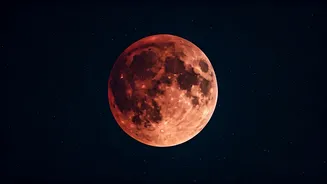
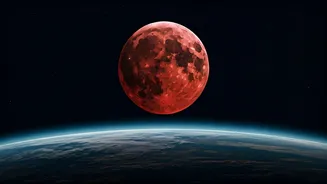
A total lunar eclipse, often referred to as a 'Blood Moon', occurs when the Sun, Earth, and Moon line up perfectly, with our planet positioned directly
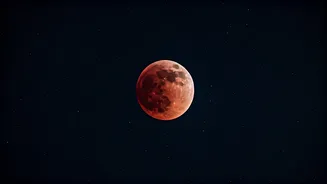
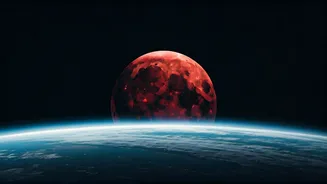
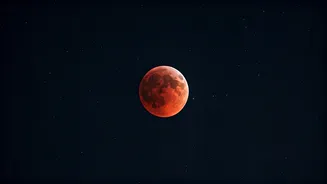
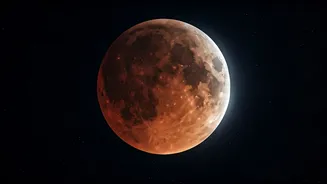
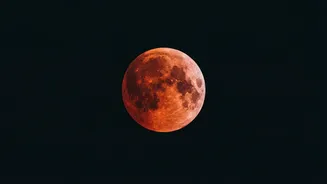
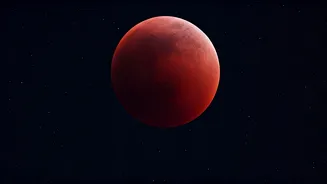
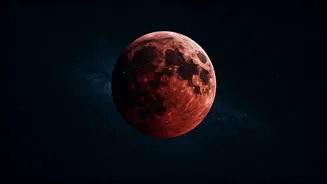
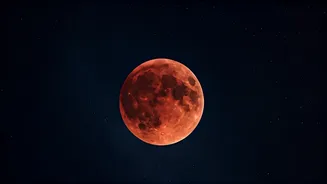
between the Sun and its natural satellite. During this alignment, Earth casts its shadow upon the Moon. The most intriguing part of this phenomenon is the Moon's potential transformation into a reddish or coppery hue. This striking color isn't a coincidence; it's a direct result of how sunlight interacts with Earth's atmosphere as it filters towards the Moon. While Earth blocks direct sunlight, some rays still manage to reach the Moon. These rays pass through our planet's atmosphere, which scatters shorter, blue wavelengths of light more effectively. The longer, redder wavelengths, however, are less dispersed and are bent towards the Moon, illuminating it with an eerie, reddish glow. This captivating visual effect is thoroughly explained by NASA's detailed descriptions and visualizations of lunar eclipses, underscoring the elegant geometry and atmospheric science at play.
Visibility: When and Where
The total lunar eclipse on March 3, 2026, promises to be a globally observable event, marking the sole total lunar eclipse of the year and the last until late 2028. Significant portions of Asia, Australia, North America, and even some parts of South America will have the opportunity to witness this astronomical marvel. The exact timing of the Moon entering Earth's shadow and reaching full totality will vary based on an observer's geographical location, creating a staggered viewing experience across different time zones. While Europe and Africa might have limited visibility depending on local moonrise and moonset times, the eclipse's path ensures a broad audience can partake in the spectacle. NASA's advanced eclipse visualizations and detailed maps are invaluable resources for skygazers, offering precise insights into how Earth's shadow traverses the lunar surface and pinpointing the optimal viewing zones for experiencing the transition from partial eclipse to the dramatic totality phase and back again.
The Red Hue Explained
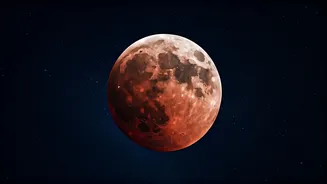
The mesmerizing crimson color of the Moon during a total lunar eclipse is a fascinating consequence of Earth's atmosphere acting like a cosmic lens. As sunlight journeys towards the Moon, it must pass through our planet's atmospheric layers. During this passage, the atmosphere preferentially scatters the shorter, bluer wavelengths of light, much like it does during a sunset or sunrise. Conversely, the longer, redder wavelengths are more resilient to scattering and are bent, or refracted, towards the Moon. This refracted red light is what ultimately illuminates the lunar surface, imbuing it with its characteristic 'Blood Moon' appearance. This same atmospheric phenomenon is responsible for the vibrant reds and oranges we often observe at dawn and dusk, where sunlight has to traverse a greater thickness of the atmosphere, intensifying the scattering of blue light and allowing red light to dominate our view. NASA's scientific explanations consistently align with this principle of atmospheric refraction and scattering of sunlight.
Viewing Your Eclipse
Gazing at a total lunar eclipse is a wonderfully accessible experience, requiring no specialized equipment. Unlike solar eclipses, which necessitate protective eyewear to prevent damage, a lunar eclipse can be viewed safely with the naked eye, allowing you to appreciate the entire event from the initial dimming of the Moon to the peak of totality and its gradual return to brightness. While binoculars or telescopes are not essential for observation, they can significantly enhance the viewing experience by revealing intricate details on the lunar surface, such as craters and maria, adding an extra layer of depth to your celestial observation. For the most rewarding viewing, it's advisable to select a location with minimal light pollution and a clear, unobstructed view of the night sky. Familiarizing yourself with the local eclipse timings and moonrise schedule will ensure you're ready to witness the Earth's shadow gracefully creep across the Moon. Arriving 30 to 60 minutes before the predicted totality allows you to observe the subtle, yet dramatic, progression of the eclipse unfolding.