


A Timeless Revival
Indian textiles are currently experiencing a significant renaissance, with designers breathing new life into time-honored weaves and regional prints. This
trend transcends mere nostalgia, reflecting a broader movement towards sustainable fashion practices. By reinterpreting traditional motifs with a contemporary flair, these heritage patterns are not just making a comeback but are actively shaping current fashion narratives, proving that tradition can indeed be exceedingly trendy and relevant for today's conscious consumer. The focus is on celebrating India's rich textile legacy while adapting it for a global audience that values both aesthetics and ethics.
Madras Checks Reimagined
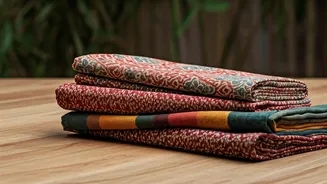
Once a go-to for breezy summer ensembles, the spirited Madras Checks are now making a strong return. These vividly colored plaids, traditionally a symbol of light and airy clothing, are being artfully incorporated into modern fashion. You'll find them adorning contemporary shirts, chic dresses, and stylish co-ord sets, all infused with a fresh, up-to-date sensibility. Designers are playing with scale, color combinations, and silhouettes to give these classic checks a distinctly modern edge, proving their versatility beyond casual wear and into more sophisticated fashion statements.
The Allure of Ajrakh
Characterized by its elaborate geometric designs and a distinctive palette dominated by deep indigos and rich reds, Ajrakh printing is currently a prominent trend. This ancient art form, known for its hand-block printing technique, is finding its place in both traditional ethnic wear and innovative fusion ensembles. Its intricate patterns offer a timeless appeal, bridging the gap between heritage craftsmanship and contemporary style. The deep, natural dyes used in Ajrakh further align with the growing demand for sustainable and ethically produced fashion.
Earthy Bagru Prints
Bagru prints, celebrated for their grounding earthy tones and the use of natural dyes, are experiencing a significant resurgence, particularly within the sustainable fashion movement. This traditional block-printing technique from Rajasthan produces visually appealing patterns that often draw inspiration from nature. The organic feel and inherent eco-friendliness of Bagru prints make them a popular choice for designers and consumers seeking environmentally conscious apparel. Their comeback signifies a growing appreciation for artisanal crafts and slow fashion.
Rustic Dabu Charm
Dabu printing, a resist-dyeing technique that utilizes mud to create textured patterns, is gaining traction for its unique rustic charm and organic aesthetic. This method, often resulting in subtle yet captivating designs, is becoming increasingly popular in minimalist and eco-conscious fashion circles. The nuanced appearance and environmentally friendly process of Dabu prints resonate with a consumer base that prioritizes mindful consumption and appreciates the subtle beauty of handcrafted textiles. Its revival highlights a preference for understated elegance and natural finishes.
Bold Ikat Statements
The striking, often blurred patterns of Ikat, created by pre-dyeing warp threads before weaving, are now making a bold impact across a wide spectrum of fashion. From elegant sarees that capture the essence of traditional craftsmanship to edgy contemporary streetwear, Ikat's distinctive visual appeal is undeniable. Its characteristic wavy or diffused edges add a dynamic quality to garments, making them stand out. This print's ability to be both dramatically impactful and subtly nuanced ensures its enduring popularity in modern wardrobes.
Kalamkari's Modern Canvas
Kalamkari, a free-hand drawing and block-printing technique that often features elaborate mythological motifs and narratives, is being ingeniously reinterpreted for modern fashion. Designers are moving beyond traditional garments to showcase Kalamkari on contemporary silhouettes such as stylish jackets and updated sarees. This artistic form, rich in cultural storytelling, is being adapted to suit a new generation of fashion enthusiasts, blending its historical depth with current stylistic preferences and demonstrating its versatility as a dynamic textile art.