








AI's COBOL Disruption
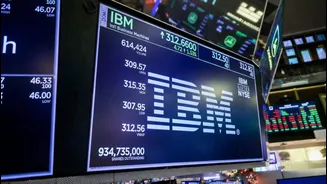
A groundbreaking development in artificial intelligence has sent shockwaves through the financial markets, severely impacting the share price of International
Business Machines Corp. (IBM). The catalyst for this significant decline was the announcement by AI startup Anthropic regarding its new Claude Code tool. This innovative AI solution is designed to assist in the modernization of COBOL, an older programming language that remains critical to numerous business operations, particularly those running on IBM's mainframe systems. Traditionally, updating COBOL systems involved extensive and time-consuming efforts, often requiring large teams of specialized consultants to meticulously map out complex operational workflows. Anthropic's announcement highlighted that tools like Claude Code possess the capability to automate substantial portions of this modernization process, specifically targeting the exploration and analysis phases which historically consume the bulk of the effort in COBOL system upgrades. This efficiency gain, while a technological leap, has raised considerable investor concerns about the future revenue streams and market position of companies heavily reliant on these legacy systems.
Stock Market Fallout
The direct consequence of Anthropic's COBOL modernization announcement was a dramatic sell-off of IBM's stock. Given that IBM is the primary provider of the mainframe computers that predominantly run COBOL applications, the news directly challenged the company's established business model. The steep drop in IBM's share price, which fell by as much as 13% during intraday trading on a particular Monday, marked its most severe single-day decline since March 2020. This sharp fall has placed IBM shares on a trajectory for potentially their largest monthly percentage decrease in nearly 60 years, with data compiled by Bloomberg indicating it could be the worst monthly performance since 1968. This investor reaction underscores a broader market anxiety concerning how rapid advancements in artificial intelligence could disrupt the growth prospects of veteran technology firms whose foundations are built on older, albeit still vital, technological infrastructure. The market's response signals a critical inflection point where AI's disruptive potential is directly confronting the stability of legacy enterprise solutions.
Legacy Systems at Risk
A substantial portion of IBM's ongoing business operations is intrinsically linked to its mainframe segment. These powerful, large-scale computing systems are the backbone for countless critical applications, many of which are still written in COBOL. This programming language, developed decades ago, predates most of the contemporary coding frameworks that dominate the current technological landscape. Despite its age, COBOL remains indispensable for institutions that prioritize extreme levels of stability, reliability, and security, such as major financial institutions and governmental agencies, which depend on the robust performance of mainframes for their core functions. The recent developments surrounding AI's ability to efficiently handle COBOL modernization present a significant challenge to this established reliance. The introduction of AI-driven solutions that can streamline the upkeep and transformation of these vital legacy systems raises questions about the long-term demand and pricing power for the very infrastructure that has been a cornerstone of IBM's success for years. This shift prompts a re-evaluation of the market's perception of risk and opportunity in the face of accelerating AI innovation.
Broader AI Impact
The market turbulence surrounding IBM is not an isolated incident but part of a wider trend affecting the technology sector, particularly software companies. This concern was further amplified when Anthropic introduced an enhanced security feature for its Claude AI model, which contributed to a general downturn across cybersecurity stocks. Across the board, software shares have faced significant headwinds throughout the year, largely fueled by escalating investor apprehension about the disruptive capabilities of artificial intelligence. A prominent exchange-traded fund focused on software stocks has experienced a decline of 27% year-to-date, putting it on track for its most significant quarterly drop since the financial crisis of 2008. This market pressure is largely attributed to the proliferation of new AI-driven tools from major players like Anthropic, OpenAI, and Alphabet Inc. The phenomenon of "vibe coding," or the use of AI to generate software code, is increasingly concerning investors, as it empowers individuals to develop their own applications more readily. Such a shift could potentially diminish the reliance on established software providers, thereby impacting their revenue growth trajectories, profit margins, and overall pricing leverage.