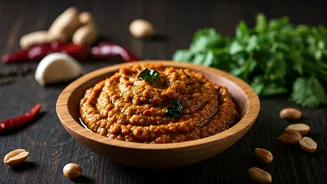

Chutney Essentials
To embark on your peanut chutney journey, gathering the right ingredients is the first step. You'll require roasted peanuts, the heart of the chutney,
and typically, a cup of them will do. Next comes the punch: green chilies, which offer the desired level of heat. Then, you'll need tamarind for a tangy flavor, garlic cloves for a savory kick, and ginger to enhance the aroma. A pinch of asafoetida, a common Indian spice, brings a unique depth, while mustard seeds will bring a lovely texture. Finally, you’ll need some fresh curry leaves, and salt to taste. These components combine to create the core flavors and textures that define an authentic peanut chutney.
Simple Chutney Prep
The preparation of this chutney is relatively straightforward, making it accessible for both beginner and experienced cooks. Firstly, dry roast your peanuts in a pan until their skins begin to loosen. Once cooled, rub the skins off to unveil the peanuts' rich flavor. Combine the roasted peanuts with the green chilies, tamarind, garlic, ginger, and a small quantity of water in a blender or food processor. Blend until you achieve a smooth or slightly coarse consistency, as preferred. Tempering adds a layer of depth. For this, heat a spoonful of oil in a small pan, add mustard seeds, and let them splutter. Add asafoetida and curry leaves, then pour the tempering over the chutney, and mix well.
Serving Suggestions
Peanut chutney is incredibly versatile when it comes to serving suggestions, making it a favorite accompaniment to many Indian dishes. It's a classic pairing with dosas and idlis, providing a delightful contrast in flavor and texture. Spread it generously over your dosa or serve it as a dipping sauce for the idli. Beyond South Indian staples, the chutney complements uttapam, vada, and even certain types of parathas. It can also be mixed with other chutneys or used as a spread for sandwiches or wraps. Its robust, savory flavor makes it a fantastic addition to almost any meal. Consider experimenting with it to discover your preferred combinations.
Adaptations and Variations
While the basic peanut chutney recipe is a classic, there's plenty of room to personalize it to your taste. For a spicier chutney, add more green chilies. Adjust the amount of tamarind for the desired level of tanginess. Some like to add a touch of coconut to the mix, which adds sweetness and creaminess. A few roasted red chilies can also be added, if you are looking for a deeper red color and more complex flavor. You can also explore different tempering techniques using other spices like cumin seeds or urad dal. If you enjoy a slightly sweeter chutney, try adding a small amount of jaggery to balance the flavors. Always taste and adjust the seasoning to suit your palate.
Health Benefits & Notes
Peanut chutney, apart from its delicious taste, brings certain health benefits. Peanuts are a good source of protein and healthy fats. However, it's wise to consume chutney in moderation due to its calorie content. Use fresh ingredients for the best taste, and adjust the spice level to your preference. If you're using fresh tamarind, soak it in warm water for a while to soften it and extract its pulp, which you can add to the chutney. For those with allergies, consider alternatives. Though it’s a relatively simple recipe, the quality of the ingredients directly affects the final taste. Properly roasted peanuts will result in the most flavorful chutney. If you are preparing a large batch, it can be stored in the refrigerator for a few days.