







AI's Shifting Landscape
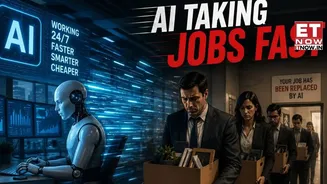
The rapid advancement of artificial intelligence is undeniably reshaping the professional world, sparking both excitement and apprehension about job security.
While AI excels at analytical and repetitive tasks, a recent study sheds light on the enduring value of distinctly human capabilities. According to research from US-based AI firm GoHumanize, released in May 2026, certain soft skills are poised to remain robust against automation over the next ten years. The report estimates that approximately 25% of current jobs could be automated. However, despite AI's growing proficiency in areas like coding and data analysis, the study emphasizes that machines still struggle with skills deeply rooted in human understanding, trust, judgment, and emotional awareness. This ongoing evolution necessitates a focus on cultivating these innate human strengths to navigate the future job market successfully.
Leadership: The Unshakeable Skill
At the forefront of future-proof abilities is leadership, a skill consistently identified as crucial by employers, scoring a remarkable 95 out of 100 in importance. While AI can automate around 31% of leadership-related tasks, the core essence of inspiring, conflict resolution, motivation, and nuanced decision-making in uncertain environments remains firmly in human hands. With a human dependency score of 93 out of 100, leadership relies heavily on emotional intelligence and situational awareness, aspects AI finds exceptionally difficult to replicate. Roles such as CEOs, principals, and senior executives depend on intricate interpersonal dynamics and the ability to foster a shared vision, capabilities that current AI systems cannot easily mimic. This makes leadership a cornerstone for continued relevance in the professional sphere.
Collaboration & Teamwork's Power
Following closely behind leadership, collaboration and teamwork rank as the second most indispensable skills, with teamwork appearing in nearly four million active job listings. Effective teamwork transcends mere task completion; it involves keenly observing subtle tensions, adapting to diverse communication styles, managing individual personalities, and cultivating sustained trust among colleagues. These complex social dynamics contribute to teamwork's high human dependency score of 79 out of 100. AI may facilitate coordination, but it cannot replicate the intuitive understanding, empathy, and relationship-building required for truly cohesive and productive teams. The ability to navigate these intricate human interactions ensures that collaborative roles remain vital.
Negotiation: Human Instinct Prevails
Negotiation emerges as the third most resilient skill against automation, with nearly 2.8 million job postings seeking professionals with this capability. While AI can undoubtedly aid in preparation, data analysis, and research, the study posits that machines will only automate about 47% of negotiation-related work. The remaining critical aspects demand human intuition, social intelligence, and the ability to interpret non-verbal cues like body language and tone. Building trust and responding adeptly to the emotional undercurrents of conversations are paramount in successful negotiation, earning this skill a robust human dependency score of 89 out of 100. The art of persuasion and finding common ground remains a profoundly human endeavor.
Coaching & Mentoring Depth
Coaching and mentoring are identified as among the least replaceable skills, crucial in fields like education, human resources, and sports. These roles require a deep understanding of individual challenges, encompassing both emotional and practical barriers. The GoHumanize study indicates that nearly two-thirds of coaching-related tasks are currently beyond AI's capabilities. Mentors often need to discern whether an individual's struggles stem from a lack of knowledge, confidence, motivation, or emotional support. This nuanced, human-centric judgment and tailored guidance are incredibly difficult for AI to replicate, underscoring the continued importance of these supportive roles.
Public Speaking's Impact
Rounding out the top five, public speaking demonstrates a remarkable 74% resistance to automation. The ability to deliver messages with conviction, confidence, and a palpable personal presence is something AI systems struggle to imitate effectively. Over 2.5 million active job postings highlight the demand for communication and public speaking prowess, underscoring the need for individuals who can captivate audiences and influence them in real-time. This skill relies heavily on human credibility, emotional connection, and the inherent charisma that resonates with listeners, making it a vital asset in professional communication.
Beyond the Top Five
Beyond the top five, the report highlights several other crucial human skills that are expected to remain highly valuable. These include organizational leadership, people management, emotional intelligence, interpersonal skills, and change management. These abilities collectively emphasize the importance of understanding and navigating complex human interactions, fostering positive environments, and driving organizational progress through human insight. As AI continues its trajectory, focusing on developing these deeply human competencies will be paramount for sustained career relevance and success across various industries.
Rethinking Education Priorities
The findings suggest a potential disconnect between current educational priorities and future career demands. The founder of GoHumanize pointed out that educational institutions may still be emphasizing STEM and analytical training, areas where automation is rapidly advancing. While technical expertise remains important, the study strongly advocates for a greater focus on developing communication, leadership, empathy, and critical decision-making abilities. Professionals who cultivate these distinctly human skills are likely to be better positioned to thrive and adapt in an economy increasingly shaped by artificial intelligence, ensuring long-term career security.