



Vacuum Hair Dryers
In the dawn of the 1900s, achieving dry hair was an elaborate affair, often involving contraptions that look more like industrial equipment than personal
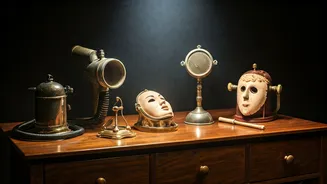
grooming tools. The 'vacuum hair dryer' was one such invention, essentially a repurposed vacuum cleaner. A hose attached to the device would draw air, which was then directed towards the user's wet hair. This method, however, was far from efficient or safe. The process required the individual to sit beneath a bulky, stationary machine, leading to uneven drying and often leaving hair more frizzy than styled. The lack of portability and inherent safety concerns made this an impractical and somewhat hazardous precursor to modern hair dryers.
Fire-Heated Curling Irons
Before the convenience of electricity, obtaining fashionable curls involved a more primitive and dangerous approach. Curling irons in the early 1900s were literally heated over open flames, typically on gas stoves or burners. This meant there was absolutely no control over the temperature. Stylists would manually wrap strands of hair around the scorching metal, a process fraught with peril. Frequent burns to the scalp and hands were common, along with significant hair damage from the uncontrolled heat. In some instances, these makeshift styling tools even posed fire hazards, showcasing a stark contrast to today's safe and adjustable hair tools.
The Chin Beautifier
Among the most peculiar beauty inventions of the early 1900s was the 'chin beautifier,' a device designed to aggressively reshape the facial structure. This apparatus was typically strapped around the head and chin, aiming to create a slimmer jawline, reduce the appearance of a double chin, and enhance overall facial contours. The mechanism relied on constant pressure and compression, which proponents believed could alter the shape of the chin over time. This was sometimes complemented by facial taping. However, this method did not address fat reduction and essentially treated the face like malleable material, making it a truly bizarre and invasive beauty treatment.
The Dimple Maker
The allure of dimples, often seen as charming facial features, led to the invention of specific gadgets to create them. Isabella Gilbert, an American inventor, developed a spring-loaded cheek press designed for women aspiring to have permanent dimples. This device applied pressure to the cheeks in an attempt to imprint these desirable indentations. While it tapped into a popular aesthetic desire, its effectiveness was highly questionable. Following its creation, various other pressure-based devices emerged, but most were found to carry significant health risks, making the pursuit of dimples a potentially hazardous endeavor.
Permanent Wave Machines
Achieving long-lasting curls, or perms, in the early 20th century was a laborious and often uncomfortable process involving a 'permanent wave machine.' This device resembled a chandelier with heated metal rods suspended over the head, and users would sit under it for extended periods. The machine used a combination of intense heat and chemicals to restructure the hair, creating enduring waves and curls. These sessions could last for over six hours, and the risk of severe burns to the scalp and significant hair damage was extremely high. The overall appearance and experience were often likened to medieval torture devices, highlighting the extreme lengths people went to for fashionable hairstyles.