



Recognizing the Nest
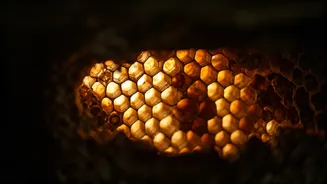
Honey bee nests are intricate structures primarily built from beeswax, forming a honeycomb with hexagonal cells. These cells serve vital functions, storing
honey and pollen, and nurturing developing bee larvae. While the honeycomb itself is the core, the nest might be concealed within cavities like walls or attics, making direct visual identification difficult. In such instances, the only outward indication could be a consistent stream of bees entering and exiting a small opening in your home's exterior. It's important to differentiate these natural structures from man-made hives used in beekeeping; nests are the wild, self-constructed dwellings bees create.
Common Warning Signs
Early detection of a honey bee nest relies on observing consistent, albeit subtle, indicators. A primary sign is the perpetual movement of bees to and from a specific location, suggesting an established colony. You might also detect a persistent, low buzzing sound emanating from within walls, ceilings, or roofs, indicating a growing population. Pay attention to increased bee activity around small openings, cracks, or vents, as these are common entry points. Additionally, look for unusual sticky stains or patches on surfaces, which can be signs of wax or honey leakage. A sudden, noticeable surge in the number of bees around your property is another strong indicator that a nest might be nearby.
Preferred Nesting Sites
Honey bees seek out secure, sheltered locations to establish their colonies. Around human dwellings, they often favor enclosed and protected spaces. Common areas include voids within walls, the hidden expanses of attics and roof spaces, and even disused chimneys. Outbuildings like sheds and garages also present attractive nesting opportunities. Furthermore, trees with natural hollows situated close to homes can become nesting sites. The remarkable ability of bees to exploit even the smallest openings means that a crack in a wall or a gap in the roof can be enough for them to initiate nest construction.
Nest Construction Process
The architecture of a honey bee nest is a marvel of natural engineering, driven by the colony's collective effort. Worker bees are equipped with specialized glands that produce beeswax. They meticulously shape this wax into precise hexagonal cells, forming the honeycomb. This structured arrangement isn't just for efficiency; it's functional. The uppermost sections of the comb are dedicated to honey storage, providing sustenance. The middle regions are utilized for pollen reserves, a crucial protein source. The lower parts of the nest serve as nurseries, where young bees, or brood, are developed and protected. This organized division of labor and space is fundamental to the colony's survival and growth.
Why Homes Appeal
Bees don't haphazardly choose their nesting sites; their selections are strategic and driven by specific environmental advantages. Homes often provide excellent protection from the elements, shielding the colony from harsh rain and strong winds. The stable construction of buildings also tends to maintain a more consistent internal temperature, creating a comfortable microclimate for the bees, which is crucial for brood development. Furthermore, the often quiet and undisturbed nature of cavities within homes offers a safe haven from predators and disturbances. The proximity of gardens and flowering plants around residential areas also ensures a readily available food source, making homes an ideal, albeit often unintended, nesting location for honey bee colonies.
Safety and Professional Help
Encountering a honey bee nest near your home necessitates a cautious approach. Honey bees are generally docile unless their nest is perceived as threatened, at which point they may exhibit defensive behavior. Potential risks include bee stings, especially if the nest is located in a high-traffic area. Individuals with bee venom allergies could face severe reactions. Over time, accumulating honey and wax can potentially damage building structures, leading to costly repairs. Moreover, the presence of a nest can inadvertently attract other nuisance insects. Therefore, it is strongly advised not to attempt to remove or disturb the nest yourself. The safest course of action is to maintain a safe distance and contact trained professionals or experienced beekeepers who possess the necessary expertise and equipment to safely relocate or remove the colony.