






Decentralized Catering System
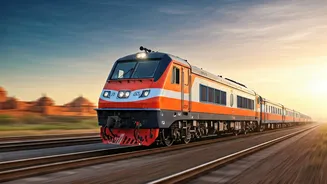
In the 1990s, the management of food services on Indian Railways was a decentralized affair, with each railway zone operating its catering independently.
Unlike today's unified approach, there wasn't a single, overarching system dictating menus or standards across the entire network. This meant that the food experience could vary significantly depending on the region you were traveling through and the specific zone responsible for that section of the route. Services were provided through a combination of onboard pantry cars, refreshment rooms situated at major railway stations, and sometimes outsourced to private contractors for managing food on busier train lines. This multi-pronged, decentralized approach contributed to a diverse, albeit less standardized, culinary offering for passengers during that period.
Classic Meal Presentation
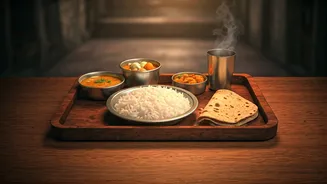
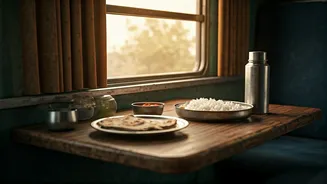
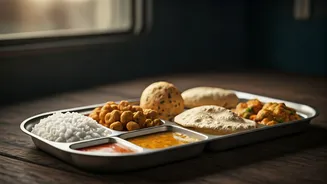
Train dining in the 1990s was characterized by its practical and durable approach to serving food. Meals were typically presented on sturdy steel trays or melamine plates, items known for their resilience and ability to withstand the rigors of train travel without breaking. Beverages, most notably tea, were served in thick glass tumblers that retained heat for extended periods, making them ideal for longer journeys. This choice of tableware not only ensured longevity but also contributed to the tactile experience of eating on a train. The aroma of food being prepared in the pantry car often wafted through the coaches, becoming an integral part of the sensory journey for many travelers, signaling the arrival of their next meal.
Hearty Vegetarian Staples
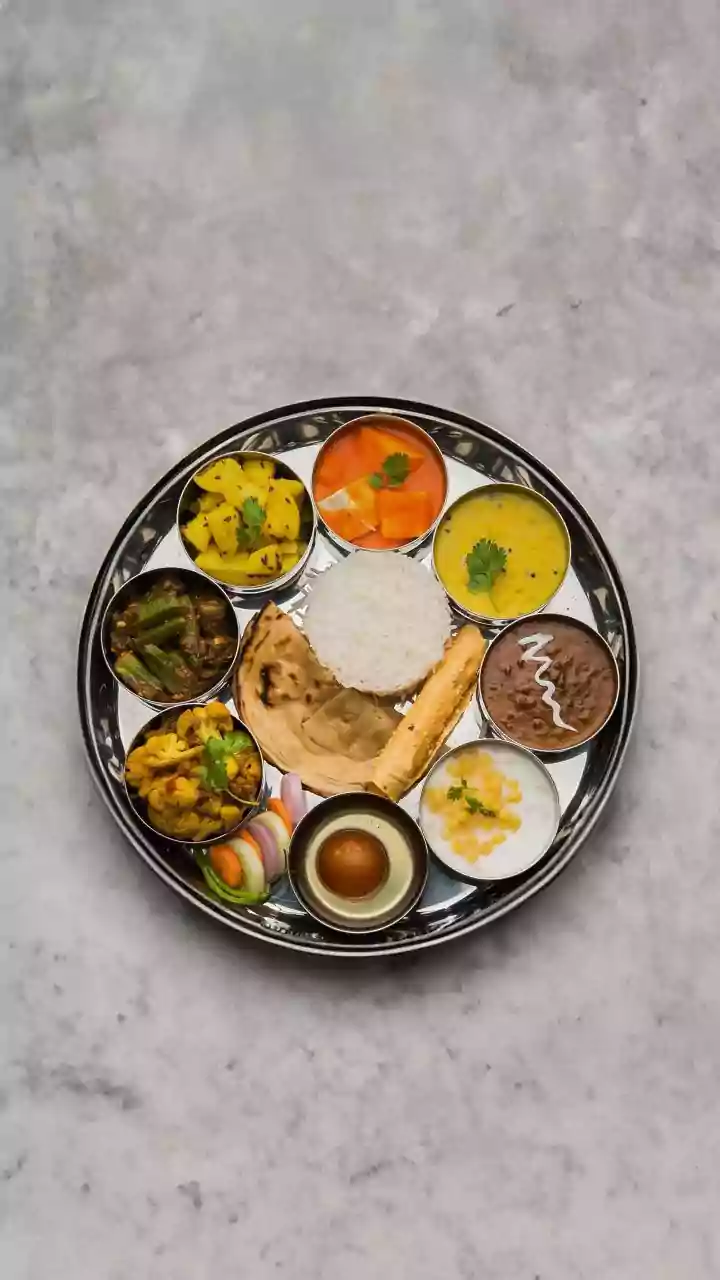
The cornerstone of Indian Railways' vegetarian menu in the 1990s was the humble thali. Passengers could generally expect a wholesome meal comprising rice or chapatis, a bowl of plain yellow dal, and a side of vegetable curry, often featuring popular choices like aloo gobi or beans. A small portion of pickle was usually included to add a tangy contrast. These dishes were specifically chosen for their suitability for travel, as they held up well and could be easily reheated in the pantry cars, even while the train was in motion. For extended journeys, rice-based preparations such as vegetable pulao or khichdi were also common, offering a comforting, filling, and easily prepared meal option for travelers.
Regional Breakfast Delights
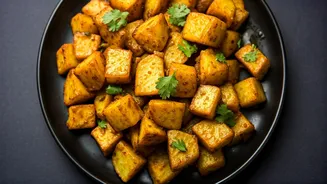
A distinctive and much-loved feature of train travel in the 1990s was the regional variation in breakfast offerings. The specific breakfast served often reflected the geographical location of the train's route. Travelers journeying through northern parts of India might have been treated to aloo parathas served with curd, a hearty start to the day. Down south, morning meals typically consisted of South Indian staples like idli, upma, or pongal. Regardless of the specific zone or region, bread and butter were almost universally available as a reliable breakfast option for those who preferred a simpler choice or for passengers with different culinary preferences.
Exciting Station Snack Stops
The experience of buying snacks from vendors at railway stations was a cherished ritual for many travelers in the 1990s. At smaller halts, vendors would move through the train carriages, vociferously offering an array of crispy delights such as samosas, kachoris, cutlets, and sandwiches. Larger railway junctions provided a more substantial opportunity for passengers to lean out of their windows during brief stops and purchase piping hot pakoras or vadas, often wrapped in newspaper. These quick, often slightly messy, yet incredibly satisfying purchases from station hawkers were a highlight of the journey, offering a burst of flavor and a welcome break from onboard meals.
Non-Vegetarian Choices
While vegetarian options dominated, non-vegetarian dishes were also available, though typically with less variety. Omelettes were a common sight on breakfast menus, offering a protein-rich start to the day. For longer train journeys, passengers might have found egg curry served alongside rice or rotis. If pantry car facilities permitted, a simple chicken curry could sometimes be found on the menu. Certain routes with better equipped kitchens might even have offered chicken biryani. However, mutton-based dishes were less frequently served directly on trains and were more commonly found at station canteens or refreshment rooms.
Sweet Endings
The dessert offerings on Indian Railways in the 1990s were characterized by their comforting simplicity and familiar sweetness. Popular choices included soan papdi, a flaky confection, and gulab jamun, typically served from syrup-filled tins, offering a syrupy, melt-in-your-mouth experience. Besan laddoos, sweet balls made from gram flour and ghee, were also frequently available. Many passengers supplemented these with biscuits they brought from home or shared with fellow travelers. Additionally, fruit vendors were a common presence at major stations, particularly selling seasonal fruits like bananas and oranges, providing a healthy and refreshing end to a meal or a snack on the go.
Hydration Solutions
Access to drinking water on Indian trains in the 1990s differed significantly from today's readily available bottled water. Branded bottled water was not yet a ubiquitous offering; finding it typically required purchasing from larger, well-equipped stations. The common practice for most passengers was to carry their own insulated flasks filled with water or to refill their bottles from taps available on station platforms. The concept of a standardized, nationwide railway brand for drinking water was still a future development. This reliance on personal flasks and platform taps underscored a more self-sufficient approach to hydration during train journeys back then.