



Luxury Boom Fades
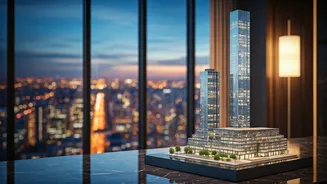
The Indian property market, particularly in Mumbai, experienced a significant pivot towards luxury residences in the years following the COVID-19 pandemic.
This trend saw builders actively phasing out the construction of smaller, more affordable apartments like 1BHKs. For instance, new launches of 1BHK apartments in Mumbai saw a dramatic decrease of nearly 50% in 2025, plummeting to approximately 9,786 units. This is a stark contrast to previous years where the annual average typically hovered around 20,000 units. This strategic shift by developers was driven by several factors, including the perceived higher profit margins associated with larger homes and a perceived surge in demand from individuals benefiting from stock market gains and successful startup ventures, who were keen on acquiring more spacious living environments.
Builder's Margin Play
Post-pandemic, developers in Mumbai found it more financially advantageous to concentrate on constructing larger apartments, such as 2BHK, 3BHK, and even 4BHK units. These bigger dwellings not only appealed to a segment of the market flush with post-pandemic capital but also offered builders a healthier profit margin compared to the often-tight margins of 1BHK projects. Consequently, the average price for a new apartment in Mumbai escalated to around ₹3 crore, making compact and budget-friendly housing options increasingly inaccessible, especially in the city's prime locations. This economic rationale led to a deliberate sidelining of smaller housing formats that historically served as the bedrock for middle-class homeownership in the bustling metropolis.
Middle Class Forgotten?
Property analyst Vishal Bhargava observes a significant flip in buyer preferences post-COVID, with a pronounced tilt towards more expansive living spaces. Developers readily adapted to this demand, consequently marginalizing the smaller apartment configurations that once constituted the primary housing stock for the middle class. However, as sales momentum decelerates and affordability concerns intensify approaching 2026, Bhargava posits that the market is poised for a recalibration. He suggests that Mumbai, which has seemingly overlooked its middle-class populace, may soon need to re-engage with this vital demographic. The reality on the ground supports this sentiment; in central Mumbai, finding genuine 1BHK apartments priced below ₹1 crore has become exceedingly rare, typically relegated to distant suburbs or far-flung areas. Some anecdotal evidence suggests that what was once a modest 450 sq ft carpet area for a 1BHK has been re-marketed as a 2BHK within the same constrained footprint.
Buyer Frustration Mounts
The increasing cost and diminishing size of even basic housing have sparked considerable public outcry and frustration, widely shared across social media. Many Mumbai residents express dismay, with one user bluntly stating, "Mumbai is nothing more than a slum for 99 per cent of the citizens." Others highlight the steep price escalation, noting that 2BHK units in areas like Bhayandar now command prices starting from ₹1.3-1.5 crore, a significant jump in just a couple of years. While some argue that the current middle class aspires to 2BHK or 3BHK units, viewing 1BHKs as entry-level, the prevailing sentiment remains that purchasing power has not kept pace with escalating property values. The market appears predominantly geared towards high-end buyers. Concerns also surface regarding potential builder collusion and the impact of government levies on overall costs, though the fundamental issue remains a scarcity of affordable housing inventory.
Wider Market Trends
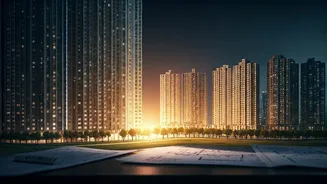
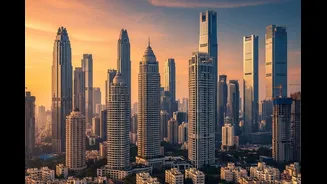
The challenges faced by Mumbai's property market are not isolated; similar concerns about a scarcity of smaller, affordable homes are echoing in other major Indian cities such as Pune, Hyderabad, and Bengaluru. Beyond government housing schemes, the availability of compact, budget-friendly residences in these urban centers feels increasingly limited. As the overall real estate market experiences a cooling effect, a critical question arises: Will property prices adjust sufficiently to provide breathing room for the middle class, or will developers continue to prioritize the lucrative luxury segment, treating compact homes as a secondary consideration? While Mumbai's skyline continues to be dominated by taller, more expensive constructions, the data suggests a growing divide between the city's aspirations and the financial realities for the salaried professionals and long-term residents who are its backbone.