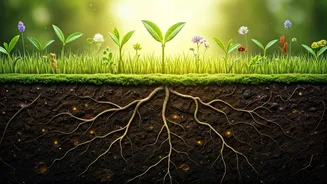







Foundations of Regenerative Farming
Regenerative agriculture is a holistic farming philosophy centered on enhancing the environment, rather than simply sustaining it. It emphasizes practices
that actively rebuild soil organic matter, foster biodiversity, and improve water cycles. Unlike conventional farming, which often depletes resources, regenerative methods aim to enrich the land with every harvest. Pioneering figures like Sir Albert Howard recognized the direct link between soil vitality and human health, advocating for farming practices that mimic natural forest ecosystems, maintaining soil humus and moisture, and leveraging beneficial mycorrhizal fungi. The Rodale Institute, a long-standing research center, has been instrumental in advancing these concepts, with J.I. Rodale popularizing the term 'organic' and his son, Robert, coining 'regenerative organic agriculture.' These approaches prioritize closed nutrient loops, increased biological diversity, a shift towards perennial crops, and a reduced reliance on external inputs, ultimately leading to higher yields and greater resilience against environmental instability.
Core Practices for Soil Revival
At the heart of regenerative agriculture lie several key practices designed to revitalize the soil and the broader ecosystem. No-till or reduced tillage methods are crucial for preserving soil structure and the delicate microbial communities beneath the surface. Cover cropping involves planting specific crops between main harvests to protect the soil from erosion, suppress weeds, and enrich it with essential nutrients. Crop rotation and increased plant diversity are vital for breaking pest cycles, improving soil health, and enhancing nutrient availability. Composting and the use of organic inputs serve as natural fertilizers, boosting soil biology and nutrient density. Furthermore, integrating livestock through managed rotational or holistic grazing patterns can significantly enhance soil fertility and promote a balanced ecosystem. Agroforestry, which combines trees and shrubs with crop and animal farming, diversifies income streams, enhances biodiversity, and improves carbon sequestration. Practices like silvopasture (integrating trees with livestock) and alley cropping (planting crops between tree rows) are gaining traction for their environmental and economic benefits.
Beyond Organic: A Deeper Restoration
While organic farming focuses on avoiding synthetic chemicals and minimizing toxins, regenerative agriculture takes a more active role in ecosystem restoration. Organic practices provide a solid foundation by eliminating harmful pesticides, fertilizers, and GMOs, thereby improving food safety and reducing environmental impact. However, many organic systems still rely on annual crops, which can be disruptive to soil structure, and may require significant off-farm inputs, making them less of a closed-loop system. Permaculture, another related philosophy, emphasizes creating permanent agricultural systems using perennial crops and mimicking natural processes to build soil fertility with less effort over time. Regenerative agriculture incorporates elements of both organic and permaculture principles but goes further by aiming to improve the soil with every cycle, enhancing plant, soil, and animal health year after year. It views farming not just as food production, but as an opportunity to create a better world by improving resources rather than depleting them.
Carbon Sequestration and Climate Impact
One of the most significant contributions of regenerative agriculture is its potential to combat climate change by sequestering carbon in the soil. Healthy, biologically active soil acts as a carbon sink, drawing down atmospheric carbon dioxide levels. Research from institutions like the Rodale Institute suggests that shifting global cropland to regenerative methods could capture a substantial portion of annual emissions. For instance, converting all available cropland to regenerative organic agriculture could sequester up to 40 percent of annual emissions, and adding pastures to this model could increase sequestration to 71 percent. This process requires no new technology, is cost-effective, and offers the dual benefit of reducing the need for harmful agricultural chemicals. Practices such as crop rotation, composting, residual mulching, cover cropping, and conservation tillage all play a role in promoting healthier carbon levels in the soil, offering a powerful tool for reversing global warming and creating a more breathable atmosphere.
Benefits for Planet and People
The advantages of regenerative agriculture extend far beyond soil health, impacting both the environment and human well-being. By enhancing soil organic matter and supporting beneficial microbes, it significantly improves nutrient cycling and the soil's capacity to retain water, making farms more resilient to drought and reducing runoff. This practice actively encourages diverse ecosystems, supporting essential pollinators and beneficial insects, thereby boosting overall biodiversity. Emerging research also suggests that regeneratively grown foods may have higher levels of certain vital nutrients, contributing to improved human health. Furthermore, regenerative farming fosters a more sustainable and balanced food system that can potentially feed the world more nutritiously and equitably. Practices like holistic planned grazing, which considers plant recovery times and the needs of various species, exemplify how livestock management can be harmonized with ecological goals, promoting both biodiversity and a healthier atmosphere.