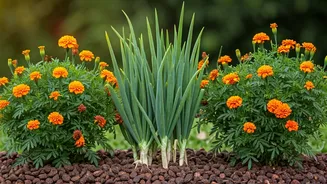








The Natural Approach
Managing a garden often involves considering various challenges, and one of the most common concerns is unwanted wildlife. The presence of snakes can be
a source of unease for many homeowners. Instead of reaching for synthetic repellents, which can be harmful to the environment and other beneficial garden inhabitants, it's wise to consider natural solutions. One of the most effective and eco-friendly strategies involves incorporating specific plants into your garden design. These plants are known to deter snakes, providing a natural barrier without the use of harsh chemicals. They work through various mechanisms, including emitting scents that snakes dislike, or having physical characteristics that make an area less appealing to them. This method not only keeps snakes away but also promotes a healthier, more balanced ecosystem in your outdoor space, fostering a garden that is safe and thriving.
Marigold's Defensive Role
Marigolds are a widely recognized choice for natural pest control, known for their vibrant colors and ease of growth. These annuals are not only visually appealing but also release a potent scent that many snakes find repulsive. The specific compounds in marigolds are often cited as the reason for this effect. Planting marigolds around the perimeter of your garden, near walkways, or around areas where snakes might be likely to enter is a popular strategy. The strong aroma emitted by marigolds can help create a natural barrier, discouraging snakes from venturing into your yard. Furthermore, marigolds are relatively low-maintenance, requiring only basic care to thrive. This makes them an accessible option for gardeners of all levels. Marigolds’ ability to repel snakes, coupled with their aesthetic appeal, makes them a valuable addition to any garden looking to promote a safer and more beautiful outdoor environment.
The Allium Family's Power
The allium family, which includes onions, garlic, and chives, has a powerful effect in the garden. These plants contain sulfur compounds that emit a strong odor. The smell is often quite appealing to humans, but snakes find it very unappealing. Planting these aromatic plants around the garden can act as a natural deterrent, creating a less hospitable environment for snakes. Consider planting them in various locations, like along garden borders or near entry points. Moreover, these plants are also beneficial for culinary purposes, allowing you to harvest fresh herbs and vegetables while simultaneously discouraging unwanted garden visitors. Their dual functionality makes them a versatile and practical choice for home gardens, providing both aesthetic and practical benefits. Cultivating alliums can bring an added layer of security, creating a safer space for families and pets, while improving the biodiversity and function of the garden.
Lemongrass's Scent Barrier
Lemongrass is highly valued for its distinct citrusy aroma, which is frequently used in cooking and aromatherapy. Beyond its culinary uses, lemongrass possesses natural pest-repelling qualities, specifically against snakes. The plant's strong scent comes from the essential oils it contains. These oils effectively discourage snakes from entering the area. Planting lemongrass around your garden or near areas where you want to maintain a snake-free zone can serve as a natural repellent. Lemongrass is relatively easy to grow and maintain, requiring ample sunlight and well-drained soil. It's a great choice for both its aesthetic appeal and its practical function in pest control. As you cultivate lemongrass, you not only beautify your garden but also implement a natural barrier against snakes. Its robust growth habit makes it an ideal choice for creating a healthier, safer outdoor environment.
Snake Plant's Tough Defense
The snake plant, also known as Sansevieria trifasciata, is very distinctive due to its upright, pointed leaves, and resilience. This plant has a very practical side, acting as a natural deterrent to snakes. While its exact mechanism isn't fully understood, the snake plant's physical structure and the compounds it emits are thought to repel snakes. Snakes may avoid areas planted with snake plants. Snake plants are also highly adaptable, making them easy to care for both indoors and outdoors. They thrive in a variety of conditions, including low-light environments. Using the snake plant in your garden is an effective, low-effort approach to creating a safer outdoor space. Its versatility, combined with its snake-repelling properties, makes it a valuable addition to any garden design. It supports a healthy garden environment, minimizing unwanted encounters with snakes.









![[WATCH] T20 World Cup 2026: Gautam Gambhir hosts dinner for Team India players ahead of Namibia clash](https://g-mob.glance-cdn.com/public/fc/image/7gXS1xdhs5Q0.webp)