







Bridging the Connectivity Divide
Amazon's strategic move to acquire Globalstar, a company already known for powering services like Apple's Emergency SOS, marks a significant expansion
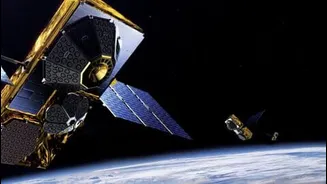
into the satellite internet arena. This acquisition, valued at approximately $11.57 billion, grants Amazon control over Globalstar's established satellite network, comprising about 24 low-Earth orbit (LEO) satellites. This network will now operate in tandem with Amazon's own extensive fleet, projected to exceed 200 satellites. The primary objective is to leverage Globalstar's existing infrastructure and, crucially, its global spectrum licenses. This integration is foundational for Amazon's forthcoming direct-to-device (D2D) satellite service, slated to launch in 2028. The vision, as articulated by Amazon's Panos Panay, is to deliver a more robust and dependable service across a wider geographical range, ensuring users remain connected to what matters most, even in areas where traditional cellular coverage is absent. This deal positions Amazon to compete more directly with established players like Elon Musk's Starlink, enhancing its capabilities in providing essential communication services to previously underserved populations and industries.
Understanding D2D Satellite Technology
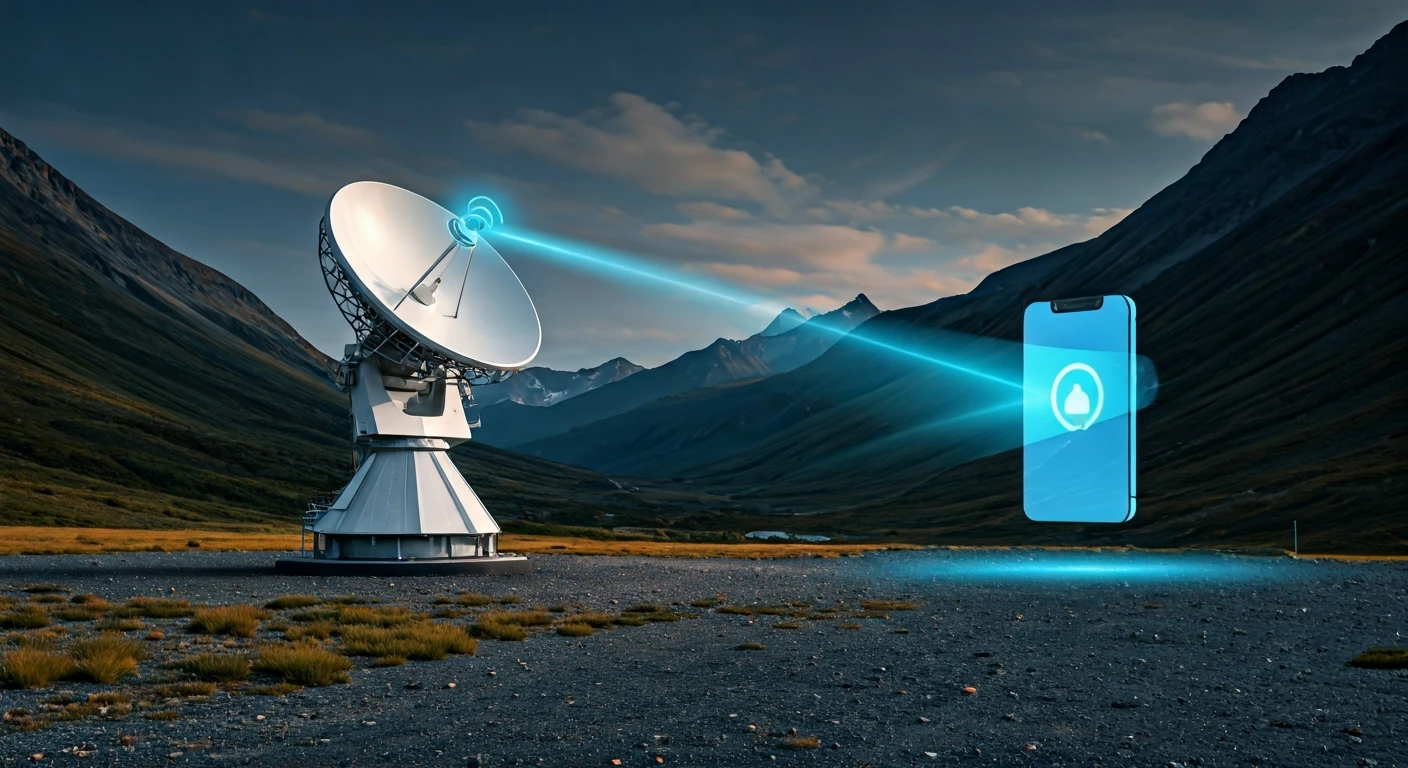
Direct-to-device (D2D) satellite connectivity represents a paradigm shift from conventional mobile networks, which rely on terrestrial Base Transceiver Stations (BTSs) to manage and route signals. In D2D systems, satellites orbiting Earth perform these crucial functions. These satellites are typically positioned in low Earth orbit (LEO), between 160 and 2,000 kilometers above the surface, offering lower latency compared to geostationary satellites situated over 36,000 kilometers away. LEO satellites are essential for mobile connectivity due to their proximity to Earth, though they require extensive constellations to ensure continuous coverage. Each LEO satellite is equipped with transmitters and receivers that direct multiple beams, utilizing lower frequency bands such as sub-GHz, L-band, and S-band (1-2.5 GHz), to cover designated 'footprints.' This functions much like an expanded network of ground-based mobile towers. When a smartphone loses its connection to a terrestrial tower due to a weak signal, it can automatically connect to an LEO satellite passing overhead. The satellite then relays the signal, either directly or via inter-satellite links, to a nearby ground-based mobile tower, thereby completing the communication link.
Market Growth and Key Players
The direct-to-device (D2D) satellite market is experiencing rapid expansion, with projections indicating significant investment. Deloitte Global's 'TMT Predictions 2026' report forecasts that investments in D2D satellite capacity will reach between $6 billion and $8 billion by 2026. A substantial portion of this, 85-90%, will fund the deployment of new satellites, with the remainder dedicated to replacing existing ones. By the end of 2026, over 1,000 D2D-capable satellites are expected to be in orbit. Concurrently, Gartner analysts predict that end-user spending on LEO satellite communications services will hit $14.8 billion globally in 2026, marking a 24.5% increase from the previous year. To navigate this burgeoning market, many satellite communication firms opt for partnerships or acquisitions to leverage established mobile infrastructure and spectrum, effectively bridging the gap between satellite and terrestrial networks. Key players include Starlink, which has already launched its Starlink Mobile D2D service in several countries and has partnered with carriers like T-Mobile, and KDDI, which announced the world's first international roaming connection via Starlink Mobile in March 2026. AST SpaceMobile is another notable entity, planning to launch its D2D service with six LEO satellites and reportedly borrowing spectrum from partners like Verizon and AT&T. Skylo, based in California, aims to offer D2D services using existing geostationary satellites and a cloud-based platform, while BSNL in India launched its D2D service in 2024 in collaboration with Viasat.
Navigating D2D Challenges
Despite the promising growth, the D2D satellite service sector faces several considerable challenges. One of the primary concerns is managing network capacity, especially during emergency situations. While satellite networks can provide coverage in disaster-stricken areas where terrestrial infrastructure is compromised, their capacity is inherently limited compared to ground-based towers. This necessitates difficult decisions regarding traffic prioritization, determining which users or services receive precedence in critical events. Furthermore, D2D connectivity performs optimally outdoors with an unobstructed view of the sky, and its speeds remain relatively limited. Devices also experience increased battery drain as they work harder to establish and maintain satellite connections. The resilience of these networks against large-scale disasters is also a point of consideration, as they still rely on terrestrial gateways for full functionality. Regulatory hurdles, particularly concerning spectrum policies and device certifications, can also impede the smooth rollout of D2D services. The US Federal Communications Commission (FCC), for instance, has indicated a need to review acquisitions like Amazon's to ensure alignment with its long-term vision for US leadership in next-generation communication technologies. While regulators aim for an open stance to foster innovation, the intricate interplay of spectrum allocation and operational agreements presents an ongoing challenge.