
Hip Thrusts
Hip thrusts are widely acknowledged as an exceptional exercise for glute development. To perform them, start by sitting with your upper back against a bench
and your feet planted firmly on the floor. A barbell is typically used, positioned across your hips, although you can also use dumbbells or your body weight. Lower your hips towards the ground until your glutes nearly touch, and then powerfully thrust them upwards, squeezing your glutes at the top. This movement directly targets the gluteus maximus, leading to significant muscle growth. Variations such as single-leg hip thrusts provide an additional challenge, addressing any imbalances. Proper form is crucial; keep your core engaged and avoid hyperextending your back at the top to prevent injury. Consistent hip thrusting, performed with progressive overload, can significantly improve glute strength and size.
Glute Bridges
Glute bridges are a fantastic exercise for beginners and a valuable addition to any glute-focused workout. Lying on your back with knees bent and feet flat on the floor, the exercise involves lifting your hips off the ground while squeezing your glutes. This move is less complex than hip thrusts, making it easier to learn and master. The glute bridge effectively isolates the glutes, strengthening them without requiring significant equipment. You can modify this exercise to increase difficulty by adding weight, performing single-leg variations, or using resistance bands. The primary benefit of glute bridges is improving glute activation, enhancing muscle engagement, and promoting overall lower body strength. These are often used as a warm-up exercise to prepare the glutes for heavier lifts.
Barbell Squats
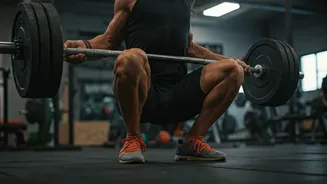
Barbell squats are a foundational exercise that heavily involves the glutes, promoting overall lower-body strength and muscle development. Standing with the barbell across your upper back, descend by bending your knees and pushing your hips back. The goal is to lower yourself until your thighs are parallel or slightly below parallel with the floor, ensuring your core is engaged and back straight. Squats activate multiple muscle groups, with the glutes playing a crucial role in the upward movement. Variations like front squats and high-bar squats shift the emphasis to different muscle groups but still effectively engage the glutes. Proper form is essential to prevent injury; focus on maintaining a neutral spine and keeping your weight balanced throughout the exercise. Including barbell squats in your routine is a compound exercise that will lead to substantial glute and leg muscle growth, making them a cornerstone for any strength training program.
Romanian Deadlifts
Romanian deadlifts (RDLs) are particularly effective at targeting the glutes and hamstrings. Standing with a barbell in front of you, hinge at your hips, keeping your back straight and the bar close to your legs as you lower it towards the ground. The focus is on maintaining tension in your glutes and hamstrings throughout the movement. Unlike traditional deadlifts, RDLs primarily emphasize the eccentric (lowering) phase, maximizing muscle engagement. The glutes and hamstrings control the descent, forcing them to work intensely. It is imperative to maintain a slight bend in your knees and to avoid rounding your back. Adding RDLs to your workout is a good choice to build powerful glutes and improve posterior chain strength. This can also help in enhancing overall athletic performance and reducing the risk of injuries.
Walking Lunges
Walking lunges are a dynamic exercise that effectively engages the glutes, while improving balance and coordination. Step forward with one leg, lowering your body until both knees are bent at a 90-degree angle. The front knee should be aligned over the ankle and the back knee should nearly touch the ground. Push off with your front foot to return to standing, then step forward with the other leg. This exercise continually activates the glutes as they stabilize the body and drive the movement. Walking lunges can be performed with or without weight, and you can add dumbbells or a barbell to increase the challenge. This exercise helps in developing unilateral strength, addressing imbalances, and enhancing functional fitness. Including walking lunges in your routine can improve lower-body power and promote a well-rounded fitness program.
Glute Kickbacks
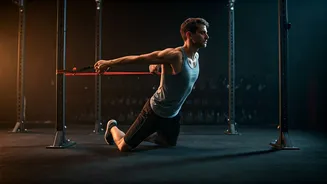
Glute kickbacks are a great isolation exercise that focuses on directly activating the glute muscles. Using a cable machine or resistance bands, position yourself in a stance that allows you to kick one leg back, squeezing your glutes at the top of the motion. Keep your core engaged and your back straight during the movement. This exercise is especially useful for targeting the gluteus maximus and can be very effective at building muscle size. Glute kickbacks are generally easy to perform, allowing you to focus on the mind-muscle connection, improving glute activation and definition. These can be adjusted to various levels of resistance. This targeted approach is ideal for finishing a glute workout and ensuring maximum muscle recruitment. Performing kickbacks can refine and shape the glutes, which will ultimately result in a stronger posterior.
Cable Pull Throughs
Cable pull-throughs are a glute-focused exercise that effectively engages the gluteus maximus and hamstrings. Standing with your back to a cable machine, grasp the rope attachment between your legs. Hinge at your hips, keeping your back straight and your core engaged, and pull the rope forward through your legs. As you stand back up, squeeze your glutes at the top of the movement. This exercise provides a constant tension on the glutes, promoting muscle growth and strength development. Cable pull-throughs are a great option for those looking to build strong glutes, and you can focus on controlling the movement to maximize muscle engagement. They allow for consistent tension throughout the exercise, stimulating muscle growth in a controlled manner. Properly executed, these can significantly contribute to glute and hamstring development.
Good Mornings
Good mornings are a compound exercise that targets the glutes, hamstrings, and lower back. Standing with your feet shoulder-width apart and a barbell across your upper back, hinge at your hips, keeping your back straight and core engaged as you lower your torso toward the floor. Maintain a slight bend in your knees. The glutes and hamstrings are crucial in controlling the movement, and working to bring the body back to the starting position. This exercise strengthens the posterior chain, enhancing your performance in other compound exercises, like squats and deadlifts. Start with lighter weights and focus on proper form to prevent injury. Good mornings are great for increasing overall strength and building muscle mass in the glutes and hamstrings. This can improve your body's overall strength.
Bulgarian Split Squats
Bulgarian split squats are a unilateral exercise that powerfully works the glutes, hamstrings, and quadriceps. Standing in front of a bench or platform, place the top of one foot on the platform behind you. Lower your body down, keeping your front knee aligned with your ankle, and pushing your hips back. The front leg bears the primary load as you drive back up, squeezing your glutes at the top. This exercise is great for improving balance, coordination, and building unilateral strength. They are more challenging than regular squats because they place a higher demand on the stabilizing muscles. You can add weight using dumbbells or a barbell. These are incredibly effective at building glute size and strength and are excellent for addressing muscle imbalances. Regular use of Bulgarian split squats can contribute to a sculpted and balanced physique.
Donkey Kicks
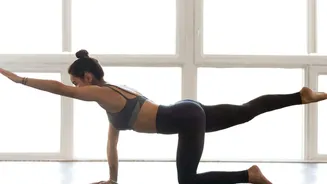
Donkey kicks are a simple yet effective isolation exercise for targeting the gluteus maximus. Start on your hands and knees, with your hands directly under your shoulders and knees under your hips. Keeping your core engaged and your back straight, lift one leg towards the ceiling, bending your knee and squeezing your glutes at the top of the movement. Lower your leg back down slowly, controlling the movement throughout. Donkey kicks are great for isolating the glutes and can be performed with or without a resistance band. This exercise emphasizes glute activation and is a useful addition to warm-ups or cool-downs, helping to target the muscle. By adding donkey kicks to your routine, you can enhance muscle definition and strength in your glutes. This exercise helps in building and shaping your glutes.