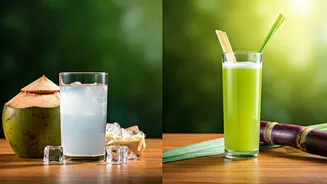







Hydration Champions Compared
When the summer sun is relentless, maintaining fluid balance is paramount. Coconut water emerges as a superior choice for rehydration due to its rich profile
of essential electrolytes, including potassium and sodium. These vital minerals work synergistically to replenish what is lost through perspiration, making it akin to commercial sports drinks in its effectiveness. This makes coconut water an excellent companion for intense heat or post-physical exertion. In contrast, sugarcane juice, while undeniably refreshing, is primarily a concentrated source of natural sugars and does not offer the same electrolyte-rich composition to restore fluid equilibrium. Therefore, for those seeking to effectively combat dehydration and maintain bodily functions during hot weather, coconut water provides a more comprehensive solution.
Understanding Sugar Intake
The sugar content in our summer beverages is a critical consideration for overall health. Sugarcane juice, despite its natural origin, is characterized by a high sucrose concentration. This composition can lead to a significant and rapid elevation in blood glucose levels, explaining the immediate surge of energy it provides. However, this rapid sugar spike underscores the importance of consuming sugarcane juice in moderation, particularly for individuals monitoring their sugar intake. Coconut water also contains natural sugars, but in considerably lower quantities, presenting a more balanced and lighter option for regular consumption. This lower sugar profile makes it a gentler choice for consistent hydration without the pronounced blood sugar fluctuations associated with sugarcane juice.
The Cooling Sensation
Both coconut water and sugarcane juice are celebrated for their cooling properties, but they offer a different experience on the palate and digestive system. Coconut water is generally perceived as lighter and easier on the stomach, providing a subtle yet effective cooling sensation without causing any feeling of heaviness. This makes it particularly suitable for consumption during the peak of summer when the body craves something soothing and easily digestible. Sugarcane juice, on the other hand, can sometimes feel denser, especially if consumed in larger volumes or when the stomach is already full. While still refreshing, its richer consistency might not be as universally 'light' as coconut water, making the latter a preferred choice for many seeking a less substantial cooling drink.
Nutritional Deep Dive
Beyond mere refreshment, the nutritional benefits of these drinks play a significant role in their health impact. Coconut water is a treasure trove of electrolytes, essential for maintaining proper hydration and fluid balance. It also provides trace amounts of vitamins and minerals, contributing to overall well-being. Sugarcane juice, while containing beneficial antioxidants and plant compounds like phenolic compounds, is fundamentally a sugar-rich beverage from a nutritional perspective. While these antioxidants offer some health advantages, the dominant characteristic of sugarcane juice remains its high sugar content. This nutritional composition dictates that it should be enjoyed as a delightful, occasional treat rather than a staple for health-conscious summer hydration.
Your Healthiest Summer Sip
When making a choice for your daily summer hydration, coconut water stands out as the more beneficial option. Its superior electrolyte content ensures effective rehydration, especially during periods of profuse sweating or intense heat. Its lighter nature and lower sugar levels make it suitable for regular consumption without causing digestive discomfort or excessive sugar intake. Sugarcane juice, while a delicious and energizing choice, is best reserved for occasional indulgence. It serves as an excellent quick energy boost when needed, perhaps after feeling fatigued. For a consistently healthy and revitalizing summer beverage that supports your body's needs without compromise, coconut water is the clear winner, offering refreshment and hydration in equal measure.