
Aurora Visibility Overview
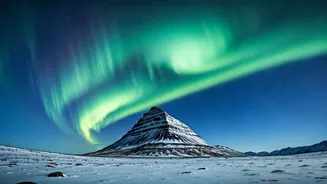
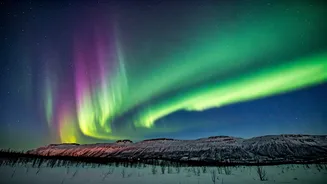
The Northern Lights, a captivating natural phenomenon, were predicted to be visible in various states across the U.S. during specific timeframes, as per
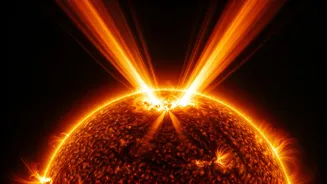
the U.K. Met Office. The reports indicated potential aurora sightings, with the forecasts mentioning a number of states that could witness the mesmerizing display. These predictions were tied to geomagnetic storm activities, which are caused by events like Coronal Mass Ejections (CMEs) impacting Earth's magnetic field. Different levels of geomagnetic storms, ranging from minor (G1) to severe (G4), were forecasted, affecting aurora visibility and intensity. Specific dates and times were provided to guide skywatchers in their quest to observe the aurora borealis.
Geomagnetic Storm Impact
The occurrence of the Northern Lights is largely determined by geomagnetic storms. The reports highlighted how varying levels of these storms influenced the potential visibility and intensity of the auroras. For example, a severe G4 geomagnetic storm was forecasted to bring spectacular Northern Lights displays across North America, even reaching as far south as Mexico. In contrast, minor (G1) geomagnetic storming was also predicted during certain periods. Specific timeframes were given, like between 4 a.m. - 7 a.m. (Jan. 20) and 1 p.m. - 1 a.m. (Jan 21) indicating the windows when geomagnetic storms were anticipated, impacting the probability of seeing the auroras.
Forecasting & Timing Details
The forecasting data provided precise timeframes and the states where the Northern Lights might be visible. For instance, the reports specified that the Northern Lights might be visible in 24 states on January 19, and in 15 states on December 9. Additional forecasts mentioned visibility in 18 states on January 2-3 and in 15 states on January 16-17. The forecasts also indicated varying geomagnetic storm levels, with some periods experiencing strong (G3) or moderate (G2) geomagnetic activity. The provided times included both EST (Eastern Standard Time) and GMT (Greenwich Mean Time) for clarity, ensuring that skywatchers across different time zones could plan their viewing accordingly.
Other Celestial Events
Besides the aurora forecasts, the provided information also touched upon other celestial events. The Quadrantid meteor shower, a prominent meteor shower, was predicted to peak. Also, the reports also mentioned the visibility of 'Earthshine' illuminating the shadowy face of the crescent moon at sunset. The occurrence of these other celestial events added context and interest, illustrating the broader realm of astronomical happenings that can be observed alongside aurora activity. The night sky offers a tapestry of wonders, with events occurring simultaneously and adding another dimension for those who like to look up.