






An Unforeseen Gaseous Veil
Astronomers have stumbled upon a remarkable phenomenon in the frigid outer reaches of our solar system: a diminutive celestial body, identified as (612533)
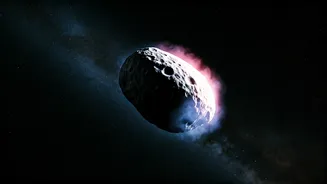
2002 XV93, possesses an exosphere that defies current scientific explanations. This object, a trans-Neptunian object (TNO) residing in the Kuiper Belt, is in a unique orbital resonance with Neptune, completing two orbits for every three of Neptune's. Roughly 500 kilometers (310 miles) in diameter, it is considerably smaller than dwarf planets like Pluto. The presence of an atmosphere around such a small, frigid body, far from the sun's warmth, is perplexing. Typically, comets develop atmospheres as they approach the sun, causing icy components to sublimate. However, (612533) 2002 XV93 is too distant and too cold (between 40 and 50 degrees above absolute zero) for common ices like water or carbon dioxide to vaporize. This atmospheric anomaly challenges the long-held belief that only larger planets are capable of sustaining dense atmospheres.
Investigating the Origin
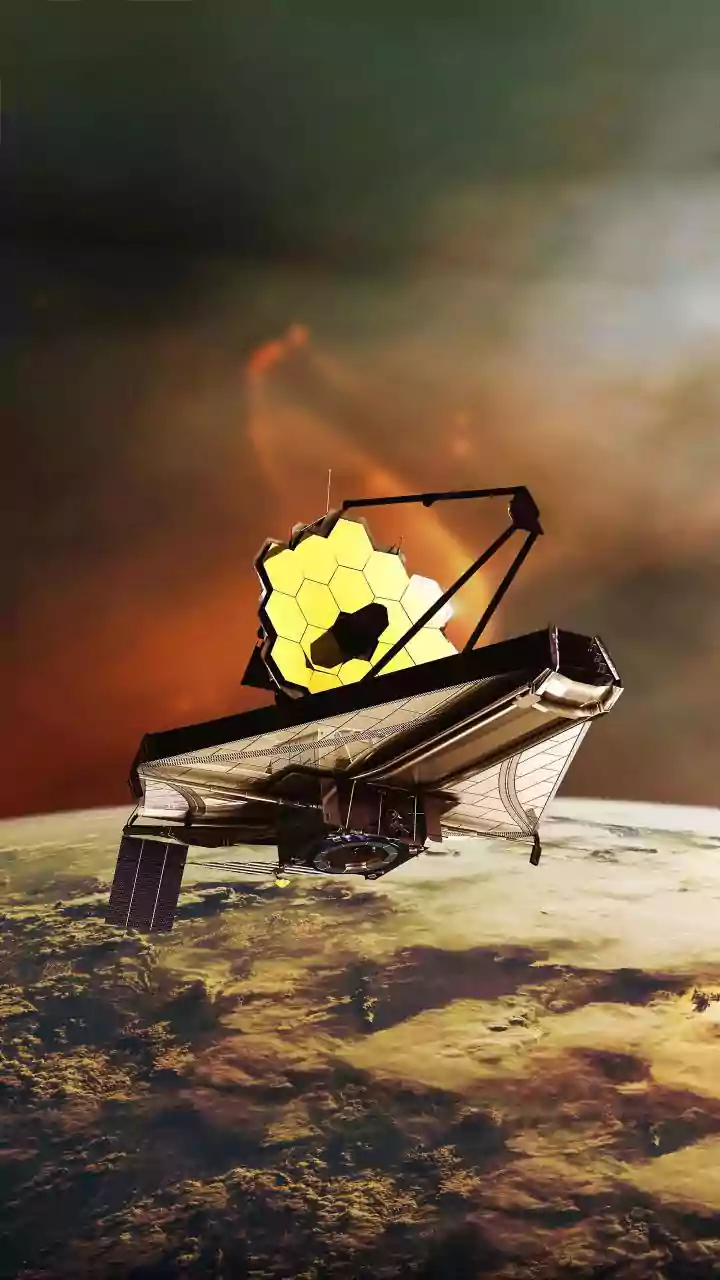
The mystery surrounding the atmosphere of (612533) 2002 XV93 deepens when considering the composition of its potential atmospheric gases. Standard expectations, similar to Pluto's nitrogen-rich atmosphere with traces of methane and carbon monoxide, are not supported by observations. Previous analysis by the James Webb Space Telescope revealed no surface ices of these substances that could account for sublimation. Researchers have put forth two primary hypotheses for this unexpected atmospheric presence. One scenario suggests a recent cometary impact, where the impacter delivered the gases. However, given the low gravity of (612533) 2002 XV93, such an atmosphere would rapidly dissipate into space within a millennium. This implies an extraordinary stroke of luck to observe the object during or shortly after such a rare event. The alternative theory involves subsurface cryovolcanic activity, where internal heat might be driving the sublimation of deeper, unobserved ices. The precise mechanism powering this potential cryovolcanism remains unknown, adding another layer of complexity to the enigma.
Observational Clues and Future Research
The unusual exosphere of (612533) 2002 XV93 was indirectly detected through a stellar occultation event on January 10, 2024. A team of Japanese professional and amateur astronomers, led by Ko Arimatsu, observed the object passing in front of a star. If the object were airless, the star's light would have abruptly disappeared. Instead, the starlight gradually dimmed and then reappeared as the object moved away, a clear indication of an attenuating atmosphere. The surface pressure of this exosphere is incredibly thin, estimated between 100 and 200 nanobars, millions of times less dense than Earth's atmosphere, and even thinner than Pluto's. To further unravel this mystery, scientists aim to determine the exosphere's precise composition using the James Webb Space Telescope. Monitoring the exosphere's density over time will provide critical clues about its longevity and source. A decreasing density would point towards an impact-driven atmosphere losing gas to space, while a stable density would suggest ongoing replenishment through outgassing, potentially from subsurface cryovolcanism. This discovery fundamentally alters our understanding of which celestial bodies can host atmospheres.