






Introducing the Skynest
A pioneering concept in air travel is set to redefine the passenger experience on extended journeys. An airline has unveiled plans for its "Economy Skynest,"
a unique sleeping solution designed specifically for those flying in economy and premium economy cabins on routes spanning an arduous 16 to 18 hours. This initiative is poised to be a significant advancement for ultra-long-haul flights, offering a novel way for travelers to achieve rest mid-air. The airline has announced that bookings for this revolutionary amenity will commence on May 18, 2026, and it will be available on its brand-new Boeing 787-9 Dreamliner aircraft. Initially, the Skynest is slated to debut on services beginning November 2026, promising to alleviate some of the discomfort associated with incredibly lengthy flights. This development follows extensive research and rigorous testing, signifying a commitment to enhancing passenger comfort in every class.
Pod Design & Amenities
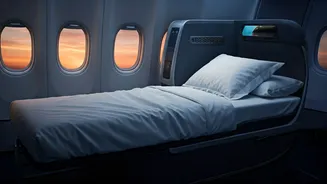
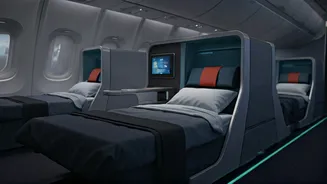
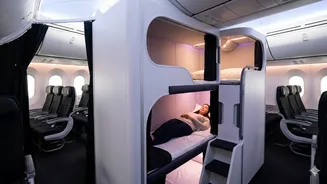
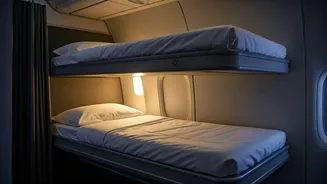
The innovation lies in the design of individual sleeping pods, each measuring approximately 6.6 feet (203 cm) in length and a compact 64 cm in width. These pods are meticulously crafted to provide a functional yet space-efficient area for rest. Upon entering their pod, passengers will be provided with fresh bedding, including comfortable pillows, crisp sheets, and a warm blanket. To further enhance the sleeping experience, an amenity kit will be distributed, containing essentials such as eye masks to block out light, soft socks for comfort, and skincare products. Each pod is equipped with features designed for passenger convenience and privacy, including dedicated privacy curtains, individual lighting, and ventilation controls. For seamless connectivity, USB charging ports are integrated within each pod, and a seatbelt is provided for safety. Additionally, earplugs will be supplied to help passengers create a more serene environment and minimize noise disturbances during their rest period.
Pricing and Access
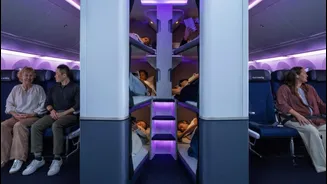
It's important to note that the Economy Skynest is not included as part of the standard ticket price; it is offered as an optional upgrade for an additional fee. Travelers looking to utilize this unique sleeping arrangement will need to pay extra. The cost for a four-hour session in a bunk bed is set at NZ$495, which converts to approximately INR 28,001. To ensure fair access and manage capacity, each passenger is limited to reserving only one session per flight. Initially, two such sessions will be available per journey, accommodating a maximum of 12 passengers in total per flight who opt for the Skynest service. This tiered pricing model allows passengers to choose their level of comfort for an enhanced travel experience.
Flight Routes and Impact
This groundbreaking amenity is strategically being introduced on some of the airline’s most demanding and extended routes. A prime candidate for the Skynest's debut is the service connecting Auckland and New York, a flight that can last an impressive 17 to 18 hours. The airline's CEO has articulated the vision behind this development, stating that by affording more passengers the opportunity for genuine rest during these ultra-long-haul flights, the travel experience to and from New Zealand can become significantly more manageable and less taxing. The Skynest is anticipated to bridge a critical gap, offering a viable alternative that sits between the often-uncomfortable experience of traditional economy seating and the substantial expense of upgrading to business class.
Usage Guidelines
To ensure a smooth and orderly experience for all passengers utilizing the Economy Skynest, a set of clear guidelines has been established. A key rule is that no food or beverages are permitted within the sleeping pods; passengers are expected to consume any meals or snacks before or after their allotted rest period. Furthermore, "double bunking," which means sharing a pod with another passenger, is strictly prohibited to maintain the integrity and safety of the sleeping spaces. While the airline encourages a peaceful environment, it acknowledges that some level of noise, such as snoring, is a natural human occurrence and is therefore permissible within the pods. These regulations are designed to maximize comfort and safety for individual users.