




AI's New Frontier
A significant advancement in astronomical research is being driven by artificial intelligence, which has successfully confirmed the existence of more than
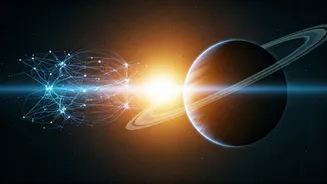
100 planets orbiting stars beyond our own solar system. Furthermore, this intelligent system has flagged over 2,000 additional signals that warrant further investigation as potential new worlds. This development, spearheaded by researchers at the University of Warwick and detailed in the Monthly Notices of the Royal Astronomical Society, illustrates a paradigm shift in how complex scientific tasks are approached. Automated systems are increasingly capable of undertaking intricate analyses that previously demanded extensive time and effort from human astronomers, marking a pivotal moment in our exploration of the cosmos.
The RAVEN System
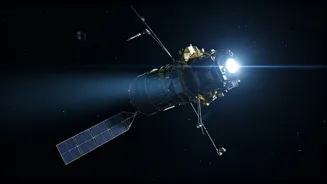
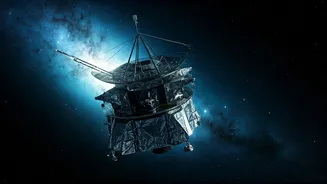
At the heart of this groundbreaking research is an artificial intelligence pipeline named RAVEN. This sophisticated system is designed to meticulously process immense volumes of data generated by space telescopes, a task that would be overwhelmingly time-consuming for human researchers. Instead of relying on scientists to manually scrutinize every data point, RAVEN independently identifies subtle patterns indicative of planetary transits. The data utilized for this study was collected by NASA's Transiting Exoplanet Survey Satellite (TESS), a powerful observatory that continuously surveys the sky, monitoring stars for minuscule fluctuations in their brightness. These subtle dips in light are crucial clues in the search for exoplanets.
Detecting Distant Worlds
The fundamental principle behind detecting these exoplanets relies on observing slight diminutions in a star's light. When a planet traverses directly in front of its host star, it obstructs a small portion of the starlight, causing a temporary and measurable decrease in the star's apparent brightness. This method, known as the Transit Method, has proven to be one of the most effective and reliable techniques for discovering planets outside our solar system. Through the application of this method, the AI system, RAVEN, was able to definitively identify more than 100 planets, including a substantial number that are newly discovered. Additionally, it flagged over 2,000 other intriguing signals that present strong possibilities of being new planetary bodies awaiting confirmation.
Reshaping Space Research
This advancement represents a significant evolution in how astronomical research is conducted. Previously, the analysis of exoplanet signals was an arduous manual process. Astronomers would meticulously review light curves, verify complex patterns, and diligently work to eliminate false positives – a process that could take months for a single set of data. However, the sheer volume of data generated by modern telescopes has grown exponentially. Tools like RAVEN are now indispensable for sifting through this deluge of information with unprecedented speed. By swiftly identifying the most promising candidates, these AI systems enable astronomers to dedicate their expertise to the crucial stages of confirmation and in-depth scientific analysis, rather than being bogged down by preliminary data processing. The technology is not replacing astronomers but rather augmenting their capabilities, allowing for more efficient and extensive exploration of the universe.