






A Giant Leap
NASA has achieved a significant milestone with the successful testing of a high-power plasma thruster, a development that could drastically reduce the time
it takes to travel to Mars. This advancement signifies crucial progress toward enabling human astronauts to set foot on the Red Planet in the future. Administrator Jared Isaacman highlighted the agency's growing proficiency in operating electric propulsion systems at previously unachievable power levels within the United States. The successful demonstration during this test underscores NASA's commitment and capability in advancing the technologies necessary for ambitious crewed missions beyond Earth.
Electric Propulsion's Future
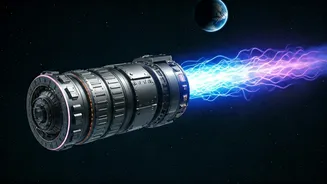
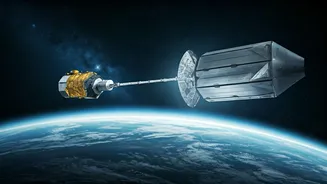
The prototype, a lithium-fed magnetoplasmadynamic (MPD) thruster, underwent rigorous testing in February at NASA's Jet Propulsion Laboratory in Southern California. During these trials, the propulsion system achieved impressive power outputs, reaching up to 120 kilowatts. This performance surpasses the capabilities of current electric thrusters utilized by NASA spacecraft, including those powering missions like the one to the asteroid belt, which employs continuous low-thrust propulsion to gradually accelerate to speeds nearing 124,000 miles per hour. Unlike conventional chemical rockets that rely on combustion, this MPD engine utilizes electromagnetic forces to accelerate plasma derived from lithium, offering a more efficient and potent means of propulsion for extended space voyages.
Why Plasma Matters
NASA researchers are keenly focused on scaling this technology to megawatt-class power levels, a move expected to significantly support future space missions by reducing launch mass and enabling the transport of larger payloads. Projections indicate that future crewed expeditions to Mars might necessitate a total propulsion power ranging from 2 megawatts to 4 megawatts. As NASA pushes forward with longer-duration human missions, the development of supporting technologies such as advanced remote diagnostics and comprehensive healthcare monitoring systems becomes increasingly vital for safeguarding astronaut well-being far from Earth. The successful initial test of the thruster, a culmination of years of design and construction, represents a monumental achievement for the JPL team, validating both its functionality and its targeted power levels.
Global Race Heats Up
This recent achievement by NASA arrives amidst a global surge of interest in advanced electric propulsion systems for deep-space exploration, with both governmental and private aerospace organizations actively pursuing such innovations. Notably, Russia's state nuclear agency has also unveiled its own plasma propulsion concept, claiming theoretical advantages that could shorten Mars transit times compared to traditional rocket systems. This competitive landscape highlights the escalating importance of next-generation propulsion technologies in humanity's ongoing quest to explore the cosmos and expand our reach beyond our home planet.
Facing Hurdles
Despite the promising advancements, significant engineering challenges lie ahead, particularly concerning the system's durability. Propulsion systems designed for Mars-class missions will likely require continuous operation for over 23,000 hours, enduring extreme temperatures and substantial power loads. During laboratory tests at JPL's specialized vacuum facility, the thruster's tungsten electrode experienced temperatures exceeding 5,000 degrees Fahrenheit while generating a brilliant plasma plume. NASA's strategic roadmap includes plans to progressively increase the power levels of individual thrusters, aiming for outputs between 500 kilowatts and 1 megawatt in the coming years. This ambitious project, developed in partnership with Princeton University and NASA Glenn Research Center, is a cornerstone of NASA's broader strategy for future human exploration of Mars.