





The Growing Problem
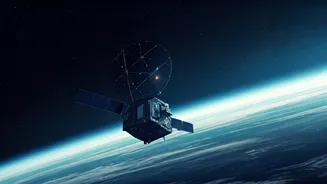
The Earth's orbit is facing a critical challenge: a growing accumulation of space debris. This includes defunct satellites, fragments from collisions,
and remnants from rocket launches. This debris, traveling at incredibly high speeds, poses a significant threat to operational satellites and future space missions. The higher the altitude of the orbit, the slower the natural decay rate of this junk, resulting in a persistent and escalating hazard. These orbital remnants are not merely cosmetic; they represent a very real danger, capable of causing catastrophic collisions that generate even more fragments, exacerbating the problem in a chain reaction known as the Kessler syndrome. Understanding the nature and origin of space debris is crucial to developing effective mitigation strategies and preserving the space environment for future generations. The international community is increasingly recognizing the importance of addressing this issue to ensure the sustainable use of space.
Sources of Debris
The origins of space debris are varied, with both natural and man-made sources contributing to the problem. One primary source is the fragmentation of satellites and rocket bodies, whether from accidental collisions or deliberate explosions. These events release countless smaller pieces, significantly increasing the population of space debris. Another significant contributor is the release of materials during the normal operation of satellites and rockets, such as paint flecks, coolant leaks, and even the ejection of protective covers. Furthermore, the remnants of past space missions, including discarded rocket stages and inactive satellites, continue to orbit the Earth, posing a long-term risk. Even micrometeoroids and the effects of space weathering can contribute to the generation of smaller particles. The ongoing challenge lies in accurately tracking and cataloging this debris to monitor its evolution and its potential to endanger active satellites and future missions.
Dangers of Clutter
The presence of space debris presents several significant dangers. One of the primary risks is the potential for collisions with operational satellites, which can lead to the loss of critical services, such as communication, navigation, and Earth observation. Such collisions can generate even more debris, thereby increasing the risk of subsequent impacts and creating a cascading effect. Furthermore, the high speeds at which debris travels – often exceeding several kilometers per second – mean even small fragments can cause significant damage. This poses a constant threat to manned missions and the International Space Station. The threat is not just limited to direct impacts; the presence of debris can also degrade the performance of satellite systems, interfere with signal transmission, and increase operational costs by necessitating evasive maneuvers.
Collision Risks
The risk of collisions in Earth's orbit is a growing concern, driven by the increasing density of space debris and the growing number of active satellites. Even a relatively small collision can generate thousands of new fragments, each capable of causing further impacts. This creates a chain reaction, where one collision leads to many more, further increasing the risk in a phenomenon known as the Kessler syndrome. Predicting and mitigating collision risks involves extensive tracking and analysis of debris and operational satellites. Space agencies and commercial operators use sophisticated models to forecast potential close approaches and develop mitigation strategies, such as maneuvering satellites to avoid impacts. The need for precise tracking data and improved collision avoidance systems is crucial to safeguard valuable space assets.
Mitigation Strategies
Addressing the problem of space debris requires a multifaceted approach, involving both prevention and remediation strategies. Prevention includes designing satellites and rocket bodies that minimize the generation of debris, such as ensuring they are deorbited or moved to disposal orbits at the end of their operational lives. Another key strategy is to minimize the chances of on-orbit explosions, which can occur due to unspent fuel or pressurized components. Remediation efforts focus on removing existing debris from orbit. This can involve technologies such as capturing debris with robotic arms, using nets or harpoons, or even employing lasers to alter the orbits of debris and guide them to burn up in the atmosphere. The development of international guidelines and regulations for space sustainability is also essential to ensure that future activities are conducted responsibly and do not further exacerbate the problem.
International Cooperation
The challenge of space debris requires international cooperation. No single nation can solve this complex problem alone. Space agencies around the world are collaborating to share data, develop best practices, and work towards common goals. This includes efforts to track and catalog space debris, coordinate collision avoidance maneuvers, and establish international standards for the sustainable use of space. Initiatives such as the Inter-Agency Space Debris Coordination Committee (IADC) facilitate collaboration between space agencies to exchange information and coordinate research efforts. The development of legally binding international agreements can further promote responsible behavior in space and encourage the adoption of effective debris mitigation measures. International collaboration is critical for securing the long-term viability of space activities for the benefit of all humanity.
Future Considerations
Looking ahead, the long-term implications of space debris must be seriously considered. As the number of satellites in orbit continues to increase, driven by advances in technology and the growing commercialization of space, the risk of collisions will continue to rise. Technological innovations will play a vital role in addressing this challenge. Advances in debris removal technologies, improved tracking and monitoring capabilities, and the development of more sustainable satellite designs are all essential. Moreover, the establishment of a robust regulatory framework and the enforcement of international guidelines will be necessary to ensure responsible space activities and safeguard the orbital environment. It is crucial to address the space debris problem proactively to protect the future of space exploration, scientific research, and commercial applications.