





The Debris Dilemma
The vast expanse of space, seemingly empty, is increasingly cluttered with orbital debris. These remnants of past space missions, ranging from defunct
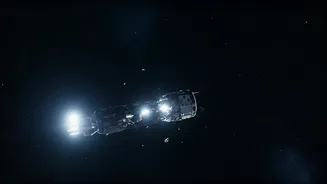
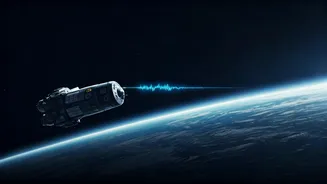
satellites to tiny fragments of exploded rockets, pose a growing threat to active spacecraft and future missions. Scientists are particularly concerned about a potential cascade effect, often referred to as Kessler Syndrome, where collisions between existing debris could generate even more fragments, leading to a domino effect that could render certain orbits unusable. Millions of objects, some larger than a centimetre and countless others even smaller, are estimated to be in orbit, travelling at extreme speeds. While the danger is significant, the visual evidence of this menace is notably absent from recent high-profile imagery, prompting questions about its visibility.
Why Cameras Miss Junk
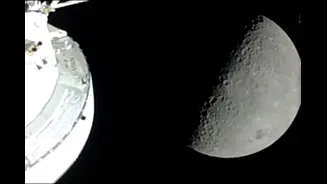
The remarkable clarity of images from missions like Artemis II often leads to questions about the absence of visible space junk. The primary reason for this is the sheer difficulty of capturing such objects. Most orbital debris is incredibly small, far too minute to be detected by the naked eye, and consequently, too insignificant to be clearly resolved by camera lenses, even those on advanced spacecraft. While there's a theoretical possibility of photographing a larger piece of debris, the conditions required are exceptionally precise. The immense speeds at which both the spacecraft and the debris are traveling create a blur, making it exceptionally challenging to achieve a clear, identifiable image. The odds of obtaining a photograph that definitively shows a piece of space junk are exceedingly low, given these combined factors of size and velocity.
Location, Location, Orbit
A crucial factor influencing the visibility of space debris is its typical location. The densest concentrations of orbital junk are found in Low Earth Orbit (LEO), generally between approximately 466 and 621 miles above our planet's surface. Missions like Artemis II, especially during their initial launch phases and transit to lunar trajectories, are often far beyond this primary debris zone. Furthermore, during these critical early stages of a mission, astronauts are intensely focused on vital flight operations and navigation, leaving virtually no opportunity to look for or photograph external objects. The spacecraft's rapid acceleration means that even if a larger object were present in their immediate vicinity, it would likely be gone from view within moments, making detailed capture virtually impossible.
Safety Amidst Debris
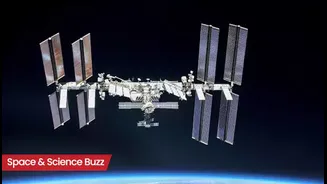
Despite the challenges in visually documenting space junk, its presence is a reality for human spaceflight. The International Space Station (ISS), for instance, frequently experiences impacts from minuscule debris particles. However, the ISS is engineered with robust shielding designed to withstand these small particle collisions, and the probability of a catastrophic impact with a larger object remains relatively low. To mitigate risks, sophisticated tracking systems are in place to monitor potential threats during spaceflights. While the problem of space debris is a serious concern for the longevity of space exploration, it's important to remember that space is vast, and objects, even fast-moving debris, are often separated by immense distances, averting constant close encounters for astronauts.