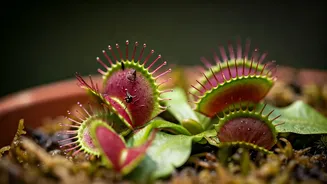







The Deceptive Venus Flytrap
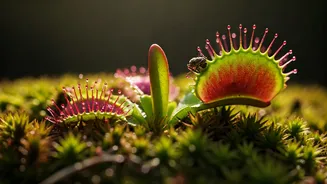
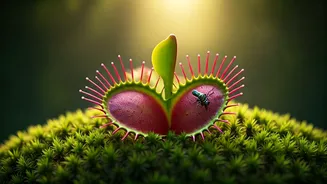
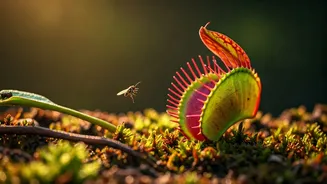
Renowned as the quintessential carnivorous plant, the Venus flytrap employs a sophisticated snap-trap mechanism. Its modified leaf blades are lined with
sensitive trigger hairs; when an unsuspecting insect makes contact with these hairs, the trap springs shut with remarkable speed, ensnaring the prey within. While primarily feeding on insects, this plant has been known to occasionally capture and consume other minuscule creatures that wander too close. This intricate design showcases a remarkable evolutionary adaptation for survival in environments where soil nutrients are scarce, turning a typically passive organism into an active hunter.
Elegant Pitcher Plants
Pitcher plants present an alluring yet deadly environment for insects, utilizing deep, tubular leaves filled with a digestive fluid. These plants often secrete a sweet nectar that acts as a powerful lure, drawing insects towards the opening of the pitcher. Once an insect lands on the slick inner surface, it inevitably slips into the fluid below and drowns, unable to escape. Certain species, particularly within the Nepenthes genus, are impressively large and have been observed trapping not only insects but also small vertebrates like rodents and other tiny animals, demonstrating a broader predatory range than commonly assumed.
Sticky Sundews' Embrace
Sundews, with their enchanting appearance, are covered in numerous small tentacles tipped with glistening, sticky droplets resembling morning dew. This deceptive facade attracts insects, which become hopelessly entangled when they land on these adhesive surfaces. Once a victim is caught, the sundew's leaf begins to slowly curl inward, wrapping around the prey and initiating the digestive process. These plants are predominantly found in waterlogged bogs and acidic soils, environments notoriously deficient in essential nutrients, driving their specialized predatory evolution.
Bladderwort's Swift Capture
Among the most dynamic hunters in the aquatic realm, bladderworts are known for their incredibly rapid traps. They possess minute, hollow bladders equipped with a valve-like opening. When a tiny aquatic organism, such as insect larvae or water fleas, brushes against trigger hairs near the bladder's entrance, the bladder instantaneously expands, creating a vacuum that sucks the prey inside along with water. These bladders are among the fastest traps in the plant kingdom, making bladderworts highly effective predators in ponds, lakes, and waterlogged soils, ensuring a steady supply of nutrients.
Butterwort's Gentle Trap
Butterworts feature broad, soft leaves that are covered in a sticky mucilage, creating a flypaper-like surface. This adhesive quality is perfectly suited for capturing very small flying insects, such as gnats and fruit flies, which are drawn to the plant's surface. Upon landing, the insects become stuck, and the leaf then secretes digestive enzymes to break them down. These plants are typically small and delicate, often flourishing in damp environments where their preferred, minuscule prey is abundant, allowing them to efficiently supplement their nutrient intake.
The Enigmatic Cobra Lily
Distinguished by its striking hooded shape, reminiscent of a reared cobra, the Cobra Lily (also known as the California pitcher plant) employs a unique trapping strategy. Insects are enticed into the plant's opening, often by its distinct appearance or scent. Once inside, the smooth, slippery inner walls make escape nearly impossible, leading the prey to fall into the digestive fluids at the bottom. This remarkable plant thrives in the boggy terrains of northern California and southern Oregon, areas that provide the moist conditions necessary for its survival and predatory lifestyle.
Waterwheel Plant's Strategy
The Waterwheel Plant is a truly unique aquatic carnivore, characterized by its whorls of tiny, specialized traps that float just below the water's surface. These miniature traps are designed to capture minuscule aquatic life, including mosquito larvae and other small invertebrates. The plant drifts freely in water bodies, allowing its traps to come into contact with prey. Upon detection, the trap doors close with astonishing rapidity, securing the meal. This species is quite rare and is considered endangered, underscoring the fragility of its specialized habitat and evolutionary niche.