







The Cold Room Divide
Singer Nick Jonas has revealed a rather peculiar, yet intensely personal, sleep preference: he thrives in a 'freezing cold' room. This starkly contrasts
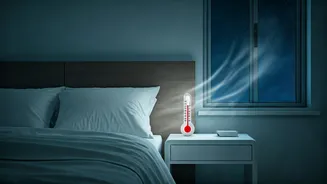
with his wife's desire for a warmer environment, often set around 71-72 degrees Fahrenheit. Jonas, however, champions a much cooler 62 degrees Fahrenheit, even using a fan to augment the chill. This divergence in sleeping temperature preferences has become a talking point, highlighting how individual comfort levels can vary dramatically. His insistence on a cool environment stems from a personal feeling of 'running hot,' suggesting an internal body temperature regulation that favors colder conditions for optimal rest. He finds the idea of sleeping at a warmer temperature quite challenging, contrasting sharply with his own deeply ingrained need for a cold sanctuary to achieve true sleep.
Beyond the Bed
Nick Jonas's relationship with his bed extends only to sleep, a principle he adheres to strictly. He famously stated on a past TikTok show that beds are exclusively for sleeping. This means no sitting, eating, reading, or watching TV from the comfort of his bed. This deliberate separation of activities from his sleep space underscores a conscious effort to associate the bed solely with rest. This approach likely reinforces his body's connection between the bed and falling asleep. Furthermore, this stricture complements his preference for a cooler sleeping environment. If a bed becomes too warm, it can hinder the natural temperature drop required for sleep onset, making his aversion to a warm bed a logical extension of his overall sleep hygiene strategy.
The Science of Cool Sleep
The ambient temperature of a bedroom plays a significant role in our ability to fall asleep and stay asleep, acting as a silent orchestrator of our sleep cycle. According to Dr. Yatin Sagvekar, a Consultant Neurologist at Kokilaben Dhirubhai Ambani Hospital in Navi Mumbai, an optimal sleep environment is characterized by coolness, ideally around 18°C (64.4°F). This cooler temperature assists the body in naturally lowering its core temperature, a crucial step that facilitates the release of melatonin, the hormone vital for inducing sleep. This physiological process is essential for initiating sleep and maintaining its quality throughout the night. Therefore, Nick Jonas's preference for a freezing cold room aligns with established scientific recommendations for promoting healthy sleep patterns.
Thermoregulation and Sleep
Our bodies possess an innate ability to regulate their internal temperature, a process known as thermoregulation, which is intricately linked to sleep. Dr. Hiran S. Reddy, a consultant physician and critical care specialist, explains that individuals who tend to feel warmer often resort to methods like sticking a foot out from under the covers. This seemingly simple action leverages the unique physiology of the feet, which are rich in blood vessels and possess minimal hair, making them highly efficient in dissipating heat. By exposing one foot, excess body heat can escape through these superficial vessels, contributing to a subtle yet important drop in core body temperature. This cooling mechanism sends a calming signal to the brain, harmonizing with our body's natural circadian rhythms and encouraging the production of sleep-inducing hormones.
Cooling for Deeper Rest
The benefits of even minor skin cooling extend significantly to sleep quality. Dr. Reddy points out that research in sleep medicine substantiates that even slight reductions in skin temperature can expedite the process of falling asleep and promote deeper, more restorative rest. For individuals like Nick Jonas, who may experience overheating or frequent night sweats, actively cooling the sleeping environment presents a natural and non-invasive strategy. This method enhances sleep hygiene without the need for any medication. By creating a cooler atmosphere, the body's natural thermoregulatory processes are supported, making it easier to achieve and maintain the lower core temperature required for optimal sleep. This proactive approach to temperature management can be a game-changer for improving sleep quality.