



Amritsar to Attari
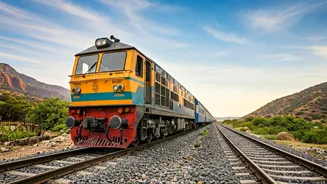
Experience a brief, yet impactful, 25-kilometer railway voyage from Amritsar to Attari, costing a mere ₹10 and taking approximately 40-45 minutes. This
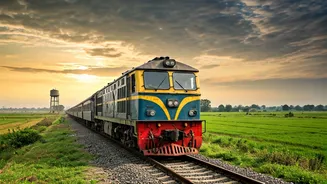
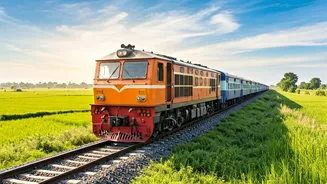
route, which includes stops at Chheharta and Khasa, terminates in Attari, a town situated very close to the international boundary with Pakistan. Historically, this line was once part of a larger network connecting Amritsar to Lahore before the Partition of India. The journey itself unfolds through expansive green farmlands and past small, serene villages, offering glimpses of rural life. Near Khasa, travelers might observe training exercises of the Border Security Force. The Attari station is notable for its colonial-era architecture and an international platform that once facilitated cross-border train services. Key attractions in the vicinity include the famous Attari-Wagah border ceremony, the historic Sarai Amanat Khan village, Pul Kanjri, and Sham Singh Attari Park with its dedicated museum. This route also boasts a cinematic past, having been featured in popular Indian films like 'Bajrangi Bhaijaan' and 'Veer-Zaara', adding a layer of emotional resonance to the landscape and the quiet station.
Amritsar to Dera Baba Nanak
Embark on a peaceful 55-kilometer journey from Amritsar to Dera Baba Nanak, a trip that lasts about 1 hour and 20 minutes and costs just ₹15. The train makes several stops, including Verka, Majitha, Ramdas, Rattar Chattar, and Hardowal, before reaching its destination in the Gurdaspur district. Along this route, you'll encounter charming colonial-style station buildings, some adorned with vibrant bougainvillea. Verka station, in particular, evokes the feel of a quaint hill station bungalow, while Hardowal offers a tranquil rural ambiance. The vistas from the train windows showcase agricultural fields, tractors at work, and villagers engaged in their daily tasks across the scenic countryside. Dera Baba Nanak is a place of profound religious significance, closely linked to the final years of Guru Nanak Dev Ji. It is situated across the Ravi River from Kartarpur in Pakistan, home to the revered Gurdwara Darbar Sahib Kartarpur. The town serves as the starting point for the Kartarpur Corridor, a visa-free passage for Indian Sikh pilgrims to visit the shrine in Pakistan when it is operational. Other points of interest include the Darbar Sahib gurdwara, Sri Chohla Sahib, and the local market. This station's modest charm has also attracted filmmakers, featuring in the movie 'Gustaakh Ishq'.
Amritsar to Khem Karan
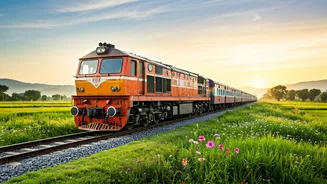
Undertake the longest of the three routes, a 77-kilometer expedition from Amritsar to Khem Karan, requiring approximately two hours of travel and a ticket price of ₹20. Some services commence from Bhagtanwala station near Amritsar. The train traverses through numerous small halts within the Taran Taran district, offering an intimate view of rural Punjabi life. Khem Karan holds significant historical importance, primarily as the location of the Battle of Asal Uttar during the 1965 Indo-Pakistani War. It was here that Indian forces successfully halted a major Pakistani armored offensive, a victory that resulted in abandoned tanks scattered across the fields, earning the area the somber moniker "Graveyard of Tanks." Adjacent to the border fence, visitors will find two unique religious sites: Gurdwara Sahib Singh Shaheed and Sheikh Braham Dargah. Access to these shrines necessitates passing through Border Security Force checkpoints. Strict security protocols are in place, including restrictions on photography and the mandatory deposit of electronic devices before entering the sensitive area. The journey here provides a poignant connection to wartime history and the resilience of the land.
Winter Beauty & Heritage
Traveling these captivating routes during the winter months, particularly in December, offers a uniquely beautiful experience. Mornings are often blanketed in a thick fog that drifts across the expansive fields surrounding Amritsar and Attari, softening the landscape into a serene palette of grays and greens. As the train proceeds, the unfolding panorama of wide farmland, distant hamlets, and the vast open sky creates a profoundly peaceful and picturesque scene outside the window. Beyond the scenic beauty, many of the railway stations along these lines are remarkable examples of colonial-era architecture. While some historic structures have unfortunately fallen into disrepair or been demolished, such as the old stations at Chheharta and Khasa on the Attari route, the surviving buildings, especially those along the Dera Baba Nanak line, retain their visual appeal and hold potential for heritage restoration, offering a tangible link to the region's past.