







Mission's Core Purpose
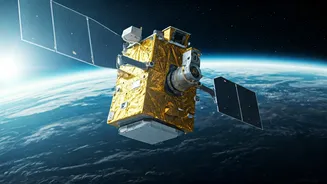
The primary objective of the PSLV-EOS-N1 mission was the deployment of an Earth Observation Satellite. These satellites are designed to gather crucial
data about our planet. This data assists in various fields, ranging from environmental monitoring and climate studies to urban planning and disaster management. The type of data collected includes high-resolution images, measurements of atmospheric conditions, and information about land and water surfaces. The satellite was designed to provide valuable insights into our planet's processes, leading to informed decision-making in diverse sectors. It’s a vital tool for understanding Earth’s ever-changing dynamics and supporting sustainable practices. The data can contribute to global efforts aimed at addressing climate change and promoting responsible resource management. The mission was not just about putting a satellite in space; it was about enhancing our understanding of Earth.
Satellite's Technical Role
The Earth Observation Satellite onboard the PSLV-EOS-N1 mission played a significant role in gathering specific information. This satellite utilized advanced instruments and sensors to collect a variety of data, including high-resolution images, measurements of land cover, and atmospheric data. These instruments are designed to work in synergy, enabling comprehensive and detailed observations. These observations are crucial for various applications, such as agriculture, where data from satellites helps in crop monitoring and assessing yields. In the realm of urban planning, satellite imagery helps in visualizing city development, managing resources, and addressing environmental issues. Disaster management benefits as well, with the satellite providing early warnings and assistance in assessing the aftermath of natural disasters. The satellite's ability to capture data from different perspectives provides essential support to many areas.
Anomaly Investigations
Any anomaly during the PSLV-EOS-N1 mission would have been subject to thorough investigation to determine the cause and the resulting impact. Scientists and engineers would meticulously examine telemetry data, analyze flight performance, and review operational procedures. The analysis involves identifying any deviation from the expected trajectory, data transmission, or satellite operations. Comprehensive tests and simulations may be conducted to replicate the anomaly and gain a better understanding of the issues. This process is crucial not only for understanding what happened but also for preventing similar problems in future missions. The findings from these investigations are used to implement corrective measures, such as modifying launch procedures, redesigning components, or revising operational protocols. Such meticulous reviews demonstrate the commitment to improving the safety and reliability of space missions. Learning from past experiences is an important aspect for advancing space technology.
Data Application Benefits
The data acquired by the Earth Observation Satellite has many applications. In agriculture, it can improve crop yield forecasting and provide information about soil and water management. Environmental protection also gains from the satellite data, as it provides detailed insights into deforestation, pollution, and climate change. Urban planners can utilize satellite data for effective urban development, transport, and resource allocation. Disaster management teams use satellite data to monitor and assess the impact of natural disasters, facilitating prompt relief and recovery operations. Satellite data is also used to generate geographic information system (GIS) maps, which are valuable tools for decision-making across numerous sectors. The utilization of this data is key to advancing many areas, as well as driving innovation.
Future Mission Implications
The PSLV-EOS-N1 mission's results, regardless of any potential anomalies, would influence the approach to future space missions. Any issues or challenges faced would result in careful analysis. This analysis would inform improvements in technologies, operations, and launch strategies. It might lead to modifications in satellite designs to increase reliability and performance. More efficient processes for gathering and handling data could be implemented. Enhanced training for ground crew and astronauts would also be considered. The focus is to build on lessons learned from past missions. Furthermore, international cooperation in space exploration could become more important, sharing knowledge and resources to drive innovation and mitigate risks. These enhancements will help ensure success in future missions.