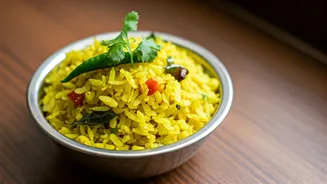

Poha: A History
Flattened rice, the core of poha, has a rich history dating back centuries in Indian kitchens. It was a staple in regions like Maharashtra, Madhya Pradesh,
Gujarat, and parts of North India. The ease of preparation and long shelf life made it ideal for travelers and traders. Each region crafted its own version over time, transforming poha into a dish with diverse identities. These variations reflect the cultural diversity of India, with each area adding its unique flavors and ingredients. This allowed poha to evolve into the many forms enjoyed today, making it a beloved breakfast option across the country.
Ingredients Required
To make this quick and wholesome poha, you will need several readily available ingredients. These include 2 cups of poha (medium or thick), ½ cup of green peas, 1 finely chopped onion, 1–2 chopped green chillies, ¼ cup of peanuts, 8–10 curry leaves, 2 tablespoons of chopped coriander, 2 tablespoons of oil, salt to taste, 1 teaspoon of cumin seeds, 1 teaspoon of mustard seeds, and 1 tablespoon of lemon juice. While these are the core ingredients, you can customize the dish to suit your preferences. For example, some people add sev or pomegranate on top for added texture and flavor, adding a regional touch to the recipe.
Preparation Steps
Begin by washing the poha in a strainer and letting it rest for 2–3 minutes until it softens. Heat 2 tablespoons of oil in a pan. Add 1 teaspoon of mustard seeds, 1 teaspoon of cumin seeds, and 8–10 curry leaves, allowing them to crackle. Then, add ¼ cup of peanuts and sauté for 1 minute. Follow this by adding ½ cup of green peas and cooking for another minute. Next, incorporate 1 finely chopped onion and 1–2 chopped green chillies, cooking until the onions soften. Add the softened poha and mix gently without breaking it. Incorporate salt to taste and ¼ tsp of turmeric, mixing well. Turn off the heat and add 1 tablespoon of lemon juice and 2 tablespoons of chopped coriander, mixing to combine. Serve warm.
Regional Variations
Poha's versatility is evident in the many regional variations found across India. Maharashtrian kanda poha emphasizes onions, while Indori poha includes fennel seeds and sev for added texture. In Gujarat, lemon and coriander provide a fresh finish. These slight changes showcase how flexible poha can be while still adhering to its core elements. The adaptability of the dish makes it a favorite across the country. These regional versions highlight how a single dish can embody diverse culinary traditions. No matter the version, poha remains a simple yet satisfying meal enjoyed by many families, reflecting the rich culinary landscape of India.
Health Advantages
Poha is not only easy to prepare but also offers several health benefits, making it a suitable breakfast for both kids and adults. Flattened rice provides easily digestible carbohydrates, providing steady energy for the morning. The inclusion of peas, peanuts, and vegetables increases the fibre and nutrients in the dish. The ingredients used in poha are beneficial, contributing to a nutritious and wholesome meal. This combination makes poha an excellent choice for those seeking a quick, healthy breakfast, which supports energy levels and aids digestion throughout the day. It's a simple, light, and nutritious way to start your morning.