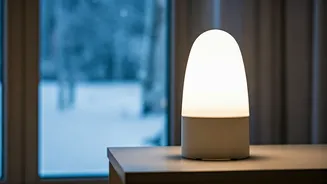

Understanding SAD Lamps
SAD lamps, also known as light therapy boxes, are specifically designed to mimic natural sunlight. The primary function of these lamps is to deliver a high
intensity of light, typically around 10,000 lux, which is significantly more than standard indoor lighting. This high intensity light exposure is believed to help regulate the body's natural sleep-wake cycle, also known as the circadian rhythm, which can be disrupted during the shorter days of winter. Additionally, light therapy can influence the production of serotonin and melatonin, two neurotransmitters that play crucial roles in mood regulation. Serotonin is often referred to as the 'happy hormone,' while melatonin helps regulate sleep. By increasing serotonin levels and potentially decreasing melatonin at the appropriate times, SAD lamps aim to alleviate symptoms of SAD, such as fatigue, low mood, and changes in appetite.
How They Work
SAD lamps operate on the principle of light therapy, which involves exposing oneself to bright light for a specific duration each day. The lamps typically emit a spectrum of light that closely resembles natural sunlight, without the harmful ultraviolet (UV) rays. The recommended usage involves sitting near the lamp for about 20-30 minutes each morning, although this can vary based on the lamp's intensity and individual needs. It's crucial to position the lamp correctly, usually at an angle and a distance that allows the light to enter your eyes effectively, without directly staring at the bulb. Consistent use, particularly during the darker winter months, is key to experiencing the potential benefits of light therapy. It's advisable to consult with a healthcare professional before starting light therapy, especially if you have pre-existing eye conditions or are taking medications that increase light sensitivity. The lamps are often used in conjunction with other treatments like counseling or medication.
Benefits and Considerations
The potential benefits of using SAD lamps extend beyond mood elevation. Many users report improvements in energy levels, sleep patterns, and overall well-being. Studies have shown that light therapy can be effective in reducing the symptoms of SAD, such as fatigue, oversleeping, and social withdrawal. However, it's essential to understand that SAD lamps aren't a one-size-fits-all solution, and their effectiveness can vary from person to person. Some individuals may experience side effects, such as headaches, eye strain, or irritability, particularly if they are sensitive to light. It is also important to note that SAD lamps are not a cure for SAD but a tool to manage its symptoms. The best results often come when light therapy is integrated into a broader wellness plan that includes lifestyle adjustments, such as regular exercise, a balanced diet, and sufficient sleep. Choosing a lamp with the right features, like adjustable brightness and UV filters, can also enhance the experience.
Choosing the Right Lamp
When selecting a SAD lamp, several factors come into play. The light intensity, measured in lux, is a critical consideration; lamps typically offer a range from 2,500 to 10,000 lux. It's essential to choose a lamp that provides the recommended intensity for effective light therapy. The size and design of the lamp also matter. Consider where you will be using the lamp, and opt for a size and style that fits your space comfortably. Look for lamps that have features like adjustable settings, allowing you to customize the brightness and timer to suit your needs. Furthermore, ensure the lamp has a UV filter, which helps to protect your eyes from harmful rays. It's also worth checking for certifications that verify the lamp's safety and effectiveness. Reading reviews and comparing different models can help you make an informed decision and choose a SAD lamp that aligns with your specific requirements and lifestyle.