







Unified Computing Vision
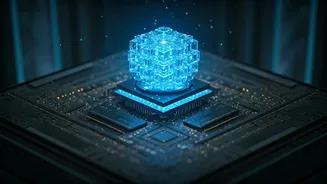
A novel reference architecture has been introduced to bridge the gap between quantum processors and established supercomputing systems. This quantum-centric
supercomputing model aims to seamlessly connect quantum processing units with central processing units within expansive computational environments. The design accommodates a broad range of operational settings, including research facilities, internal company infrastructure, and cloud-based services. Its key objective is to facilitate synchronized operations and collaborative workflows across these diverse hardware platforms, paving the way for more complex and integrated scientific endeavors. This architecture signifies a move towards a more cohesive and potent computational ecosystem.
Integrated System Design
The proposed architecture meticulously integrates quantum processors with existing classical computing clusters, high-speed networking capabilities, and shared data storage solutions. This interconnected setup is engineered to allow scientific applications to dynamically shift their computational load between quantum and classical resources, optimizing performance based on the specific demands of each task. To manage this complex interplay, open-source software frameworks, such as Qiskit, are slated to handle the intricate processes of scheduling and coordination across the combined quantum-classical systems. This strategic integration ensures that computational tasks are executed on the most suitable hardware, maximizing efficiency and analytical power for scientific exploration.
Unlocking Complex Problems
The ultimate goal of this fusion is to create a unified environment where quantum and classical computing resources work in tandem to address scientific challenges that have traditionally been insurmountable for classical supercomputers alone. This vision harks back to pioneering ideas about using computers to simulate quantum physics, a feat now being realized through this advanced architecture. The synergy between quantum and classical computing is expected to open doors to solving problems that were previously considered computationally intractable, pushing the boundaries of scientific understanding and innovation across various disciplines, from materials science to drug discovery.
Demonstrated Scientific Successes
Tangible scientific achievements are already being reported through the application of hybrid quantum-classical computing approaches. Research teams have successfully verified the unique electronic configurations of a half Möbius molecule and simulated intricate protein structures, such as a 303-atom tryptophan cage mini protein. Furthermore, the lowest energy states of engineered quantum systems have been identified, outperforming classical simulation methods. In a significant large-scale experiment, a quantum processor exchanged data with over 152,000 classical nodes of a supercomputer to simulate crucial iron-sulfur molecular clusters, vital for biological and chemical processes. These results underscore the potent capabilities of this integrated computing paradigm.
Addressing Workflow Complexity
Despite the promising outcomes, the practical implementation of hybrid quantum workflows currently presents considerable technical hurdles. Researchers often face the challenge of coordinating data transfers, managing job schedules, and executing algorithms across disparate computing systems. IBM's reference architecture is specifically designed to alleviate these complexities by offering coordinated software orchestration and a shared infrastructure. This approach aims to streamline the linkage between quantum and classical resources, making them more accessible and manageable for scientific exploration. The development path is envisioned in stages, initially positioning quantum processors as specialized accelerators within existing supercomputing centers, with later phases promising tighter integration through advanced middleware.
Future Development Roadmap
The progression of this technology indicates a clear roadmap towards enhanced workflow integration and sophisticated algorithm development. While the current achievements are largely confined to controlled research settings and highly specialized simulations, the trajectory points towards greater accessibility. The initial phase focuses on integrating quantum processors as accelerators, while subsequent stages anticipate deeper coupling between quantum hardware and classical computing clusters. This phased approach suggests a gradual but determined evolution towards a future where hybrid quantum systems are more broadly deployed, pushing the boundaries of what is computationally possible beyond the confines of current research environments.