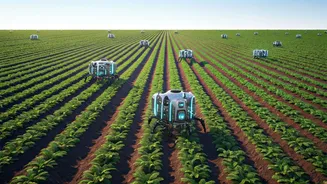








Quantum Agriculture Unveiled
Quantum technology, rooted in the principles of quantum mechanics, is rapidly changing the landscape of modern agriculture. This innovative approach harnesses
the unique properties of quantum systems to achieve unprecedented levels of precision and efficiency in farming operations. Unlike traditional methods, quantum technology offers the potential to revolutionize various aspects of agriculture, including crop management, pest control, and resource optimization. Quantum sensors, for example, can detect subtle changes in soil conditions and plant health with remarkable accuracy, enabling farmers to make informed decisions about irrigation, fertilization, and pest management. This technology promises to enhance productivity and reduce the environmental footprint of farming by minimizing the use of resources such as water and fertilizers, leading to a more sustainable and efficient agricultural system.
Precision Farming Boost
Precision farming is significantly improved through quantum technology, providing farmers with unparalleled capabilities in managing their crops and resources. Quantum sensors are key in this transformation, capable of gathering highly detailed information about soil and plant conditions. These sensors can measure everything from nutrient levels to the early detection of diseases, offering insights previously unattainable. This data allows for the application of resources such as water and fertilizers only where they are needed, optimizing their use and lowering costs. Furthermore, this targeted approach minimizes the impact on the environment by reducing runoff and chemical usage. The ability to monitor crop health with great precision also allows farmers to respond swiftly to any issues, safeguarding crop yields and quality. Ultimately, quantum-enhanced precision farming supports smarter, more sustainable, and economically viable agricultural practices, crucial for meeting the demands of a growing population.
Boosting Crop Yields
Quantum technology is paving the way for substantial increases in crop yields, changing how farmers approach cultivation. Through the use of advanced quantum sensors and data analysis, farmers gain in-depth insights into the intricate processes that affect plant growth. This includes understanding the impact of environmental factors, managing the delicate balance of nutrients, and identifying the early signs of disease. Quantum computing also plays a vital role by analyzing large datasets rapidly, offering crucial predictions and insights. Farmers can then use this knowledge to fine-tune their methods, ensuring plants receive the ideal conditions for optimal growth. This includes adjusting irrigation schedules, applying fertilizers precisely, and taking early action against pests and diseases. By optimizing these factors, quantum technology facilitates enhanced crop yields and superior crop quality. This evolution not only benefits farmers by increasing their productivity but also contributes to global food security by increasing the amount of food produced per acre.
Quantum Pest Control
Quantum technology introduces innovative methods for pest control, moving beyond conventional approaches. This technology provides advanced tools for monitoring and managing pest populations, using quantum sensors to identify and track pests and diseases within crops. These sensors can detect subtle changes, such as early indicators of infestations, enabling rapid intervention. Quantum computing accelerates data analysis, allowing for the quick identification of pest patterns and effective control strategies. This leads to a more targeted approach, reducing the need for broad-spectrum pesticides that can harm beneficial insects and the environment. By embracing quantum pest control, farmers can protect their crops, minimize environmental impact, and promote more sustainable and ecological agricultural practices. This approach not only safeguards the agricultural ecosystem but also contributes to food safety by minimizing the use of potentially harmful chemicals, ensuring healthier crops and a more sustainable future for agriculture.
Sustainability in Practice
Sustainability is a core objective of quantum technology in agriculture, aiming to diminish the environmental footprint of farming practices. Quantum sensors help optimize the usage of resources such as water and fertilizers. For example, sensors can gauge moisture levels in the soil, preventing overwatering and conserving water resources. Similarly, they can detect the precise nutrient needs of plants, enabling farmers to administer fertilizers only where needed. This precision minimizes the risk of runoff and soil contamination, protecting water bodies and ecosystems. Quantum technology also supports the development of eco-friendly pest control strategies, reducing dependency on chemical pesticides, and promoting biodiversity within farming environments. By incorporating quantum-driven techniques, farmers are empowered to enhance their agricultural productivity while simultaneously safeguarding the environment and contributing to the sustainability of the global food supply. This fusion of technological advancement and environmental consciousness underscores a promising path toward a greener and more resilient future for agriculture.