





A Tribute in Stone
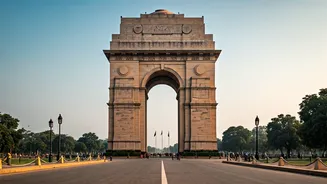
Standing proudly in the heart of New Delhi is the India Gate, an imposing 42-meter-high sandstone structure that serves as a profound tribute to the brave
souls who sacrificed their lives. This iconic monument, designed by the renowned architect Sir Edwin Lutyens, pays homage to the approximately 70,000 Indian soldiers who perished during World War I and the Third Anglo-Afghan War. The foundation stone was laid in 1921, and after a decade of dedicated construction, it was officially unveiled in 1931. More than just an architectural marvel, India Gate represents a pivotal moment in India's history, symbolizing the nation's resilience and the valor of its people who fought in conflicts far from home. Walking towards it is like traversing a historical pathway, connecting the present with the valorous past of a nation that has always honored its heroes.
Echoes of Bravery
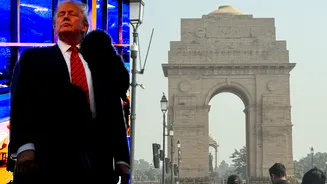
The India Gate is not merely a structure of stone and mortar; it is a testament to the enduring spirit of courage and sacrifice. Each inscription on its surface tells a story of a life given for the nation's cause. In a powerful addition to its patriotic significance, the statue of the indomitable freedom fighter Netaji Subhash Chandra Bose was unveiled at India Gate by Prime Minister Shri Narendra Modi on his 125th birth anniversary, further strengthening the monument's connection to India's fight for independence and its heroes. This sacred space continues to inspire and remind visitors of the immense courage displayed by those who defended the country, fostering a deep sense of national pride and remembrance among all who behold it.
Architectural Vision
Sir Edwin Lutyens masterfully blended Western architectural influences with Indian artistic sensibilities when conceptualizing India Gate, drawing inspiration from structures like the Arc de Triomphe. The result is a magnificent triumphal arch, distinguished by its intricate carvings and decorative artistry. The structure is elegantly built upon a foundational base of red Bharatpur stone, gradually ascending in stages to a prominent molding. The upper cornice is adorned with inscribed Imperial suns, and on either side of the archway, the word 'INDIA' is prominently displayed, flanked by the Roman numerals MCMXIV (1914) on the left and MCMXIX (1919) on the right, marking the significant war years. The construction faced considerable challenges, yet through meticulous planning and the selection of robust materials like sandstone, its enduring presence was ensured. The facade is embellished with detailed carvings, featuring motifs such as floral patterns and sunbursts, contributing to its overall splendor and timeless appeal.
Vibrant Surroundings
Beyond its historical gravitas, India Gate is a dynamic space that offers a multitude of experiences for every visitor. The expansive, verdant gardens enveloping the monument provide a serene escape, perfect for leisurely walks and quiet contemplation amidst nature's beauty. For photography enthusiasts, the arch's graceful lines and the surrounding landscape present countless opportunities for breathtaking shots, particularly during the soft hues of dawn and dusk. The area frequently buzzes with life, hosting various events such as vibrant food festivals and spirited marathons throughout the year. However, the most significant spectacle occurs on Republic Day, January 26th, when India Gate transforms into the epicenter of national celebration. A grand parade marches along Kartavya Path (formerly Rajpath), featuring military contingents, armored vehicles, and colorful floats, all complemented by performances from school children and folk dancers, adding a rich cultural tapestry to the patriotic fervor of the day.
Enchanting Evenings
As daylight fades, India Gate undergoes a captivating metamorphosis, drawing in both locals and tourists with its nocturnal charm. Illuminated by strategic floodlights, the monument's silhouette becomes dramatically pronounced against the twilight sky, standing as a radiant symbol of remembrance and national pride. This visual spectacle is further enhanced by the nearby fountains, which come alive with a mesmerizing display of light, color, and movement. The nighttime view offers a distinct and enchanting perspective, a beautiful contrast to its daytime grandeur. An evening stroll around India Gate is an immersive experience, where the interplay of light and shadow, combined with the gentle murmur of the fountains, creates an atmosphere of tranquility and reflection, making it an ideal spot for a peaceful walk around one of Delhi's most cherished landmarks.
Nearby Treasures
The vicinity around India Gate is rich with significant landmarks, offering visitors a more comprehensive exploration of the capital's heritage. A short distance away lies the National War Memorial, a poignant tribute to fallen soldiers. Adjacent to India Gate is the majestic Rashtrapati Bhavan, the official residence of the President of India. Art enthusiasts can visit the National Gallery of Modern Art, housing an impressive collection of contemporary Indian artworks. Further exploration can lead to the National Museum, a treasure trove of artifacts spanning India's vast history and diverse culture, or Jantar Mantar, an 18th-century astronomical observatory known for its remarkable scientific instruments and geometric structures. These sites, among others, provide a deeper understanding of India's historical, cultural, and artistic legacy.