
Lakeside Charm Unveiled
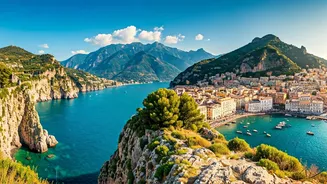
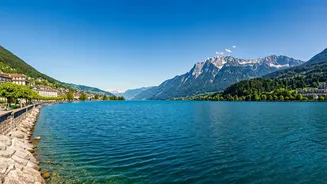
The Montreux Riviera, gracing the shores of Lake Geneva, presents a captivating summer retreat. Imagine strolling along picturesque promenades, with the majestic
Alps providing a dramatic backdrop. This region seamlessly combines tranquil relaxation with opportunities for adventure. Visitors can revel in the clear waters of numerous lidos and natural swimming spots, explore ancient castles steeped in history, and savor the exquisite local wines and cuisine. The region's mild climate and stunning vistas create an idyllic escape for those seeking the quintessential Swiss summer experience. A unique artistic landmark, a giant fork sculpture, stands in Vevey's shallow waters, a testament to the town's Alimentarium, the world's first food museum, and its associated tribute restaurant, Ze Fork, offering Swiss-style tapas with breathtaking lake views.
Grandeur of Lake Geneva
Journeying across Lake Geneva, or Lac Léman as it's locally known, aboard a classic belle époque paddleboat offers a profound sense of the lake's immense scale. The city of Geneva itself is a considerable distance from the northeastern tip of the region explored. Notably, only about 60% of this vast lake resides within Switzerland's borders, with the remainder belonging to France. The vessel, La Suisse, a beautifully preserved ship built in 1910, features ornate figureheads. From its upper deck, one can witness the futuristic sport of e-foiling, where riders seem to glide magically above the water's surface. The landscape along the shores is equally enchanting, characterized by white houses with vibrant shutters and red-tiled roofs, interspersed with terraced vineyards that create a painterly scene, occasionally interrupted by the passing of a bright red train. Small, elegant piers dot the shoreline, hinting at the presence of charming lakeside towns.
Montreux's Riviera Appeal
The affluent resort town of Montreux, considered the heart of the 'Montreux Riviera,' is easily accessible by a short train ride from Vevey. Its expansive four-mile promenade is adorned with grand villas and charming hotels, exuding a unique aesthetic with their canopied balconies and distinctive typography, reminiscent of a bygone era. This picturesque setting evokes the ambiance of a place where characters from 19th-century novels might seek respite. Surprisingly, Montreux also boasts a rich rock 'n' roll heritage; the iconic song 'Smoke on the Water' by Deep Purple was inspired by an event in the town, and Freddie Mercury found peace here in the 1980s, recommending it for its tranquility. Montreux harmoniously blends Switzerland's characteristic tidiness with an unexpectedly Mediterranean feel, facilitated by its mountain-sheltered microclimate that allows subtropical flora like palm and fig trees to flourish. Even the Plage du Pierrier in Clarens offers a beach-like atmosphere, complete with volleyball and pétanque courts, and a kiosk serving refreshing ice creams. The lake water here is remarkably pleasant, reaching up to 25C in summer and so clean that accidental ingestion is of little concern, a testament to Switzerland's excellent water purification systems.
Vineyards of Lavaux
Venturing to Lavaux, a UNESCO World Heritage wine region a short drive west of Montreux, reveals a breathtaking landscape where meticulously terraced vineyards cascade down towards the water. In the charming village of Epesses, winemaker Blaise Duboux shared insights into the region's unique character, playfully referring to his vineyards as 'luxury' due to their proximity to Évian, the source of famed French mineral water. He humorously noted they experience similar rainfall. Lavaux is home to 158 winemakers, with Blaise being one of only 14 who practice organic viticulture, emphasizing a philosophy of working harmoniously with nature. He described his approach as being 'like a surfer catching a wave,' aiming to express the unique qualities of his soil. This dedication, however, demands considerable effort, as winemakers are involved in every step from cultivation to bottling and labeling. Blaise works with seasonal laborers from North Macedonia to manage the vines, particularly by removing excess leaves to ensure air circulation and prevent mildew in the humid, misty conditions near the lake. The steep terraces are cultivated entirely by hand, a tradition maintained for generations.
Alpine Majesty and Lakes
The wines of Lavaux are also featured on the GoldenPass Express, the train that transports visitors from Montreux towards the majestic Swiss Alps, in pursuit of high-altitude water sources. As the train ascends, the scenery transforms into idyllic pastoral landscapes, reminiscent of a storybook, with lush green valleys, charming wooden chalets, and cows grazing in summer pastures adorned with the gentle clanking of their bells. Upon arrival in Zweisimmen, in the Bernese Oberland, a lively brass band welcomes passengers. The journey continues to Interlaken, a gateway to the Jungfrau region. A subsequent train and cable car ride lead to the mountain peak of First, situated 2,168 meters above sea level. From a panoramic footbridge, breathtaking views unfold over the valley and the bustling resort town of Grindelwald. The plan includes an overnight stay at a simple lodge, with the hope of experiencing the serenity of Lake Bachalp, known as the 'jewel of the Alps,' an hour's hike away, in solitude after the day-trippers have departed. The ascent to the lake involves navigating paths through lingering banks of unmelted snow, offering a refreshing coolness, before leveling out to reveal picturesque moorlands. Historically, this area was avoided due to beliefs in spirits and witches, and it was once a site for the sacrifice of criminals. Today, the landscape is peaceful, populated by scampering marmots and the soothing sounds of the Bachläger Waterfall.
Glacial Wonders and Climate Study
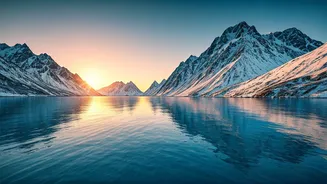
Upon reaching Lake Bachalp, it's revealed to be not one, but two distinct lakes. The rear lake reflects the snow-dusted hills, creating a striking zebra-like pattern on its surface, teeming with aquatic life like water striders and frogspawn in its shallows. The more prominent sister lake perfectly mirrors the imposing peaks of the Wetterhorn, Schreckhorn, and Finsteraarhorn. Nestled between them lies the Grindelwald Glacier, a vast expanse of white that, in the fading light, blends seamlessly with the surrounding snow. Further south, the Aletsch Glacier, the largest in the Alps, offers an even more impressive spectacle. Reached by gondola and mountain railway to Jungfraujoch, Europe's highest train station at 3,454 meters, the altitude is palpable. Emerging from an icy tunnel onto a viewing platform, visitors are met with an endless panorama of towering peaks. Tiny figures of hikers navigate the seemingly frozen river of the glacier, a stark reminder of the potential dangers of straying from the path into hidden crevasses. The overwhelming whiteness of the scene is almost blinding, leading to concerns of snowblindness. This awe-inspiring yet precarious environment serves as a metaphor for glacier tourism itself, a growing activity as these icy giants gradually melt. The Aletsch Glacier, for instance, recedes by approximately 165 feet annually. Positively, the infrastructure enabling access to this site, including the trains, is powered by renewable energy from a hydroelectric plant. Furthermore, the Jungfraujoch Research Station, perched dramatically on a cliffside and resembling a secret lair, plays a crucial role in documenting climate change. Its team of scientists collects vital meteorological and pollution data, some of which is used to hold polluting industries accountable.
Bern's River Life
The meltwater from glaciers like Aletsch feeds into Trümmelbach Falls, one of 72 waterfalls located in Lauterbrunnen valley. This spectacular cascade, accessible via tunnels and platforms within a rock face, carries an immense volume of water, up to 20,000 liters per second, creating a powerful and immersive sensory experience. The journey from the Jungfrau region to the capital city of Bern follows scenic routes, often skirting the shores of Lake Thun and paralleling the River Aare. The river's striking milky turquoise hue, a result of 'rock flour' from glacier meltwater scattering light, is a constant, captivating presence. Arriving in Bern, a city steeped in medieval history with its cobbled streets and historic fountains, the river remains a central focus. Many inhabitants flock to its banks during the summer months. Students like Uma Bintti and Djami Stram describe the Aare as integral to their summer lives, with some even using it to commute to work by floating with their belongings in dry bags. They recommend the Marzili Lido downstream for securing belongings, though casual security measures are also common. The tree-lined paths along the Aare are bustling with activity: beach volleyball courts, waterside cafes serving refreshments, and picnickers enjoying the riverside ambiance. Locals like Nelson Barroso and Esther Himbaza emphasize the river's calming influence and the slow pace of summer life it inspires. The invigorating experience of swimming in the Aare, with its refreshing temperature and the sensation of the riverbed shifting beneath, is a quintessential Bern experience, offering a genuine connection with nature even within the urban landscape.