







AI's Life-Saving Mission
In India, a significant technological shift is underway, with Artificial Intelligence taking on a crucial role in dramatically reducing road fatalities.
The nation grapples with an alarming number of road deaths, averaging around 485 lives lost daily in 2024, with a total of 1,77,177 recorded. Traditional methods of traffic management and human oversight have proven insufficient against the complexities of Indian roads, characterized by diverse traffic conditions, varying road quality, and unpredictable driver actions. This environment presents unique challenges, yet it has also become fertile ground for the development of sophisticated AI. Moving away from reactive measures, vision-based AI systems are now focused on proactive intervention. These systems analyze the chaotic nature of Indian roads – from unmarked lanes and unexpected pedestrian presence to dense vehicular flow – not as obstacles, but as valuable data sources. By processing vast amounts of driving data from myriad scenarios, AI models are achieving a remarkable level of accuracy in predicting and preventing potential accidents before they occur, proving their robustness in even the most challenging global driving environments.
Intelligent Driver Coaching
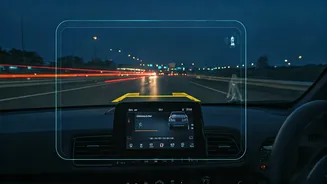
At the heart of this safety transformation are AI-powered cameras that function as intelligent, real-time coaching systems for drivers. These vision-based units meticulously monitor driver behavior, identifying critical patterns such as tailgating, unintentional lane departures, abrupt braking, signs of distraction, and the use of mobile phones while driving. Crucially, the technology excels at recognizing when these behaviors escalate into high-risk situations, triggering an immediate in-cab alert. The primary objective is not punitive, but rather to provide timely intervention and course correction. Unlike conventional dashcams that merely record footage, these AI systems operate 'at the edge,' processing information instantaneously. They can differentiate between normal variations in road conditions and genuine safety threats. Furthermore, these systems are capable of detecting subtle physiological cues, including eyelid movements, blink rates, and the percentage of eye closure, which are indicators of drowsiness and can signal an impending microsleep event. These advanced capabilities address significant contributing factors to accidents, such as speeding, which was linked to 63.7% of accidents and 60.8% of road deaths according to a MoRTH report.
Proven Safety Impact
The tangible benefits of this "safety coach in the cab" are already being demonstrated through compelling data. Enterprises that have adopted Netradyne's vision-based safety system are reporting significant improvements in road safety metrics. For instance, Hitachi Cash Management noted a remarkable 50% reduction in road accidents following the implementation of this technology. Furthermore, Netradyne's data indicates a substantial decrease in risky driving behaviors, with a 74% drop in instances of drowsy driving and a 38% reduction in distracted driving. Beyond these impressive statistics, a key aspect of this technology's success in the Indian market involves overcoming initial hesitations, particularly the perception of surveillance. The system's workflow extends far beyond immediate alerts; it incorporates a comprehensive "Intelligent Driver Management System" (IDMS). This system provides post-trip analysis, offering managers a detailed overview of driving patterns across different routes and times of day, which helps in distinguishing between isolated incidents and recurring issues. This data fuels a transparent "GreenZone" scoring system, designed to acknowledge and incentivize safe driving practices. Importantly, by providing contextual video evidence, the system also serves to protect drivers who are not at fault in road incidents, thereby shifting the narrative from intrusive surveillance to supportive safety assistance.
Tailored for Mobility
The application of this advanced AI technology is being strategically scaled across more than 3,000 fleets, with its implementation thoughtfully tailored to the specific operational demands of various commercial sectors. In the domain of goods transportation, the AI's focus is on high-risk environments, such as the handling of hazardous materials, long-haul logistics operations, and the fast-paced world of e-commerce delivery. These sectors often involve extended periods of driving and complex cargo, making vigilant monitoring essential. Conversely, within the realm of passenger transport, the technology is being adopted by a diverse range of operators. This includes providers of corporate employee shuttle services, ensuring the safe commute of personnel, as well as public transport operators managing bus fleets, which are vital for mass transit. The overarching objective is to establish a robust and scalable safety intelligence layer that encompasses all forms of commercial mobility, irrespective of whether the payload is cargo or passengers. This approach ensures that a consistent and high level of safety intervention is applied, a standard that would be exceedingly challenging to achieve through human monitoring alone, thereby optimizing safety across the entire commercial transportation ecosystem.