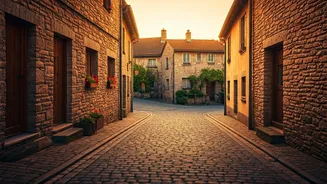








A Pocket-Sized Community
The very notion of a 'town' often conjures images of bustling streets and a significant population. However, the existence of a settlement with merely
two streets and a total of 30 residents challenges these preconceptions. This diminutive hamlet raises fascinating questions about scale and community. What defines a town in its most elemental form? Is it the infrastructure, the number of people, or the shared sense of belonging? This incredibly compact community, with its limited avenues and intimate social circle, forces us to reconsider our definitions and appreciate the diversity of human settlements, no matter how small they may appear on the map. The simplicity of its layout and the close-knit nature of its inhabitants likely foster a unique, almost familial, atmosphere where everyone knows everyone else's story.
Defining 'Smallest' Status
Determining the absolute 'smallest town in the world' is a complex endeavor, fraught with definitional challenges. When we hear of a place with just two streets and a population of 30, it certainly sparks curiosity. However, the criteria for what constitutes a 'town' versus a 'village' or even a 'hamlet' can vary significantly across regions and cultures. Official classifications, local designations, and even historical context play a crucial role. Without clear, universally accepted metrics, pinpointing the undisputed champion of miniaturization becomes an exercise in interpretation. This particular settlement, with its remarkably low street count and intimate population, certainly presents a strong case for consideration, but the debate on the exact title remains open, inviting further exploration into the diverse tapestry of human habitation.