





Lunar Expedition's Purpose
The primary objective of NASA's lunar expeditions is to solve the long-standing puzzle of where Earth's water came from. Scientists have long debated this,
with various theories proposing different sources. These sources include asteroids, comets, or even volcanic activity within the early Earth. However, the exact mechanism and timing remain unclear. By examining lunar samples, specifically focusing on the composition and isotopic ratios of elements like hydrogen, scientists hope to find clues. The Moon, due to its relatively stable geological history, serves as a time capsule, preserving evidence of events that occurred billions of years ago. The research aims to compare the water found in lunar materials with that on Earth. If the isotopic fingerprints match, it could indicate a common origin. This discovery would provide a massive step in our understanding of Earth's formation, specifically how the building blocks of life could have arrived. Also, it might guide future searches for extraterrestrial life, suggesting where to look and what to search for.
Analyzing Lunar Materials
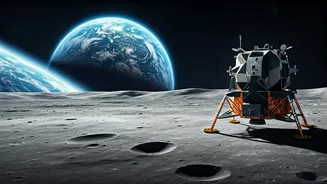
NASA's approach involves detailed analysis of lunar samples collected during past missions, along with current and future data acquired from various instruments and experiments. Scientists utilize sophisticated techniques like mass spectrometry to measure the isotopic ratios of water molecules found within the lunar rocks and regolith (the loose surface material). These ratios are critical because different sources of water have unique isotopic 'fingerprints.' For example, water from asteroids may have different ratios of deuterium (a heavy isotope of hydrogen) to regular hydrogen compared to that found in comets. By meticulously comparing these ratios from lunar samples with those from different potential sources on Earth, researchers can narrow down the possibilities and potentially pinpoint the origin of our planet's water. In addition to analyzing the samples, NASA is also developing new technologies to study water ice that has been detected in permanently shadowed craters at the Moon's poles. These frozen deposits could be an invaluable source of information and will also act as resources for future lunar exploration.
Impact on Earth Science
The outcomes of this lunar research could profoundly influence our understanding of Earth's formation and the evolution of its environment. If the lunar data supports the idea that asteroids were the primary source of Earth's water, it will highlight the critical role of these space rocks in delivering the essential ingredients for life. This discovery will shift the scientific consensus on how habitable planets come to be and the conditions under which life can arise. Understanding how water arrived on Earth can help us better comprehend the processes that led to the development of continents, oceans, and a climate that supports life. It could also have implications for the search for life elsewhere in the cosmos. Knowing the origin of water can inform us about the likelihood of finding water on other planets and moons, and thus, the potential for life. The search for extraterrestrial life will be driven by the insights gained from this research, directing future exploration efforts toward areas with similar geological characteristics and potential water sources.
Future Mission Prospects
NASA's commitment to lunar exploration is a long-term endeavor that includes future missions like the Artemis program. These future projects aim to return humans to the Moon, establish a sustainable presence, and conduct more in-depth research. The Artemis program will provide scientists with access to fresh lunar samples and the opportunity to deploy advanced scientific instruments on the lunar surface. These instruments can provide real-time data on water distribution, composition, and the lunar environment. Moreover, future missions will likely focus on extracting and utilizing resources like water ice for life support and propellant, which will enable extended lunar and deep-space missions. Collaboration with international partners is also essential. This collaborative approach will combine expertise and resources from different countries, accelerating scientific discoveries and expanding the scope of the investigation. The ultimate goal is to deepen our knowledge of the Moon and to connect our understanding of Earth to the broader cosmos.