






Hawkfish: Bidirectional Wonders
The natural world often surprises us with its adaptability, and the Hawkfish stands out as a remarkable example. Unlike many creatures that commit to a single
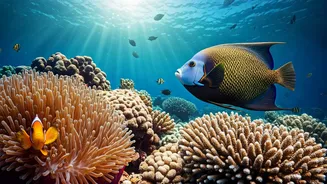
gender path, these marine inhabitants possess the unique ability to transition in either direction, a trait known as bidirectional switching. This flexibility is not arbitrary; it's a survival mechanism dictated by the social dynamics within their environment. If a reef community finds itself with an overabundance of dominant individuals, a Hawkfish can revert to a previous biological state, thereby restoring balance. Conversely, should the need arise for a new leader, the transition can occur in the opposite direction. This remarkable fluidity makes them exceptionally resilient and adept at navigating the ever-changing conditions of their reef homes, ensuring the stability and continuation of their populations in a constantly evolving ecosystem. Their capacity to adapt their reproductive roles based on group needs is a testament to evolutionary ingenuity.
Clownfish: Socially Driven Shifts
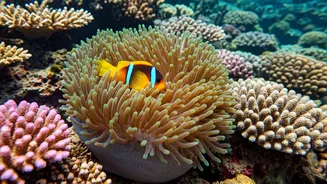
Within the vibrant, yet surprisingly structured world of clownfish colonies, gender is not a fixed characteristic but a dynamic response to social cues. Each group is typically led by a dominant breeding pair, surrounded by smaller, non-breeding individuals. The intricate social hierarchy is maintained through a startling biological process: if the primary breeding female or male is lost, perhaps due to predation, the largest subordinate clownfish doesn't merely step into their shoes—it undergoes a complete physiological metamorphosis. This profound transformation involves a rapid reorganization of both digestive and reproductive systems, enabling the individual to assume the vacated breeding role. This internal biological reset is crucial, preventing the colony from succumbing to disarray and ensuring the ongoing propagation of the species. The seamless transition is a critical factor in maintaining the colony's integrity and continued existence.
Slipper Snails: A Stacked Hierarchy
Common Slipper Snails present a unique biological strategy intricately linked to their physical arrangement. These mollusks often form dense colonies, growing in stacked formations, one atop another, resembling a miniature, living tower. The position within this vertical structure dictates an individual's reproductive role and biological state. Typically, the oldest and largest snails, situated at the base of the stack, function as the primary breeders. As younger snails join the colony and attach themselves to the top, they begin in a different reproductive phase. When the snails at the bottom are lost or die, the structure shifts, and individuals from higher positions gradually move down. This movement triggers a biological change, allowing those in the middle to transition into breeding roles. It's a biological "ladder" where an individual's sex is directly contingent on their location and age within the communal stack, ensuring a continuous cycle of reproduction.
Black Sea Bass: Growth Triggered Change
Along the Atlantic coast, the Black Sea Bass exhibits a fascinating gender transition that is fundamentally tied to its life stage and physical development. A significant portion of this species' population begins life in one distinct biological phase. However, as these fish mature and reach a specific size and age, typically between three and five years old, a substantial number undergo a significant physical shift. Scientific observations suggest that this transformation is often influenced by environmental factors and population dynamics. If the natural ratio of males and females within a local population becomes imbalanced, the largest and most robust individuals are the ones that initiate the change. This biological adaptation is considered a calculated strategy by nature to guarantee that there are always sufficient breeding individuals to sustain the species, ensuring reproductive viability across generations.
Bluehead Wrasse: Rapid Transformation
The vibrant coral reefs are home to the Bluehead Wrasse, a fish renowned for its astonishingly swift gender transformations. These reef dwellers often commence their lives as smaller, yellowish individuals within larger schools. The survival of the group, however, hinges on a unique social structure: a single dominant male, easily identifiable by his bright blue and green head, presides over the school. When this dominant leader is removed from the equation, whether through predation or other causes, an immediate leadership void emerges. The largest individual within the remaining group is primed to fill this critical role. This individual undergoes dramatic physical changes within a remarkably short period, often just a few days. Its coloration shifts to the striking blue and green hues of the dominant male, and its internal biology completely reconfigures to assume the responsibilities of reproduction and protection for the entire school. This rapid adaptation is key to the species' social stability and continuation.