








Gaming's Unseen Impact
The immensely popular augmented reality game, Pokémon GO, which turned the real world into a digital playground for players seeking virtual creatures,
has inadvertently contributed to a significant advancement in autonomous technology. For nearly a decade, millions of players worldwide were encouraged to explore streets and parks, capturing images of their surroundings through their phone cameras to encounter characters like Pikachu. This widespread engagement resulted in an astonishing collection of over 30 billion images, documenting countless locations from diverse perspectives and under varying conditions. This massive, crowdsourced visual dataset, initially created for entertainment, has now found a remarkable new application in guiding the next generation of delivery robots through complex urban landscapes, demonstrating an unexpected evolution from a simple game to a powerful data-generating engine.
Centimeter-Level Precision
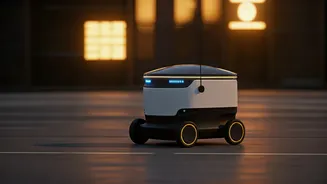
Niantic Spatial, the division dedicated to spatial computing at Niantic, has forged a groundbreaking partnership with Coco Robotics, a company specializing in small autonomous robots for local food and grocery deliveries. This collaboration leverages Niantic’s advanced Visual Positioning System (VPS). The VPS technology is designed to pinpoint a device's location with remarkable accuracy, down to the centimeter, by meticulously analyzing visual cues present in its immediate environment, such as buildings, distinct landmarks, and other recognizable features. This capability is particularly crucial for delivery robots navigating crowded sidewalks and intricate city environments where traditional GPS signals can be unreliable or imprecise. The system's training on an enormous dataset of over 30 billion images, captured by Pokémon GO players, allows it to comprehend and interpret these visual details effectively, paving the way for safer and more efficient robotic deliveries.
Robust Navigation Engine
The sheer scale and diversity of the Pokémon GO player-generated image dataset provide VPS with a unique advantage in creating robust and adaptable navigation systems. By analyzing images of the same locations taken by different players at various times, the system effectively learns to compensate for dynamic environmental factors. This includes fluctuations in lighting conditions throughout the day, changes due to different weather patterns, and variations in camera angles and perspectives. Niantic asserts that this extensive, collaboratively built visual archive makes the VPS exceptionally well-suited for navigating areas where GPS signals are prone to interference or weakness, such as dense urban canyons or areas with extensive overhead cover. This reliance on real-world visual data, rather than solely satellite signals, offers a more dependable solution for autonomous navigation.
Privacy Concerns Emerge
While the technological innovation is significant, the announcement of this partnership has unfortunately ignited a firestorm of privacy concerns among the public. Many individuals have expressed unease, questioning the implications of having billions of scanned images and photos, captured unknowingly by players who believed they were solely engaging in a game, being stored and utilized by corporations. Comments highlight sentiments of being uncompensated and not having explicitly consented to their data being used for such a purpose, all while they thought they were merely 'catching Pikachu.' This has led to comparisons of Pokémon GO essentially crowd-sourcing a new version of Google Maps without the users' full awareness or consent, sparking a vital debate about data ownership, user privacy in the age of augmented reality, and the ethical considerations of repurposing personal data for commercial applications without explicit permission.