






Pioneering Space AI
The landscape of artificial intelligence is expanding beyond Earth's atmosphere with an ambitious new project by Indian space-tech startup Pixxel and AI
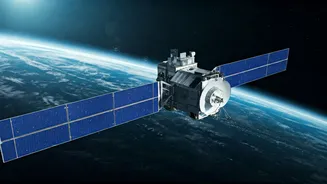
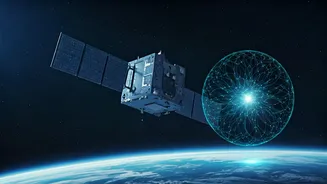
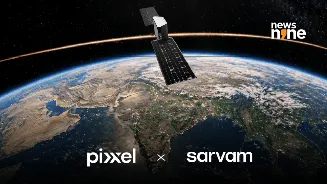
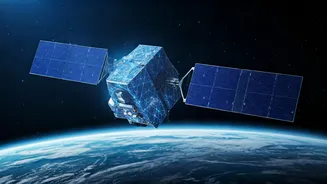
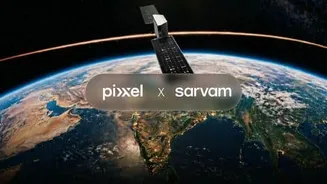
provider Sarvam AI. Their collaboration aims to establish India's inaugural orbital data center satellite, christened 'The Pathfinder.' This 200-kilogram spacecraft, slated for an end-of-2026 launch, is engineered to house powerful Graphics Processing Units (GPUs). These advanced components will be instrumental in training and executing Sarvam's cutting-edge AI models directly in space. This differs significantly from current satellite computing, which typically employs low-power processors optimized for durability over computational might. The Pathfinder is designed to mirror the high-performance hardware found in terrestrial data centers, enabling it to handle the demanding tasks required for training sophisticated AI models. This initiative arrives at a time when global tech giants and emerging startups are increasingly looking towards space to overcome the escalating energy constraints faced by data centers on Earth.
Addressing Earth's Limits
The burgeoning demand for data processing power is placing immense strain on Earth's energy resources. Global data center capacity is projected to reach an astounding 200 GW by 2030, according to JLL. In India alone, data center capacity is expected to grow sixfold from 1.8 GW to approximately 10.5 GW by 2031, as estimated by Morgan Stanley. This massive energy appetite has led to significant public concern and is compelling technology companies to seek unconventional solutions. Orbital data centers represent one such out-of-the-box approach, offering a potential escape from Earth's power limitations. Companies like SpaceX have ambitious plans to deploy as many as one million data-center satellites into orbit. Even Meta is exploring space-based solar energy to power its own ground-based facilities. The Indian Space Research Organisation (ISRO) is also investigating advanced satellites equipped with on-board data processing and storage capabilities, signaling a broader national interest in space-based computing infrastructure.
Partnership and Capabilities
The Pixxel-Sarvam collaboration outlines a clear division of responsibilities for the Pathfinder mission. Pixxel will undertake the comprehensive task of designing, constructing, launching, and managing the satellite. Development will occur at Pixxel's burgeoning Gigapixxel facility, which is being scaled for high-volume satellite production, aiming for up to 100 units. While specific technical details about Pathfinder remain undisclosed, the core objective is clear. Sarvam AI will leverage the satellite's infrastructure to conduct the training and inference of its language models autonomously in orbit. This means the AI models and their operational platform will process data without relying on external cloud or ground-based systems, enhancing data sovereignty. The mission is designed to rigorously test real-time AI inference and data processing within the challenging space environment. It will meticulously evaluate performance metrics, power management strategies, thermal regulation, and data workflow efficiency under operational conditions, laying the essential technical and commercial groundwork for future orbital data center systems.
Sovereign AI in Orbit
The strategic importance of this partnership extends to national digital sovereignty. Pixxel CEO Awais Ahmed highlighted the transformative potential of orbital data centers, emphasizing access to abundant solar energy, proximity to space-based data, and the ability to transcend Earth-bound constraints. He stated Pixxel's commitment to shaping this new frontier of space infrastructure. Sarvam CEO Pratyush Kumar echoed this sentiment, underscoring their work on a comprehensive Indian AI platform. He views the partnership as a crucial step in extending this sovereign capability into space, enabling India-built models to operate on an India-built satellite. This foundational capacity is deemed essential for the country to maintain control over its own intelligence infrastructure. Beyond its AI training capabilities, the Pathfinder satellite will also be equipped with a hyperspectral imaging camera. This advanced sensor will capture high-fidelity hyperspectral data, which will then be analyzed directly in orbit by the space-trained foundation models. This integrated approach significantly reduces the time between data acquisition and actionable insights, facilitating faster decision-making for applications like environmental monitoring, resource management, and critical infrastructure tracking.