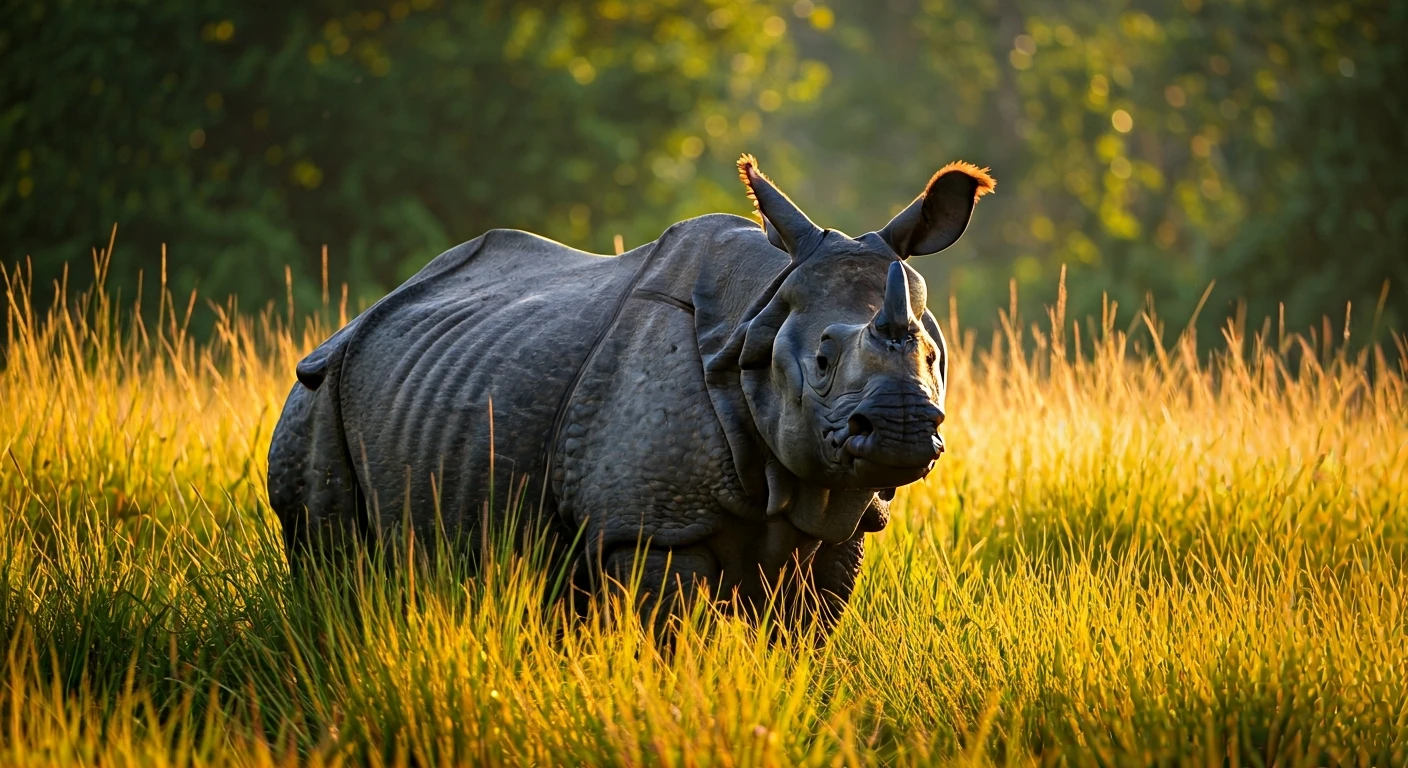





Rhino's Majestic Presence
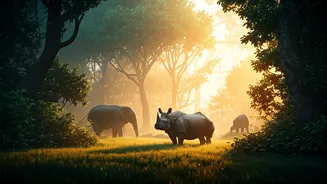
Kaziranga National Park proudly conserves the world's largest population of the Indian rhinoceros, a truly iconic species. Though classified as vulnerable,
dedicated conservation efforts in Assam have led to a remarkable recovery for these magnificent creatures. Visitors can often find these substantial herbivores contentedly munching on the park's vast grasslands or near its serene water bodies. Their presence is a testament to the success of conservation initiatives within this vital ecosystem, making them a primary draw for anyone visiting the park.
Gentle Giants Roam
The Asian elephant is another captivating inhabitant of Kaziranga, with large herds frequently traversing the park's open grasslands and interspersed forest areas. This reserve shelters a significant population of these intelligent animals, who play a crucial role in maintaining the ecological balance by influencing vegetation patterns and aiding in seed dispersal. Their migratory movements and feeding habits contribute significantly to the dynamic landscape of Kaziranga, offering unforgettable sightings for wildlife enthusiasts.
The Elusive Predator
Kaziranga boasts one of the highest densities of Bengal tigers found in protected areas across India. These stealthy predators primarily reside within the park's dense tall grass and woodland environments. While encounters are less frequent compared to rhinos or elephants, the park's designation as a tiger reserve underscores its importance for the conservation of this magnificent big cat. Spotting a tiger here requires patience and a bit of luck, adding to the thrill of a Kaziranga safari.
Water Buffalo Majesty
Among the largest bovine species globally, the wild water buffalo is a common sight in Kaziranga's marshy regions. The park is a sanctuary for one of the most critical populations of this endangered animal. Their powerful presence adds to the park's rich biodiversity, and observing them in their natural, water-rich habitat is a fascinating experience, highlighting the importance of Kaziranga's unique wetland ecosystems.
Swamp Deer Grace
The Barasingha, specifically the eastern swamp deer subspecies, flourishes within Kaziranga's wetlands and expansive grasslands. These elegant deer are easily identified by their distinctive, multi-tined antlers, a striking feature that adorns the males. They are frequently observed grazing peacefully in the park's open meadows, their presence a beautiful indicator of the health of the park's grassland and wetland habitats.
Leopard's Secret Life
Though considerably more reclusive, the Indian leopard is also a resident of Kaziranga. These agile felines typically inhabit the more densely forested sections of the park and are generally most active during the twilight hours of early morning or late evening. Consequently, leopard sightings are relatively rare, but the possibility of encountering one during a safari adds an element of mystique and excitement to the wildlife viewing experience.
Hog Deer Grazing
The hog deer is among the most commonly observed herbivores within Kaziranga's diverse landscape. These deer are smaller in stature compared to swamp deer and show a strong preference for habitats characterized by tall grasses. They are frequently seen grazing in close proximity to various water sources throughout the park, their easygoing nature making them a frequent and delightful sight for visitors.
Sloth Bear Discovery
The sloth bear is another species that graces Kaziranga, although sightings are less frequent than with many other animals. These bears typically make their homes in the forested zones of the park and are renowned for their diet, which consists primarily of termites, ants, and various fruits. Their presence, while infrequent, adds another layer of diversity to the remarkable fauna found within this renowned wildlife sanctuary.