



Hawaii's Celestial Peak
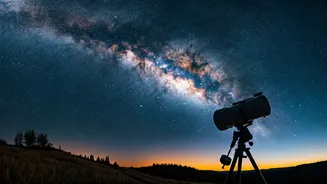
On Hawaii Island, the summit of Mauna Kea, at 13,803 feet, provides an unparalleled platform for stargazing due to its thin, dry air and minimal light
interference. This location hosts some of the world's most advanced astronomical observatories. Tours are available to a height of approximately 12,800 feet, offering views through two distinct telescopes – one for planets and another for distant galaxies. Visitors are consistently amazed by the sheer number of visible stars, with guides often remarking on its status as a premier stargazing spot under favorable conditions. Complementing the scientific observations, the University of Hawaii's Imiloa Astronomy Center on the Hilo campus provides cultural immersion. Its interactive exhibits delve into Hawaiian celestial navigation and seafaring, while the planetarium showcases short films recounting native legends from Hawaii, Japan, Canada's First Nations, and ancient Greece. Even traditional Hawaiian luaus, like the Feast and Fire Luau, incorporate astronomical themes, with dancers' movements symbolizing the stars that guided Tahitian voyagers to Hawaii. This blend of cutting-edge astronomy and deep-rooted cultural narratives allows for a profound connection to the cosmos.
Whistler's Starry Tales
Near Whistler, British Columbia, the tranquil shores of Alta Lake offer a stunning spectacle where celestial bodies are mirrored in the calm waters as the moon ascends behind nearby mountains. Guided tours through the Experiences Program utilize phone applications to identify constellations while also sharing personal anecdotes of wilderness exploration and the profound sense of closeness one feels to the vast expanse above. This region is also a hub for First Nations heritage. Whistler's museums and cultural centers, such as the Squamish Lil'wat Cultural Centre, feature cultural ambassadors who lead visitors through exhibits showcasing Indigenous traditions and their connection to the night sky. These tours illuminate the significance of symbols and patterns in art, sculptures, and petroglyphs that reference celestial phenomena. The cultural center's exhibitions often highlight the Indigenous worldview of the cosmos, including a notable display on the depiction of the universe by local First Nations.
Oregon's Dark Sky Oasis
Bend, Oregon, is celebrated for its high desert climate and designated dark sky status, making it a prime location for observing the heavens. The Oregon Observatory at Sunriver Resort stands out, housing the largest public collection of telescopes in the United States. This facility frequently hosts special events featuring expert astronomers who guide visitors in using the equipment and interpreting celestial sights. These popular events, often drawing over 100 attendees, require advance booking. For a more intimate and narrative approach to stargazing, Starshine, a local enterprise, offers guided night walks that combine celestial observation with captivating storytelling for both children and adults. Participants gather in camp chairs under blankets, with red-light flashlights replacing traditional campfires, to listen to tales like 'How Coyote Howls: A Star Story,' a narrative retold from the Chickasaw people. Guides also utilize laser pointers and star maps to pinpoint constellations, enriching the experience with both scientific and folkloric perspectives.
Australia's Ancient Skies
Australia presents a remarkable array of dark sky territories, spanning its immense inland deserts to secluded coastal vantage points, preserving both advanced astronomical research and deeply rooted Aboriginal stargazing traditions. In New South Wales, central coast resident Tim Selwyn leads cultural programs through Aboriginal Experiences, offering stargazing excursions into the darkness of Bouddi National Park. During these tours, participants gaze at the luminous night sky while hearing ancient stories about the Mirrabooka (Milky Way), the Sky Father, and other ancestral narratives. The country also features state-of-the-art facilities, such as the Sydney Observatory, which provides captivating star shows within its domed theaters, complemented by informative exhibits on celestial phenomena. Additionally, historical tours and telescope viewings are available, alongside significant exhibitions exploring the history of Australian astronomy and Indigenous celestial knowledge.
Arizona's Sacred Peaks
Located just outside Tucson, Arizona, atop a sacred mountain within the ancestral lands of the Tohono O'odham Nation, lies an observatory that offers a dual experience of cosmic exploration. Visitors can participate in nighttime viewing programs guided by scientists using cutting-edge telescopes, alongside immersive storytelling sessions focused on Indigenous celestial traditions within the newly inaugurated Tosogida Ki Center. This center guides participants through the art and science of stargazing, moving between interactive telescope control panels, 3D celestial displays, and exhibits dedicated to Tohono O'odham star lore. The Kitt Peak National Observatory's public night programs provide scientifically-driven explanations of the universe from astrophysicists, allowing for direct observation through powerful telescopes. The observatory even offers an overnight program, giving guests a taste of an astronomer's daily life. Among the knowledgeable guides is a member of the Tohono O'odham Nation, who shares insights into Native American stargazing practices. A fascinating example is how the Big Dipper constellation is reimagined in the O'odham tradition as the Kui’pud, a specialized tool used for harvesting saguaro cactus fruit.